
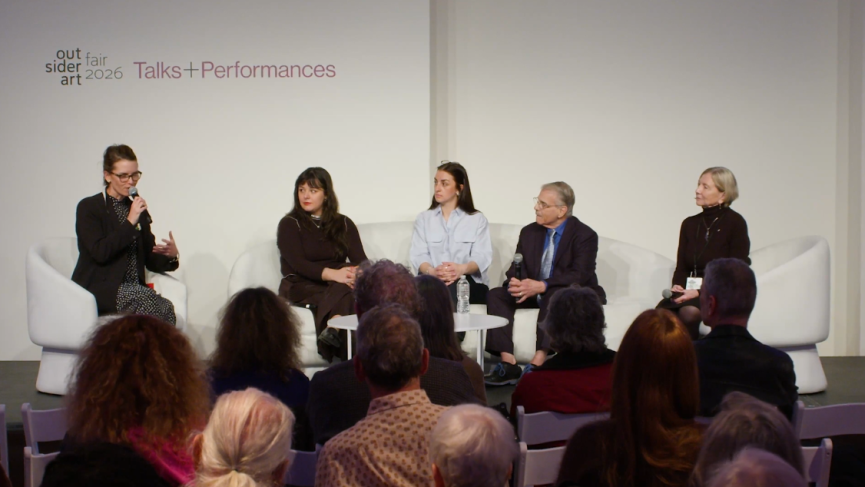
At the 2026 Outsider Art Fair in New York, Feheley Fine Arts was invited to curate the fair’s featured booth. We presented From the North, a thoughtfully conceived exhibition tracing the history of artmaking in the North from the 1950s to the present day. Through a selection of significant artworks, the exhibition highlighted the traditions of innovation, resourcefulness, and imagination … Read More
Arnaqu Ashevak: A Retrospective
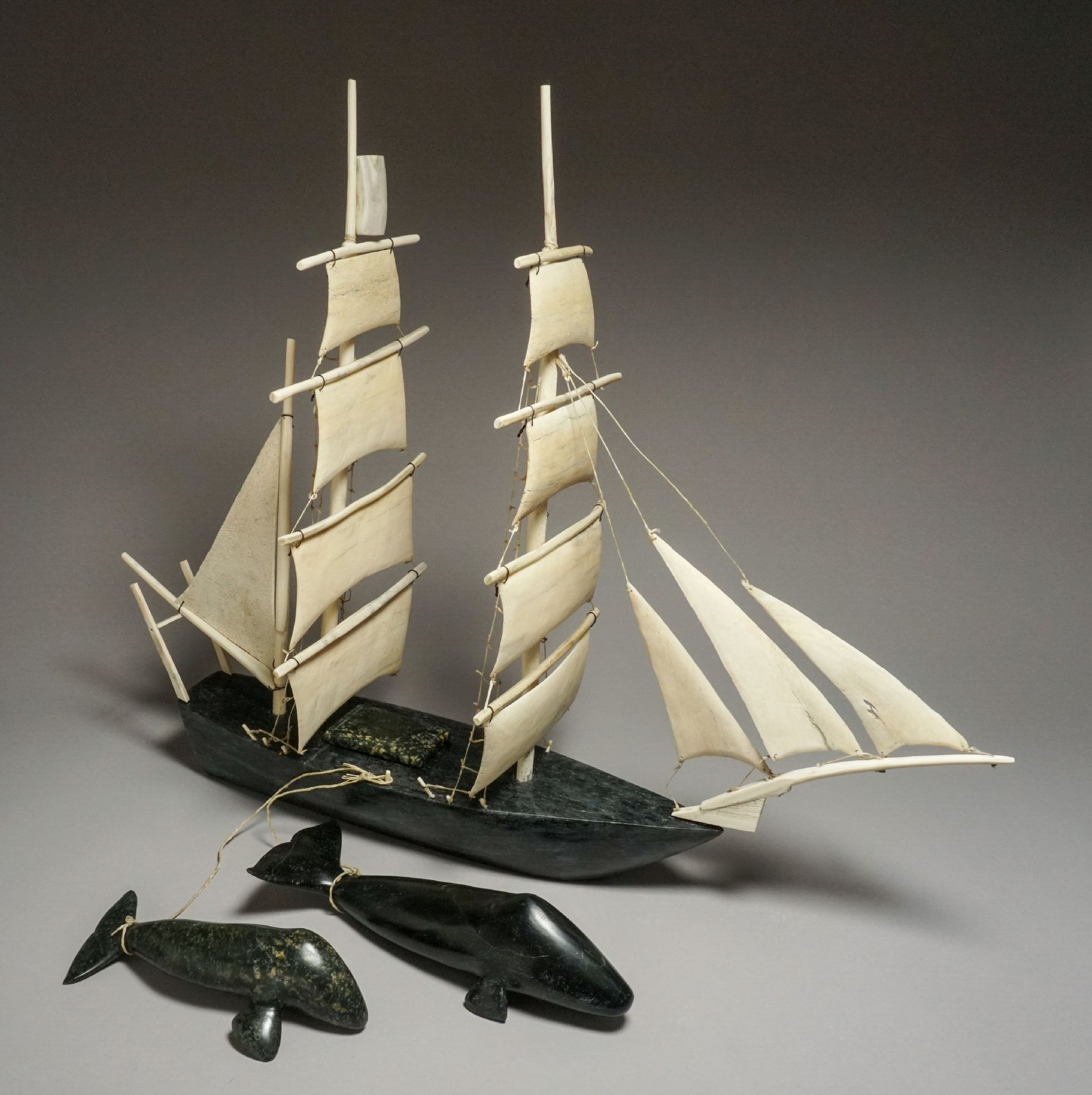
I knew when I first interviewed Arnaqu Ashevak in 1998 that he was very different from any of his fellow Kinngait artists. During the interview, he mentioned that two of his favourite artists were from Europe – Alexander Calder and M.C. Escher. He went on to say, “sometimes I look at art magazines, and get inspiration from that. Lot of … Read More
Janet Kigusiuq: Deconstructed

A distinguished artist and notable colourist, the late Janet Kigusiuq remains as one of the greatly understated artists in the contemporary Inuit art canon. This exhibition of original works traces the development of Kigusiuq’s style from early linear drawings to a gradually increased use of colour, resulting in an exquisite series of sublime abstractions. Over a career span of 30 … Read More
URSUS MARITIMUS: Polar Bears in Inuit Art
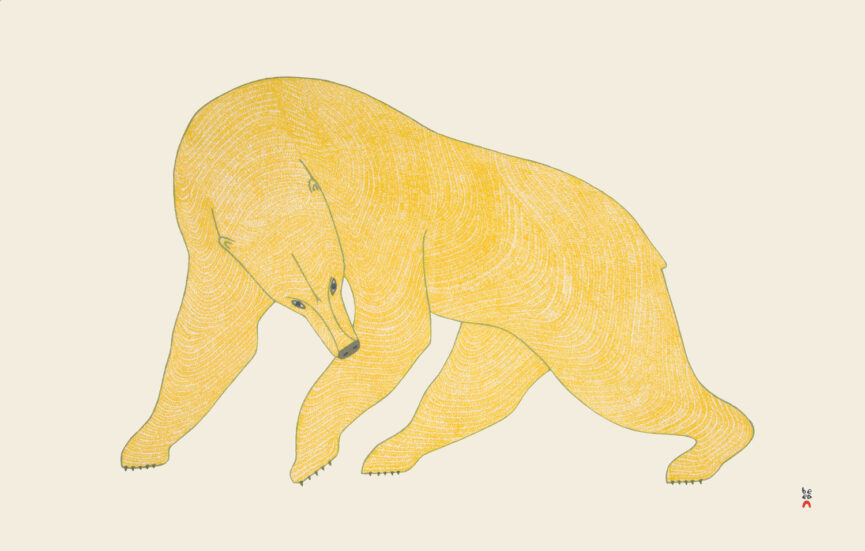
By Edd J. Guarino In Inuktitut, the language of the Inuit, the word for polar bear is nanook, or nanuq. Its Latin name is ursus maritimus. These huge animals are a fact of life in the Arctic. Their huge size and power make them very impressive creatures. The Inuit have been hunting polar bears for millennia, along with other Arctic animals. For generations, Inuit culture … Read More
The Old Ways: A Conversation Between Father and Son
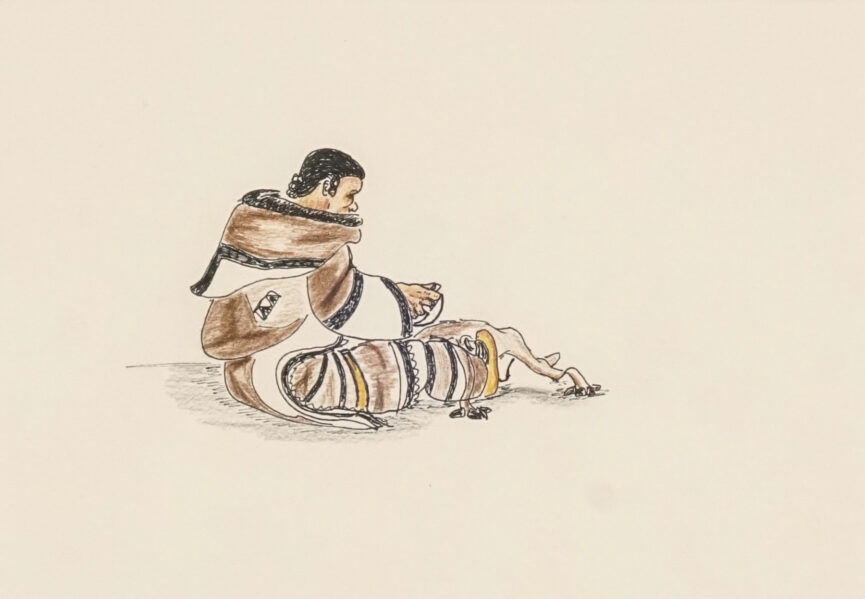
Kananginak Pootoogook (1935-2010) was in the vanguard of artists who introduced the medium of printmaking to Kinngait. In addition to taking part in the early experimentation, he became a master printer and garnered an international following for his sculptures and graphic works. His youngest son, Johnny Pootogook would be the only one of his children to become an artist. Born … Read More
Themes in Inuit Art: Drum Dancing
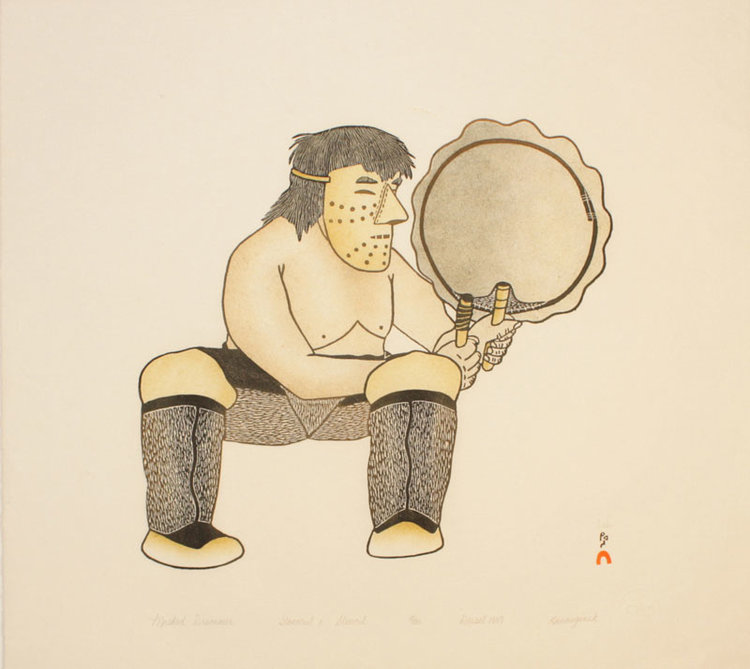
If you follow Inuit art you are most certainly familiar with the image of the drum dancer, depicted in sculpture, prints, and drawings since the 1960s. Artists like Aqjangajuk Shaa, Abraham Anghik Ruben and Luke Anguhadluq are renowned for their renditions of the subject, often a dynamic figure bending their entire body to mimic the powerful beat of the drum. Long … Read More
Sedna: The Sea Goddess
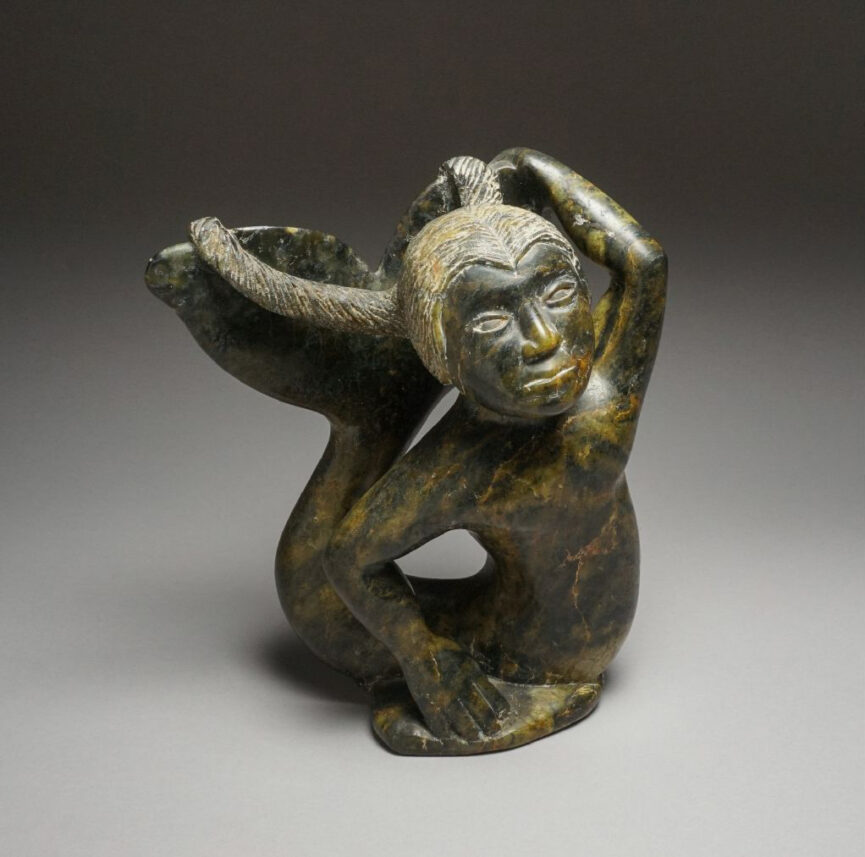
The traditional Inuit world is a place of enchantment, filled with strange spirits and supernatural beings. Governed by the unpredictable forces of nature, the Inuit used this mythology to explain, and perhaps control, these natural forces. In traditional times the spirit world was central to their culture; today, it has provided inspiration for some of the most lyrical and compelling … Read More
Shuvinai Ashoona: My Curious People

In this new body of work by Shuvinai Ashoona, the artist revisits a number of unique subjects for which her work is most admired: surrealist creatures, globes, and anthropomorphic animals, to name a few. Yet most noticeably, the human subject dominates—it’s one that Ashoona has played with throughout the majority of her 30+ year-long career. Imbued with her usual extraordinary … Read More
Six Decades of Drawing

For more than three decades, Feheley Fine Arts has presented rare, early drawings by Inuit artists, including many early Kinngait works dating from 1959-1969, drawings that continue to be sought after by collectors. The West Baffin Eskimo Co-operative still owns the lion’s share of these early drawings – some 90,000 are now housed at the McMichael Canadian Art Collection and … Read More
Michael Massie: From My Mind

Michael Massie (1962–) is an acclaimed multidisciplinary artist best known for his intricately crafted silver teapots and sculptural works. His creations often blend sharp wit with personal reflections, drawing inspiration from his Inuit, Métis, and Scottish heritage. His latest body of work marks a continuation of his refined practice. Shifting his focus from three-dimensional forms to the two-dimensional realm, Massie … Read More
Itee Poogoook: Stills

Drawings by Itee Pootoogook (1951–2014), an acclaimed artist from Kinngait, are easily recognized. His meticulous renderings of his world – the land, the buildings, the many figures and scenes that shaped his community are unique; subtly coloured and almost dream-like in their serenity. They have been exhibited and published widely, often found in major public and private collections. This group … Read More
The Ulu

The ulu, known in Inuktitut as ᐅᓗ (ulu), translates to “woman’s knife.” This crescent-shaped blade is traditionally used by Inuit women and is passed down through several generations. In Inuit culture, it is considered an honour to receive an ulu from an older female relative. [2] The ulu serves various purposes, including cleaning skins, filleting fish, cutting meat for communal … Read More