
Qavavau Manumie
Through the Ages
October 8 – 31, 2026
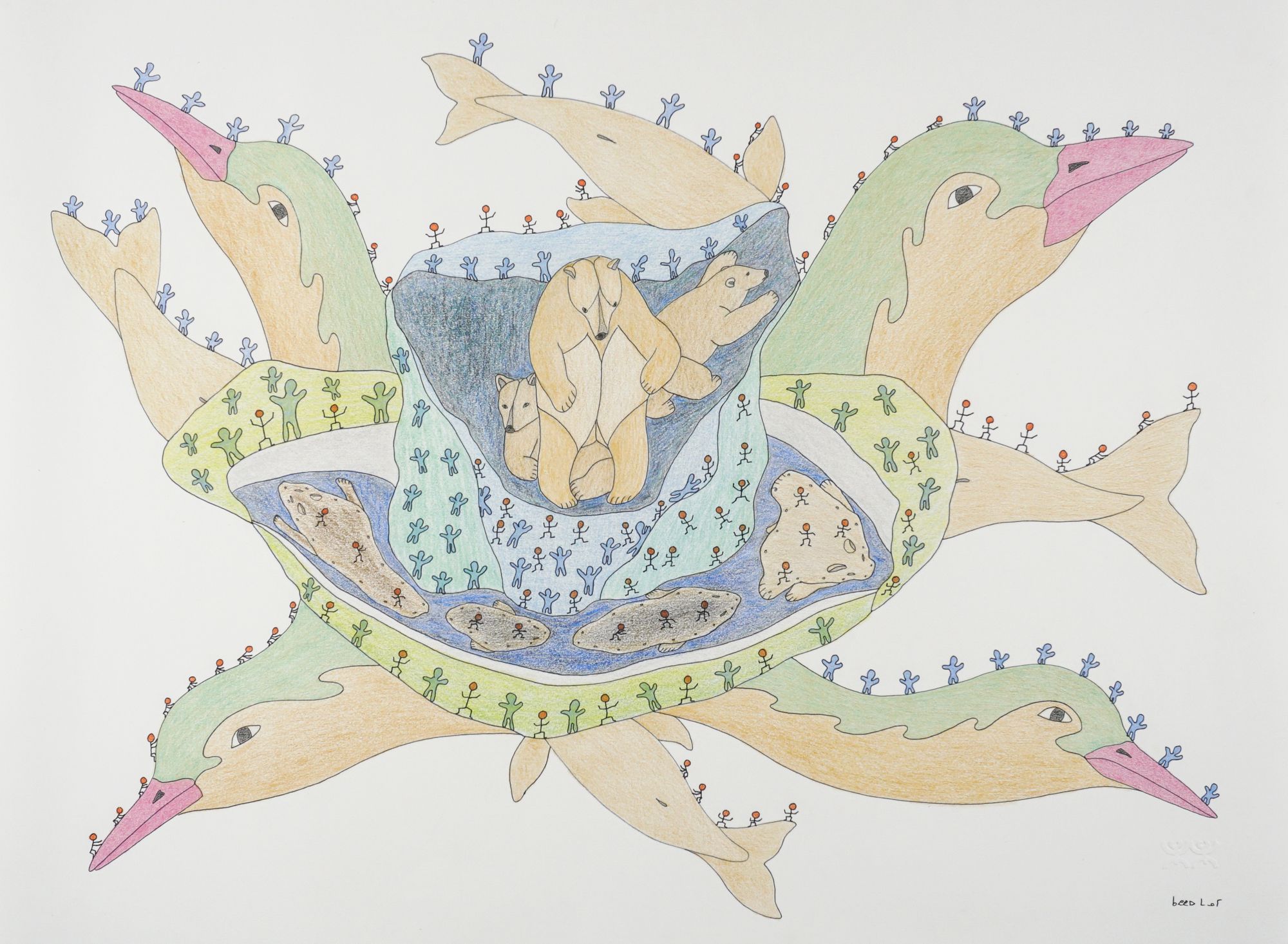
Qavavau Manumie, COMPOSITION (BIRDS, BEARS, PEOPLE), 2021, Coloured pencil & ink, 22 x 29 5/8 in.
Qavavau Manumie (1958-) is a Kinngait based graphic artist who is widely recognized for his evocative works on paper. His career began in the 1980s, when Manumie began working in the lithography studio at the West Baffin Eskimo Cooperative, quickly becoming a technically proficient printmaker. While he is regarded as a technical savant in printmaking, it is in Manumie’s drawing works where his unique inner world comes to life. Seamlessly blending reality and fantasy, Manumie explores the human experience through layers of coloured pencil and delicate lines of black ink.
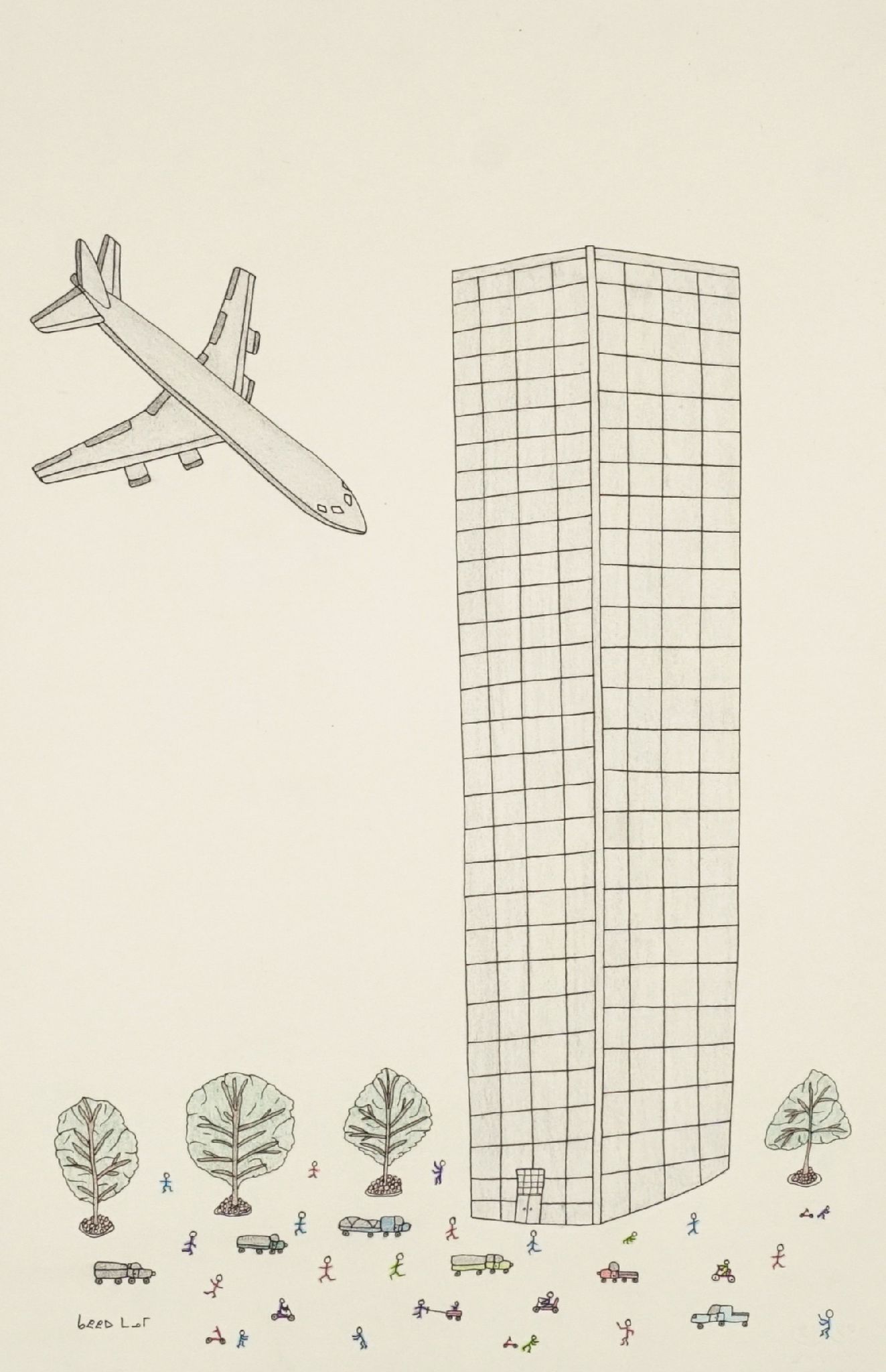
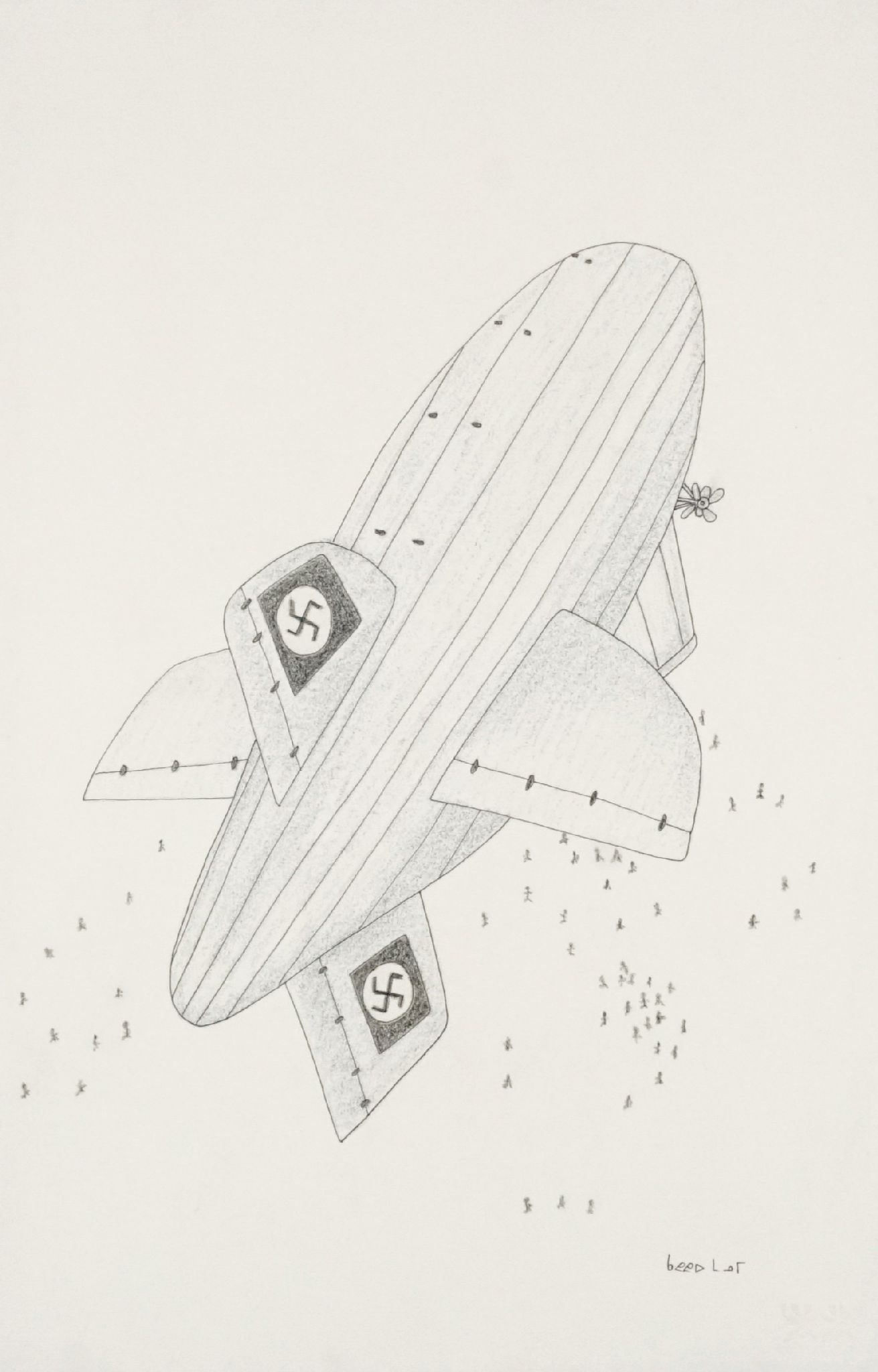
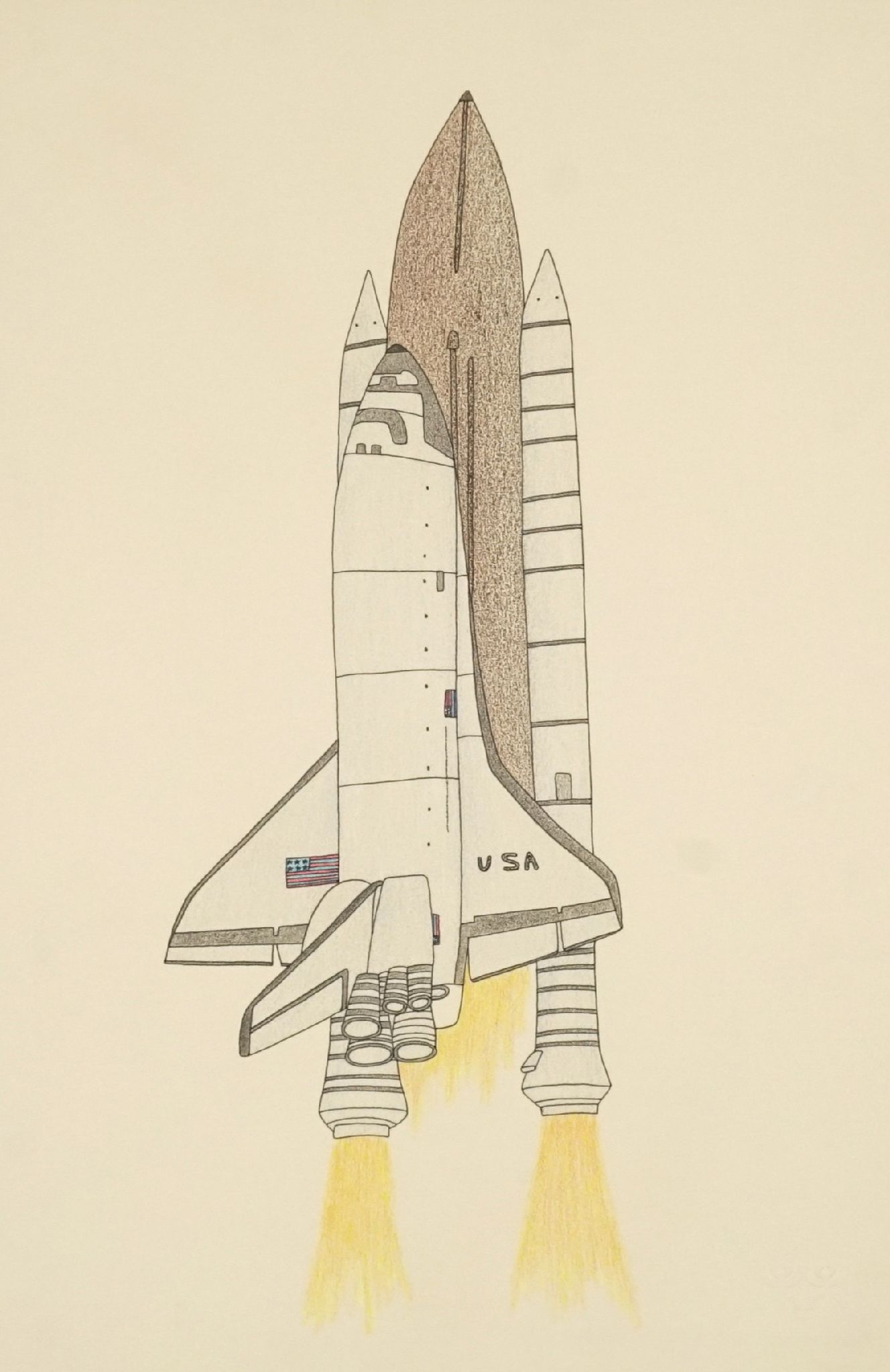
Manumie’s earlier works would draw from his exposure to historic events through radio and television programs. Bridging the gap between life in the North and historic events in the South, Manumie often interplays these influences into one piece. As seen in Kinngait, We Have Lift Off (1986), he combines the 1986 Space Shuttle Challenger disaster with a title referencing his home, Kinngait, and the famous quote “liftoff, we have liftoff!” from the Apollo 11 mission to the moon in 1969. Historic tragedies would permeate Manumie’s illustrations over the next several decades, with tributes to the 9/11 terrorist attacks, the Space Shuttle Challenger disaster, the Hindenburg disaster, and the 1983-1985 famine in Ethiopia. In his piece Composition (The Ethiopian Famine) (1985), Manumie depicts a shocking yet compassionate portrayal of an Inuk tending to a person dying of starvation. When the famine began, Inuit communities provided the most donations per capita in Canada in a profound act of solidarity. They deeply understood starvation and had experienced it themselves less than a generation earlier.
Simultaneously, Kinngait had its own local history, which Manumie would chronicle through a series of narrative-based drawings. In these pieces, he references a 1968 U.F.O. landing, the RCMP awarding an Inuk a service medal, and a group of hunters drowning after being caught in a fatal storm. Illustrated from memory, oral traditions, and local legends, Manumie’s works operate as a historical record of these stories, which would otherwise be exclusively spoken through words.
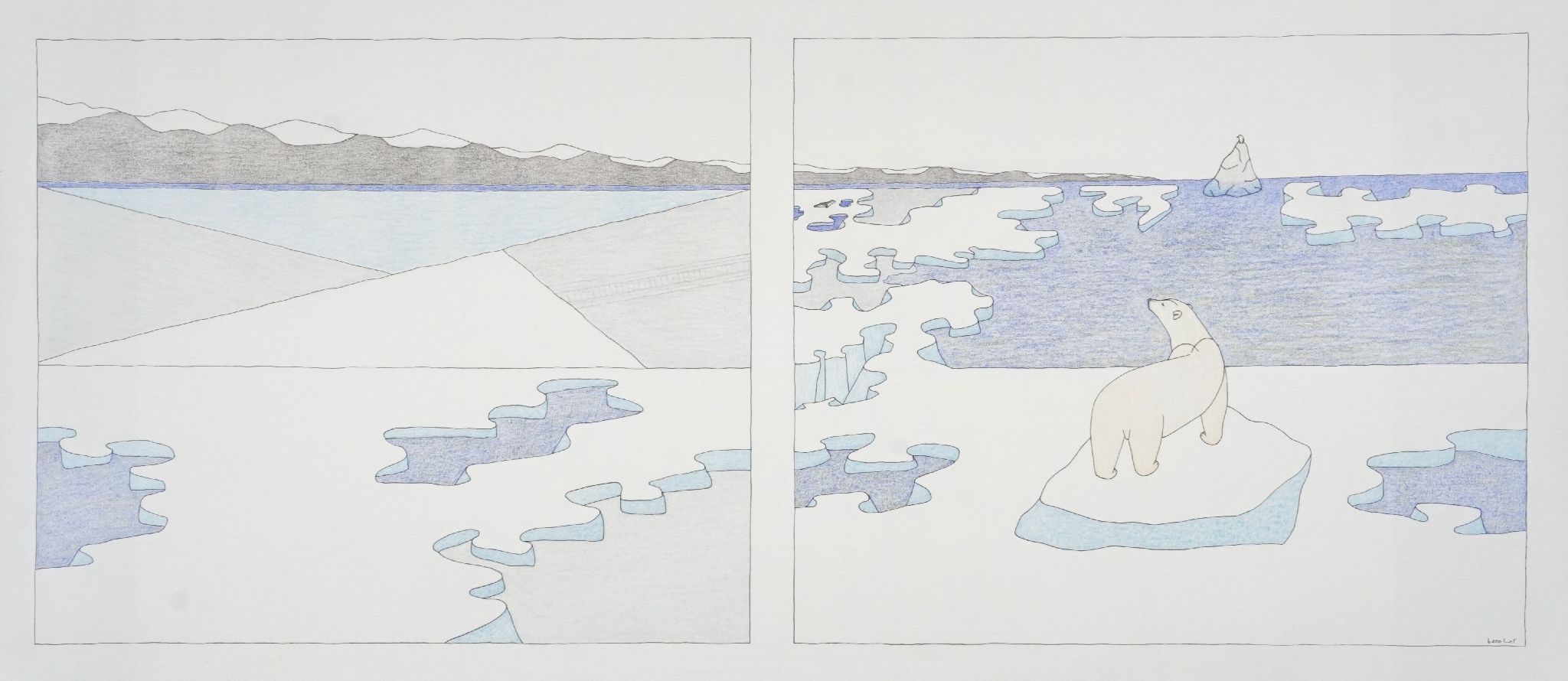
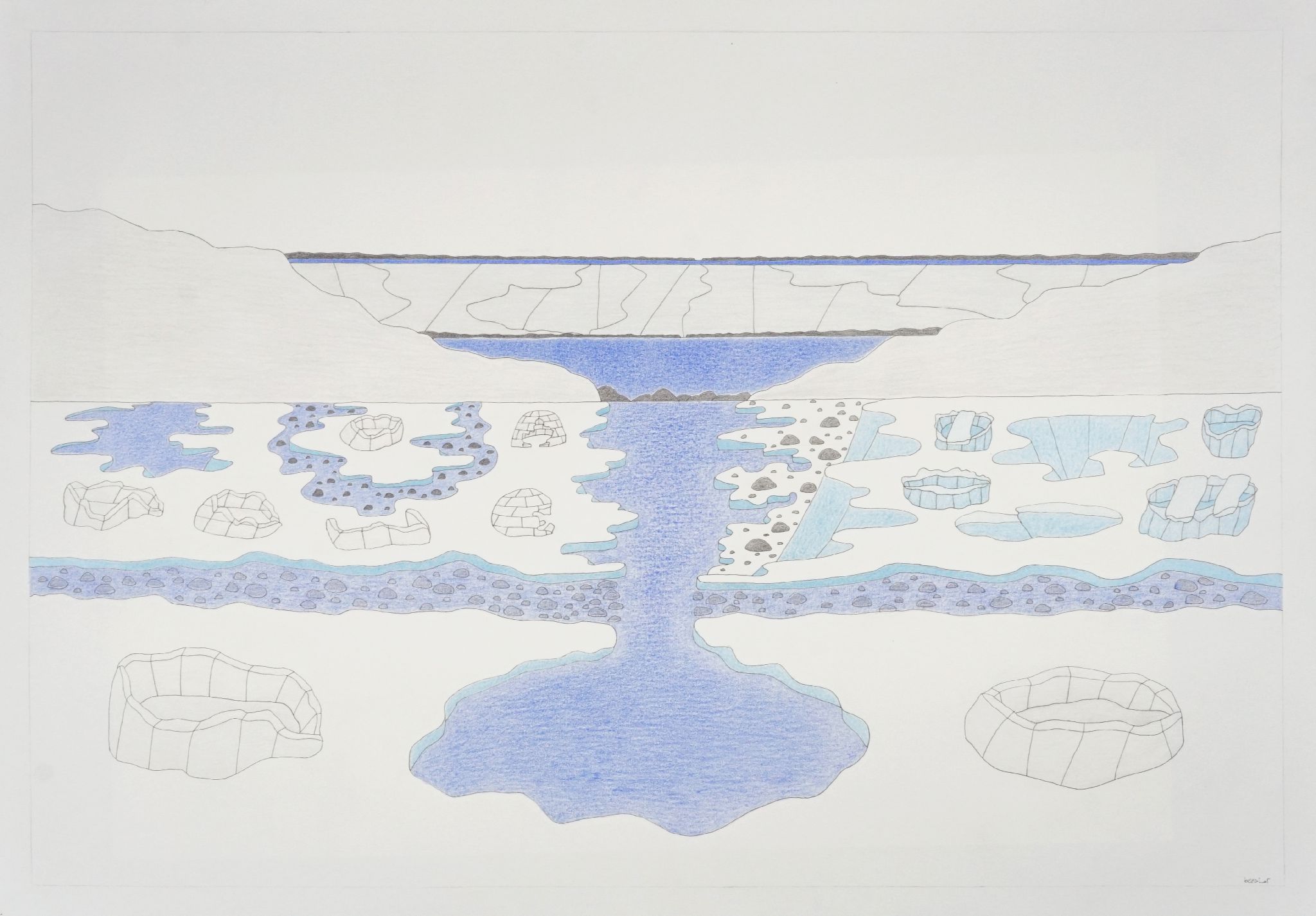
Since the 1990’s, Manumie has been vocal about the negative impacts that climate change has on the North, including melting ice floes, habitat loss, and littering. In Composition (Year After Year) (2025), the polar bear looks onward to the rapidly melting ice, unable to cross where they once did years before. As the glaciers on the horizon line are vanishing, the animals stand on their respective ice floe, floating farther away from the viewer. This loss of sea ice has devastating impacts on Arctic wildlife and hunters alike, with studies predicting “Arctic waters could be nearly ice-free in summer by the 2050s” [1].
Manumie portrays Arctic wildlife with respect and admiration, often illustrating human beings as second to the animals in his compositions. In his piece Composition (Cautionary Tail) 2022, Manumie writes:
“The hunters trying to take beluga off of their net accidentally went overboard and got tangled in the nets. Now, the beluga is trying to get free to rescue them”
– Qavavau Manumie, March 2026 [2].
This provides further insight into Manumie’s perspective on humanity, and that despite the pain we inflict, we are still connected to the natural world, with the hope that animals could forgive us.
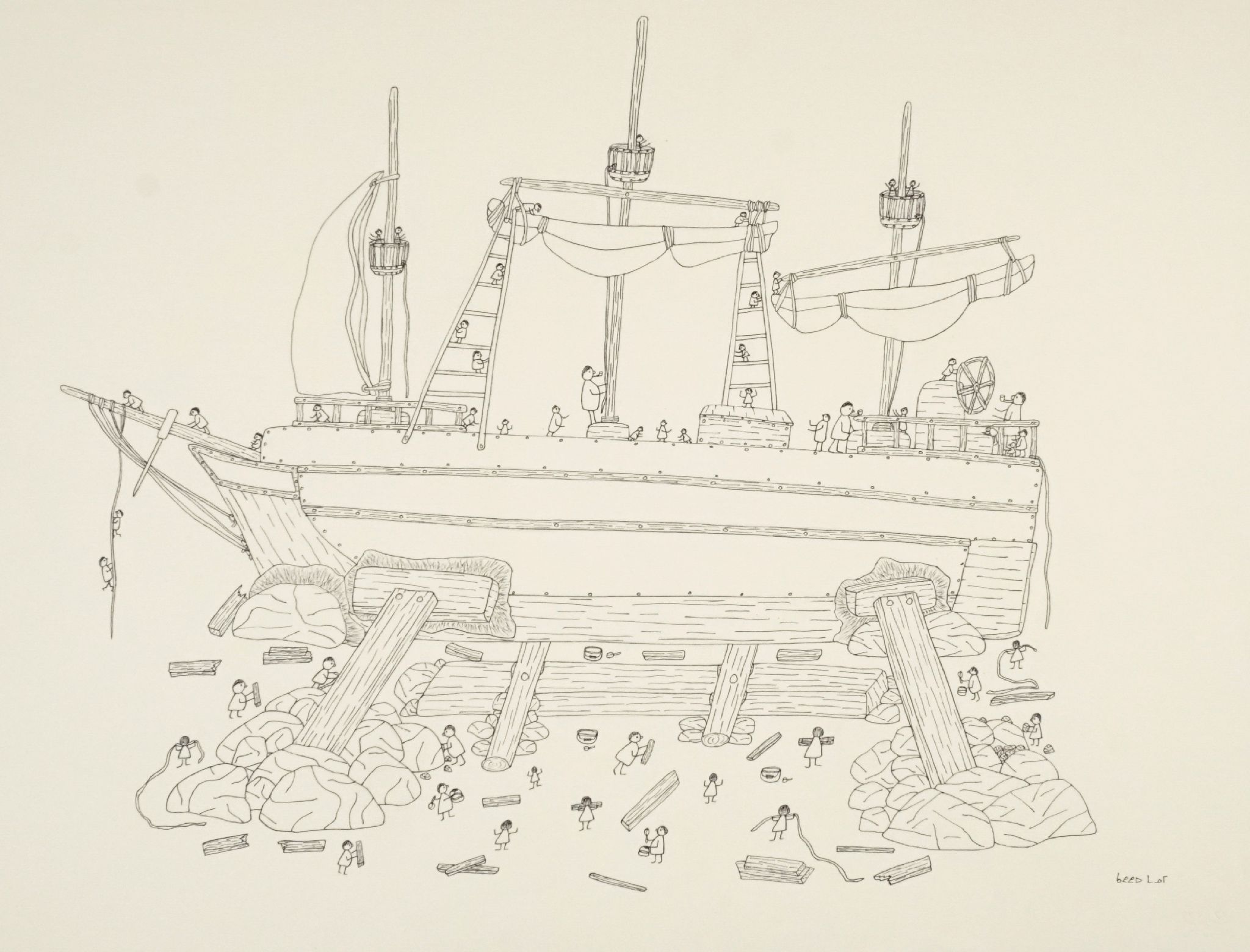
In My Boot, My Shoe, My Kamik (2024), Manumie depicts Arctic wildlife living within different types of abandoned shoes, blending traditional iconography of a sealskin kamik with a red stiletto. Inspired by a short story written by co-op manager Joemee Takpaungai, the story follows three animals who are quite happy living in their respective shoe homes until a giant blue bird swoops in and tries to steal the boot away from the fox. The animals are depicted in an active scene, shooing away the big blue bird from their shoes. This fable is one of many fantastical works Manumie would illustrate beginning in the mid 2000s to the present day. Manumie often references his own memories, as well as stories that were told to him. As a young child, Manumie’s father told him about the legend of the “little people” known as the Inuralaat. It is said that they roam the Arctic tundra, and the appearance of small tracks could mean you are in immediate danger of attack. Passed down through years of oral tradition, these mischievous small humans frequent Manumie’s work and are often engaging in play, building structures, and climbing. The Inuralaat frequent Manumie’s more fantastical works, as seen in figures building a ship for him in Making Qavavau’s Arc (2006). A jarring departure from his earlier, more solemn works on paper, his series of fantasy works are brimming with life and spirit. Illuminating his lively imagination through a series of playful scenes, the line is intentionally blurred between human, animal, and machine in Composition (Fantasy Land) (2008).
Manumie has always possessed refined technical skills and an extraordinary imagination to make these bold statements in subtle ways. His work continues to be multifaceted, unafraid to combine humour, tragedy, fantasy, politics and memories with a compelling sensitivity to his subjects. At the heart of his work, Manumie has a deep faith in humanity. His artworks serve as a call to action to protect each other and our environment before it is too late. Manumie’s works on paper are some of the most contemporary and influential works to come out of Kinngait today.
Sources:
- “Patterns of Sea Ice Change in Canada”, Government of Canada, August 14th, 2026.
- Qavavau Manumie, Interview conducted by Joemee Takpaungai in Kinngait, Nunavut, March 2026.
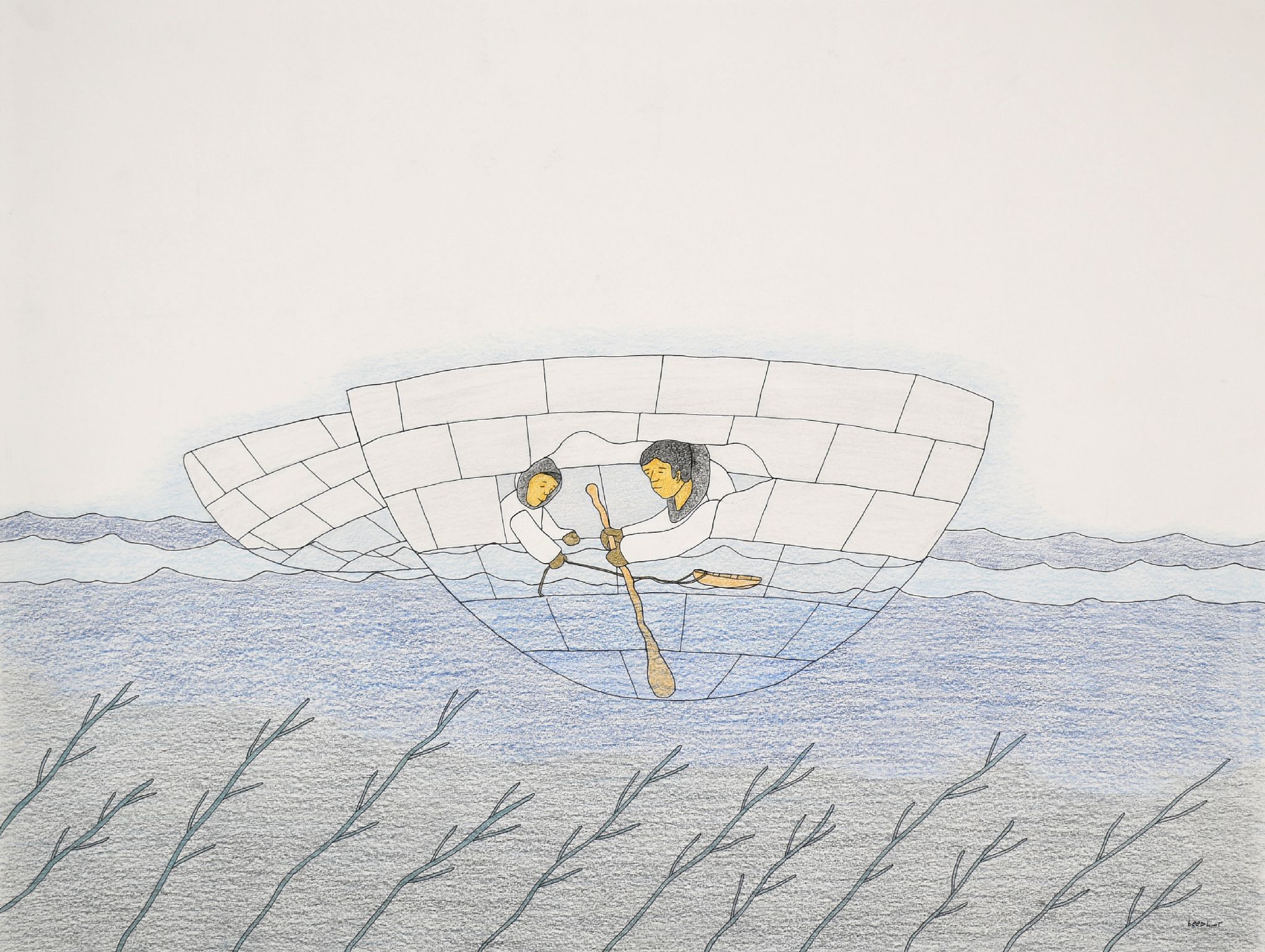
coloured pencil, ink
23 x 30 in.
SOLD
"A flood came in the winter time due to weather climate change."
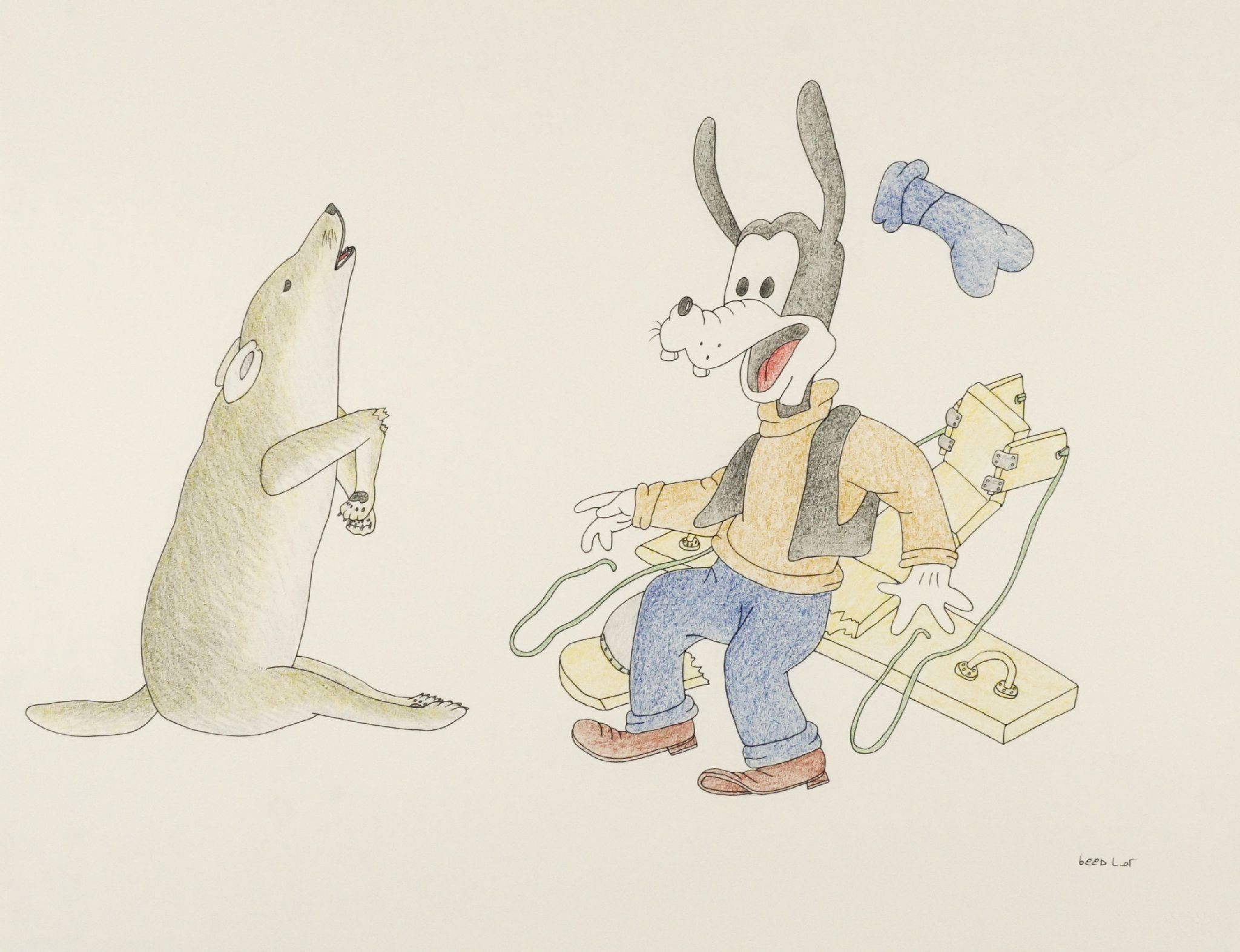
Coloured pencil & ink
20 x 26 in.
$1,800 CAD
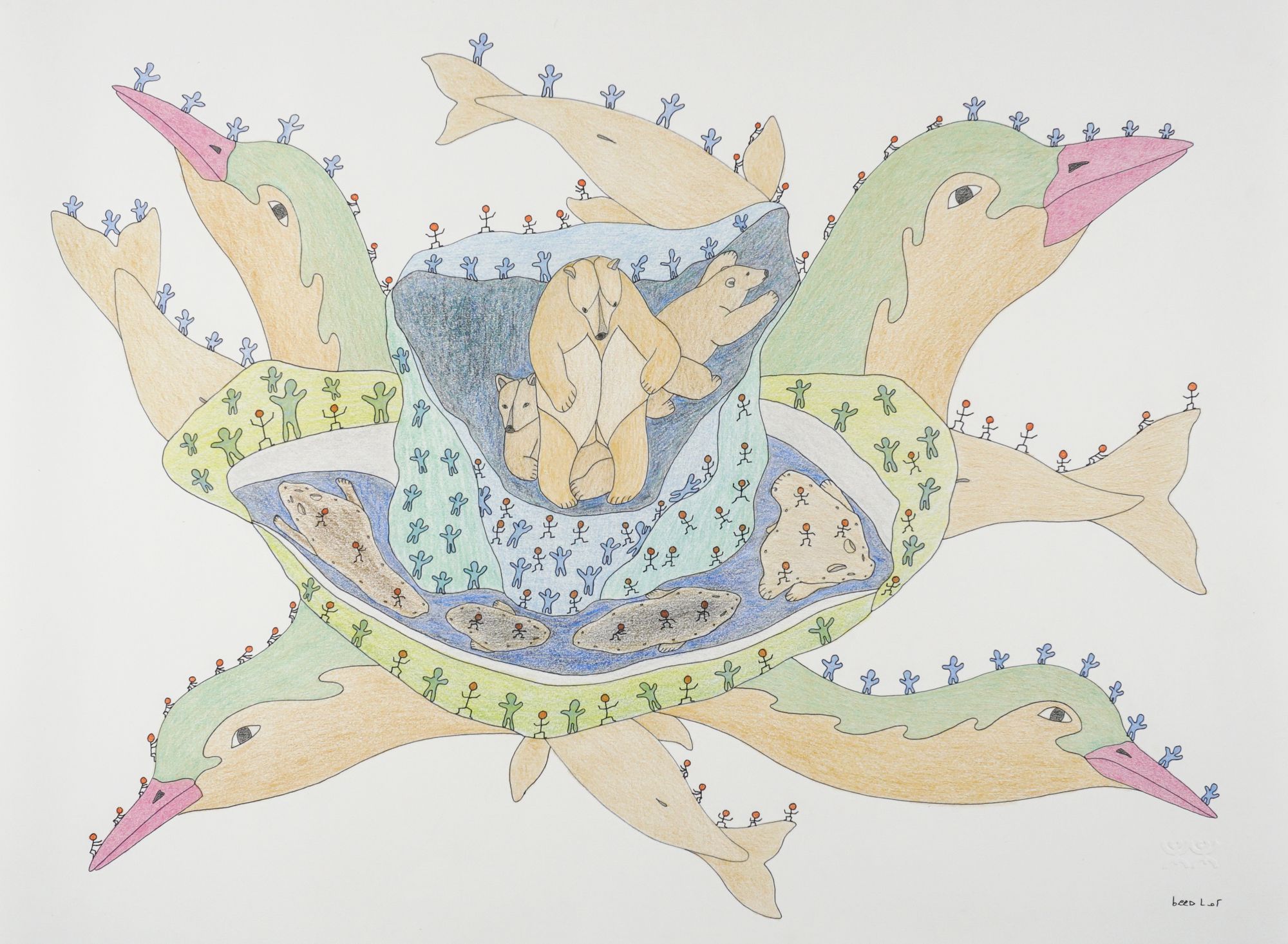
Coloured pencil & ink
22 x 29 5/8 in.
$2,600 CAD
"People arriving to a new camp. They are celebrating and happy because it has some fresh water and animals, on and around the island."
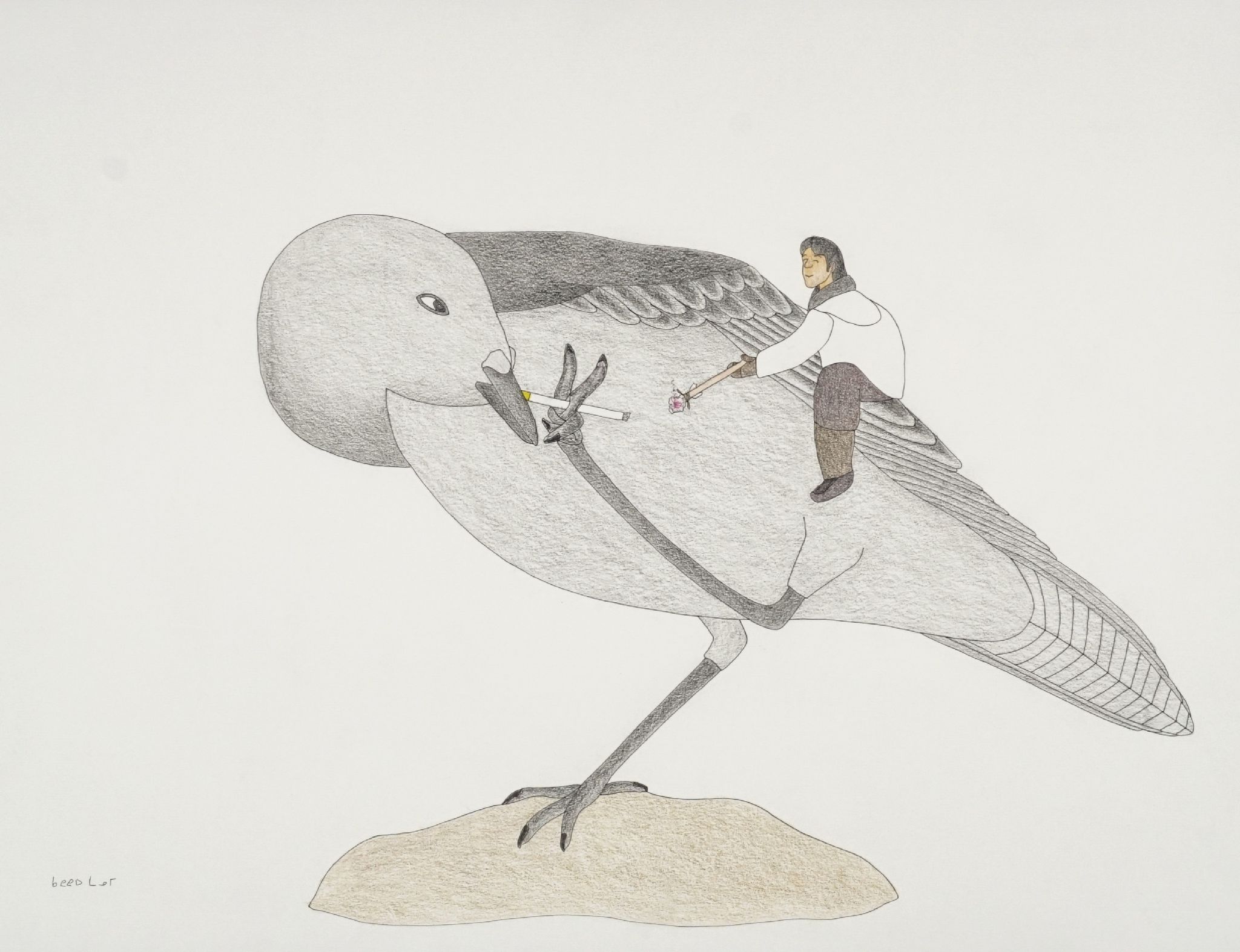
coloured pencil, ink
23 x 30 in.
SOLD
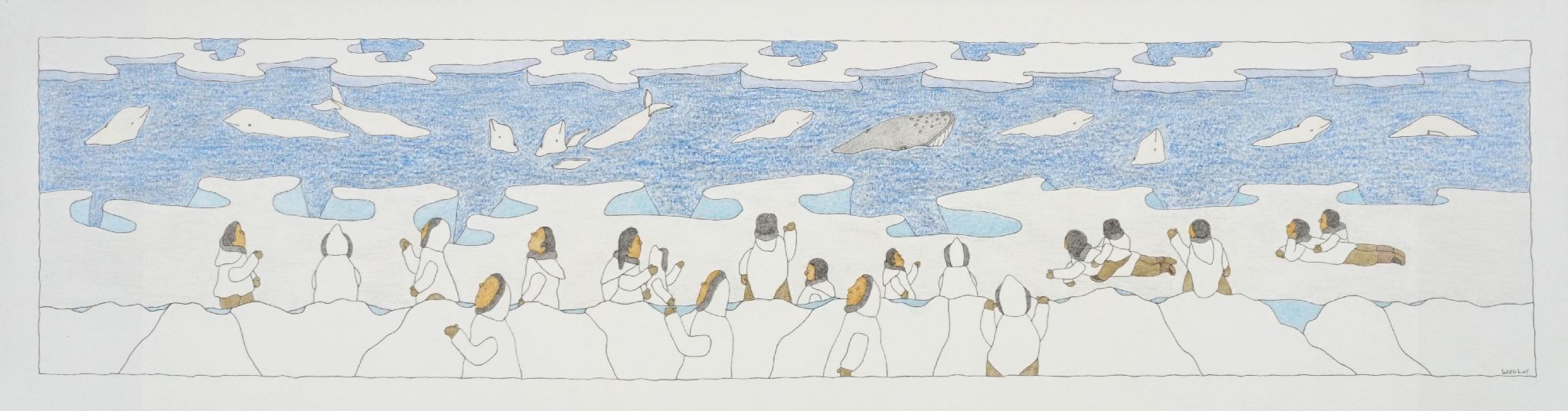
coloured pencil, ink
13 x 49 1/2 in.
$3,400 CAD
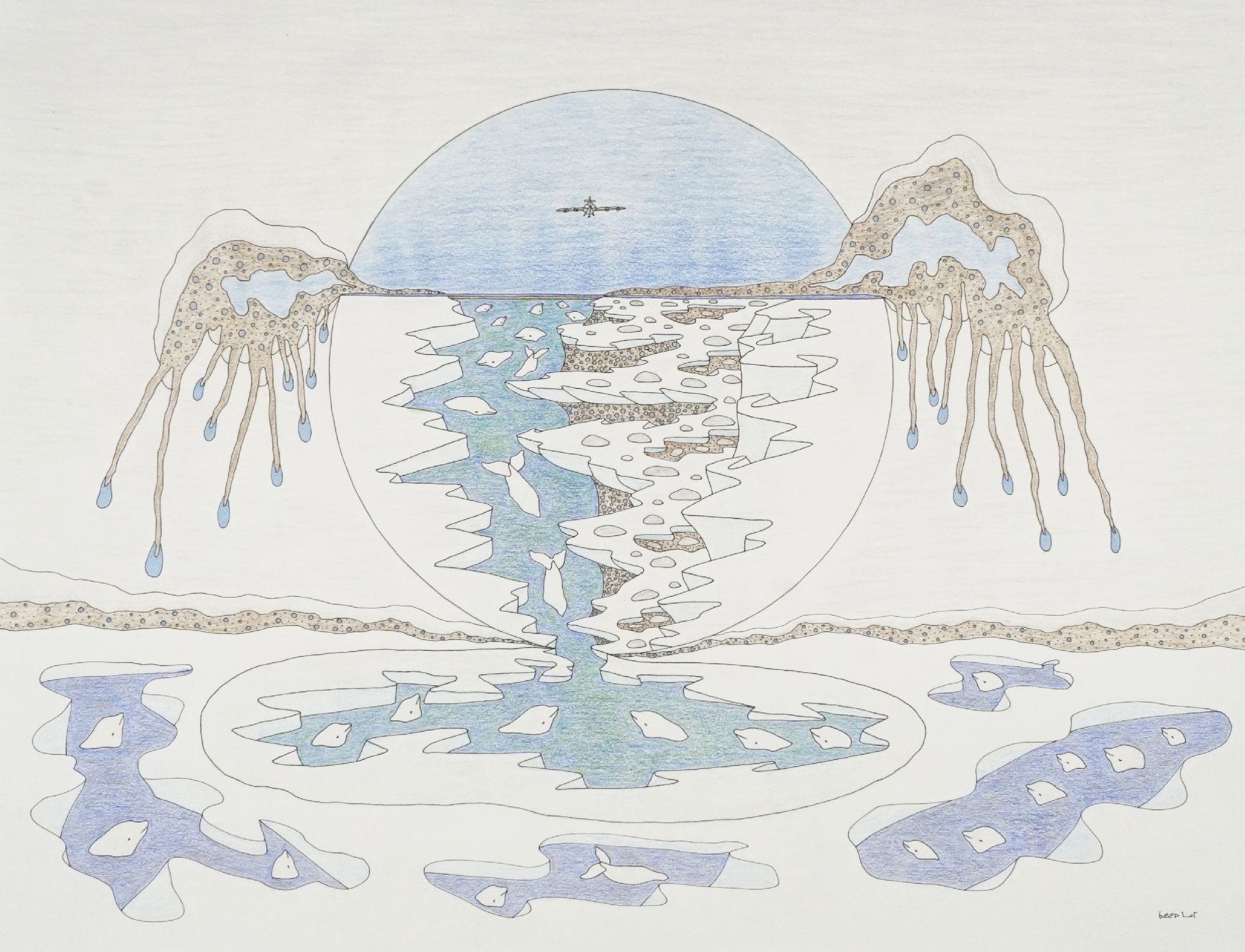
"Welcoming the arrival of the migrating whales."
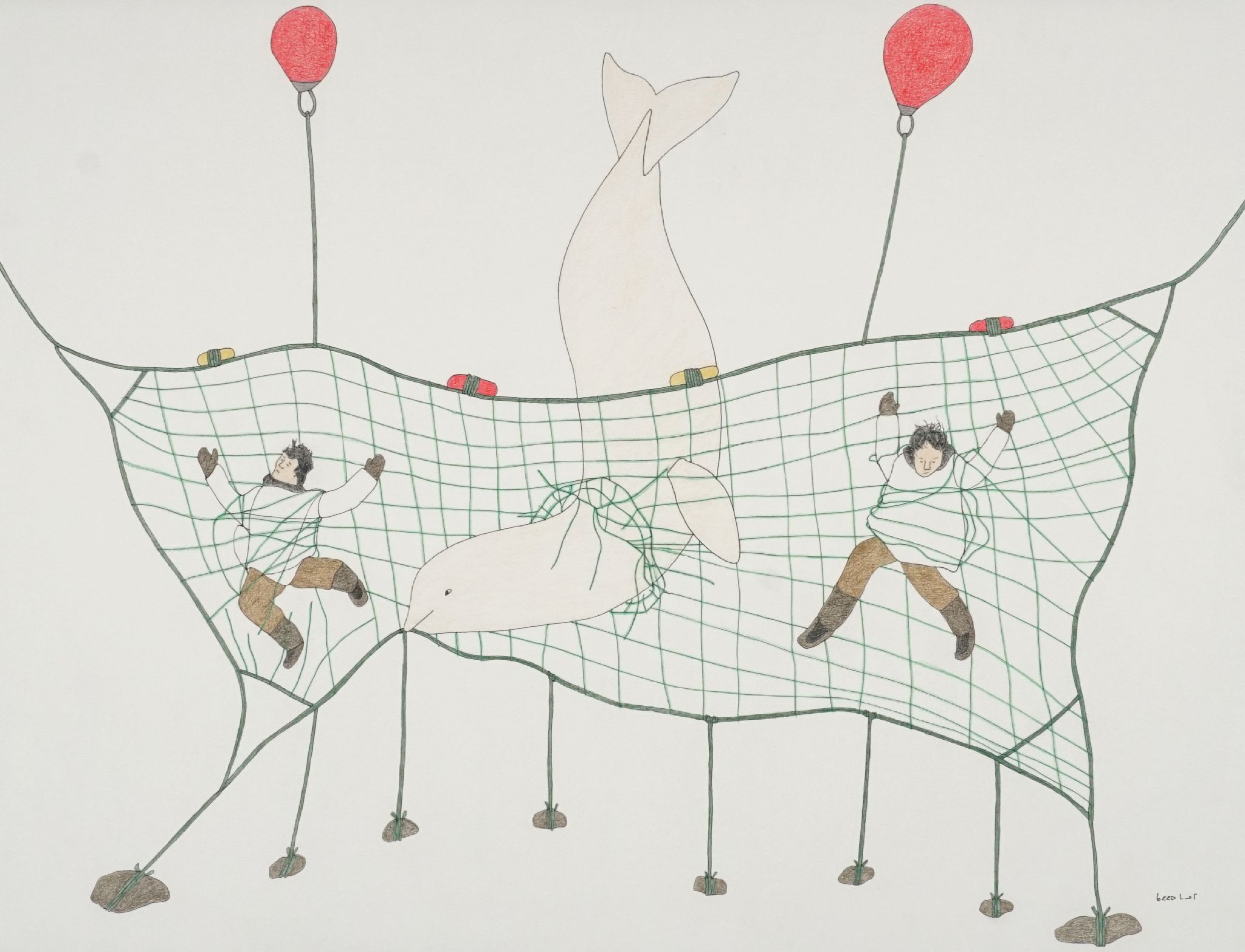
coloured pencil, ink
23 x 30 in.
SOLD
"Hunters trying to take beluga off of their net accidentally went overboard and got tangled in the nets. Now the beluga is trying to get free to rescue him."
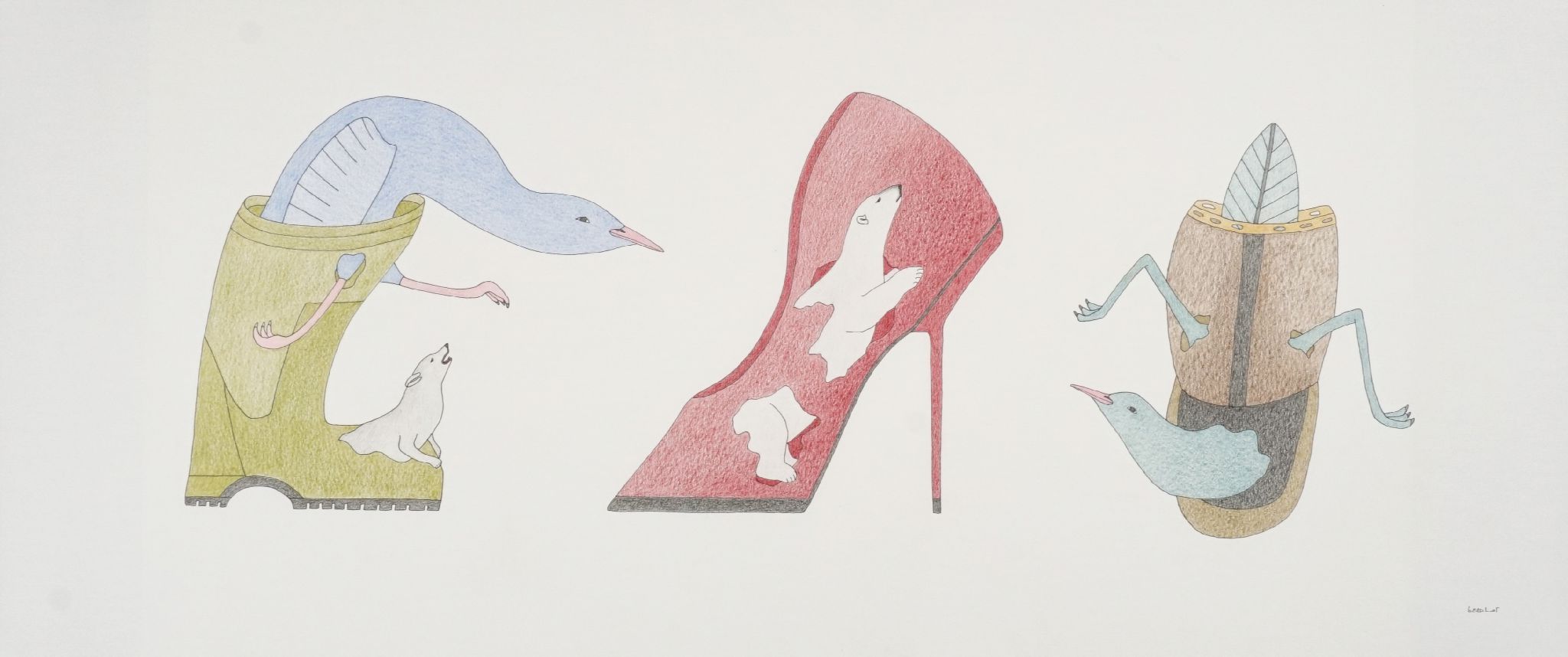
coloured pencil, ink
21 3/8 x 50 1/8 in.
$3,400 CAD
"All the animals living in shoes are frustrated by the noise made by the blue bird."
coloured pencil, ink
22 1/8 x 50 in.
$3,400 CAD
coloured pencil, ink
23 x 30 in.
SOLD
coloured pencil, ink
25 3/8 x 50 1/8 in.
$3,400 CAD
coloured pencil, ink
28 1/2 x 50 1/8 in.
$3,400 CAD
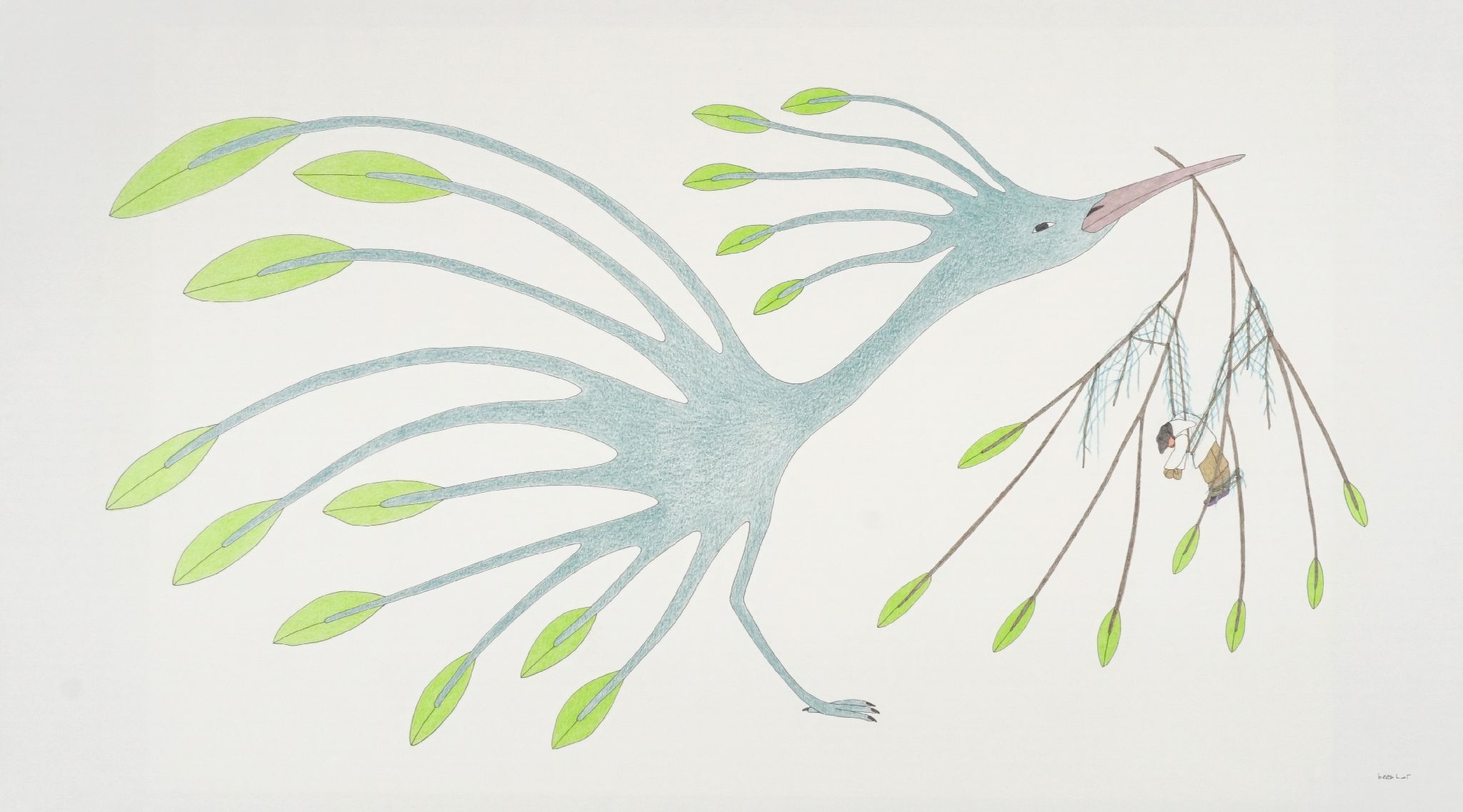
"Leaf bird finds a little person tangled in the leaves."
coloured pencil, ink
35 x 50 1/8 in.
$3,800 CAD
coloured pencil, ink
20 x 13 in.
$1,400 CAD
Coloured pencil
19 7/8 x 13 in.
$1,400 CAD
"German giant balloon arriving and people running for safety."
coloured pencil, ink
13 x 20 in.
$1,400 CAD
"Space shuttle challenger taking off."
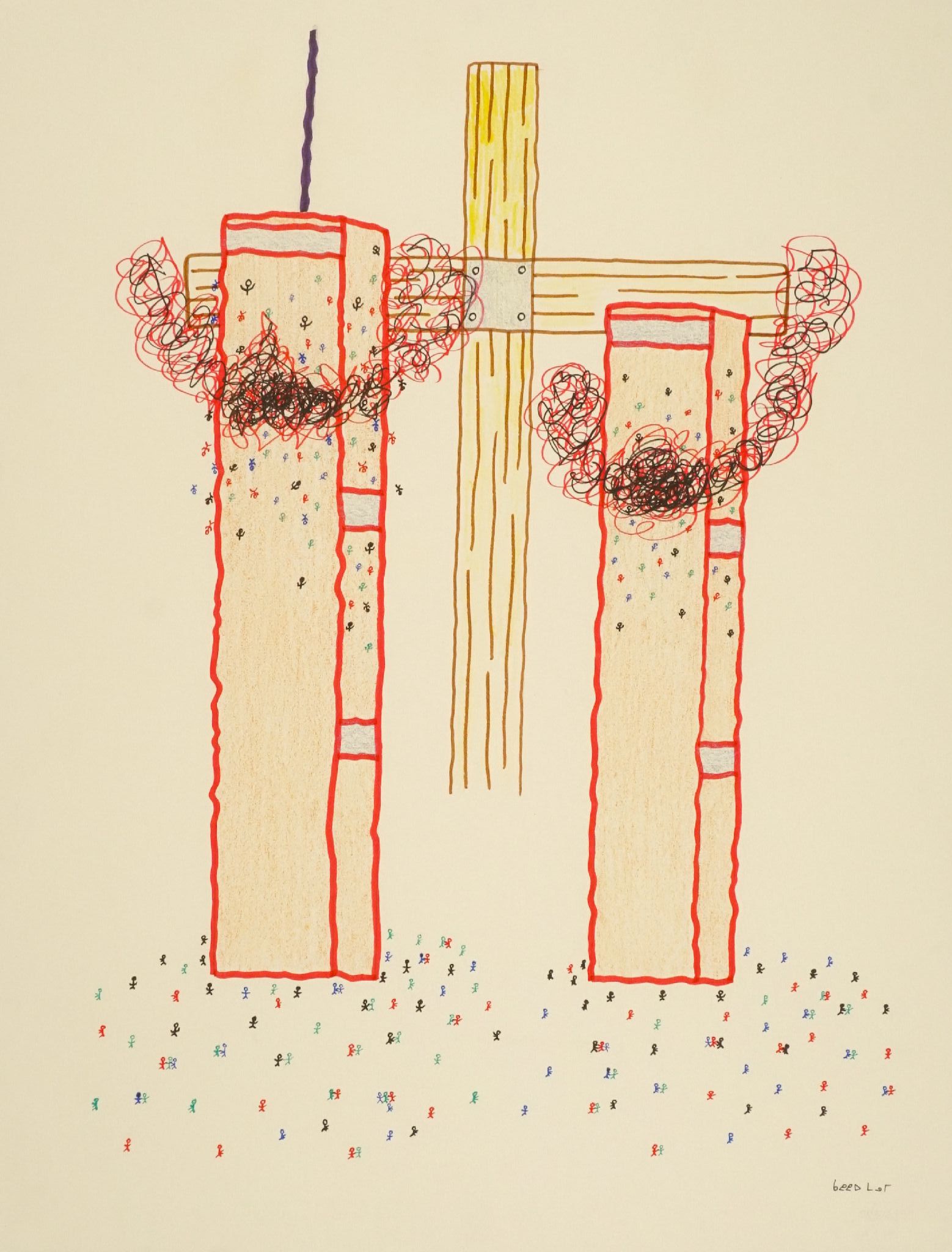
pentel, coloured pencil
26 x 20 in.
$1,800 CAD
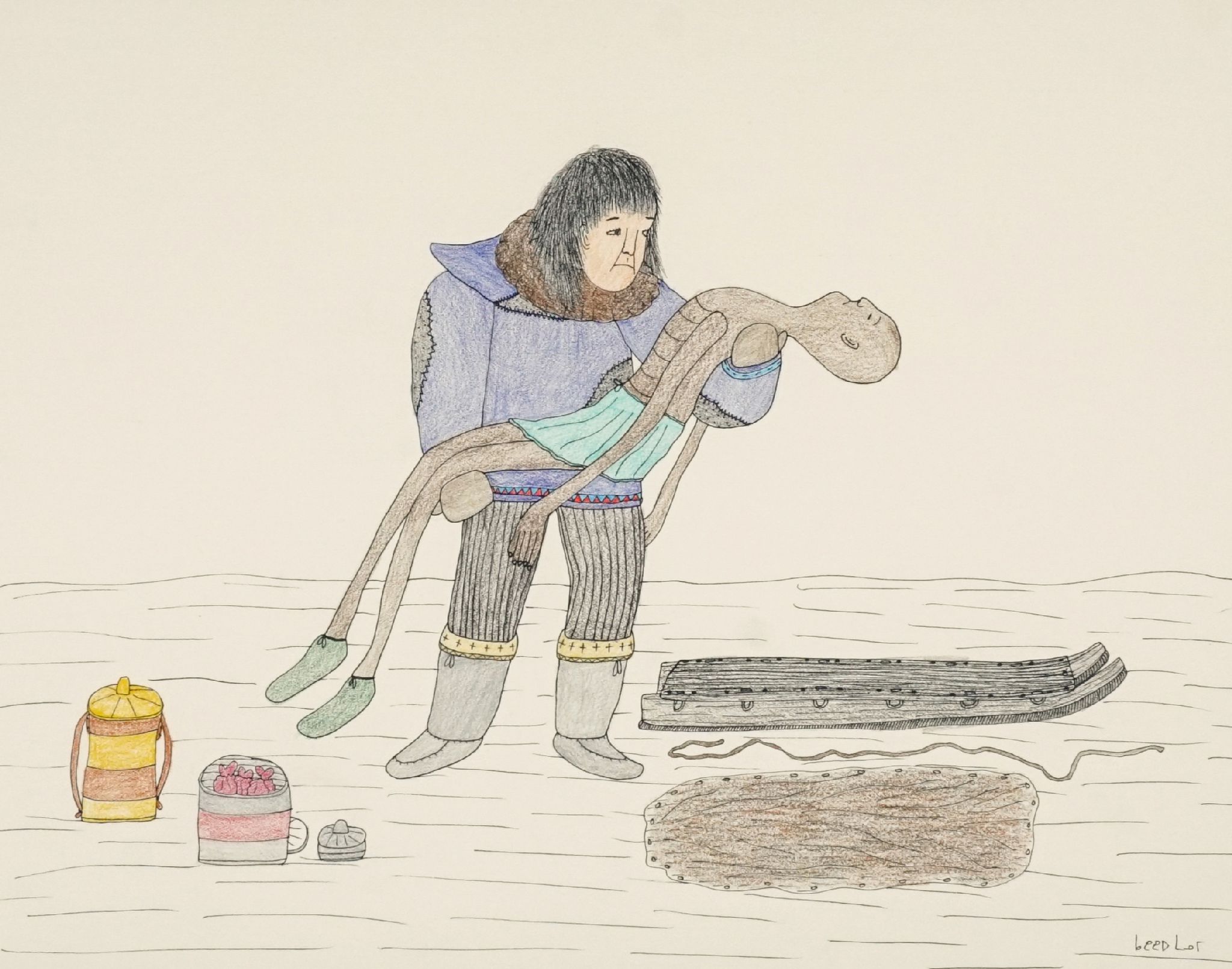
Coloured pencil
15 5/8 x 20 in.
$1,400 CAD
"Hunger is all over the world."
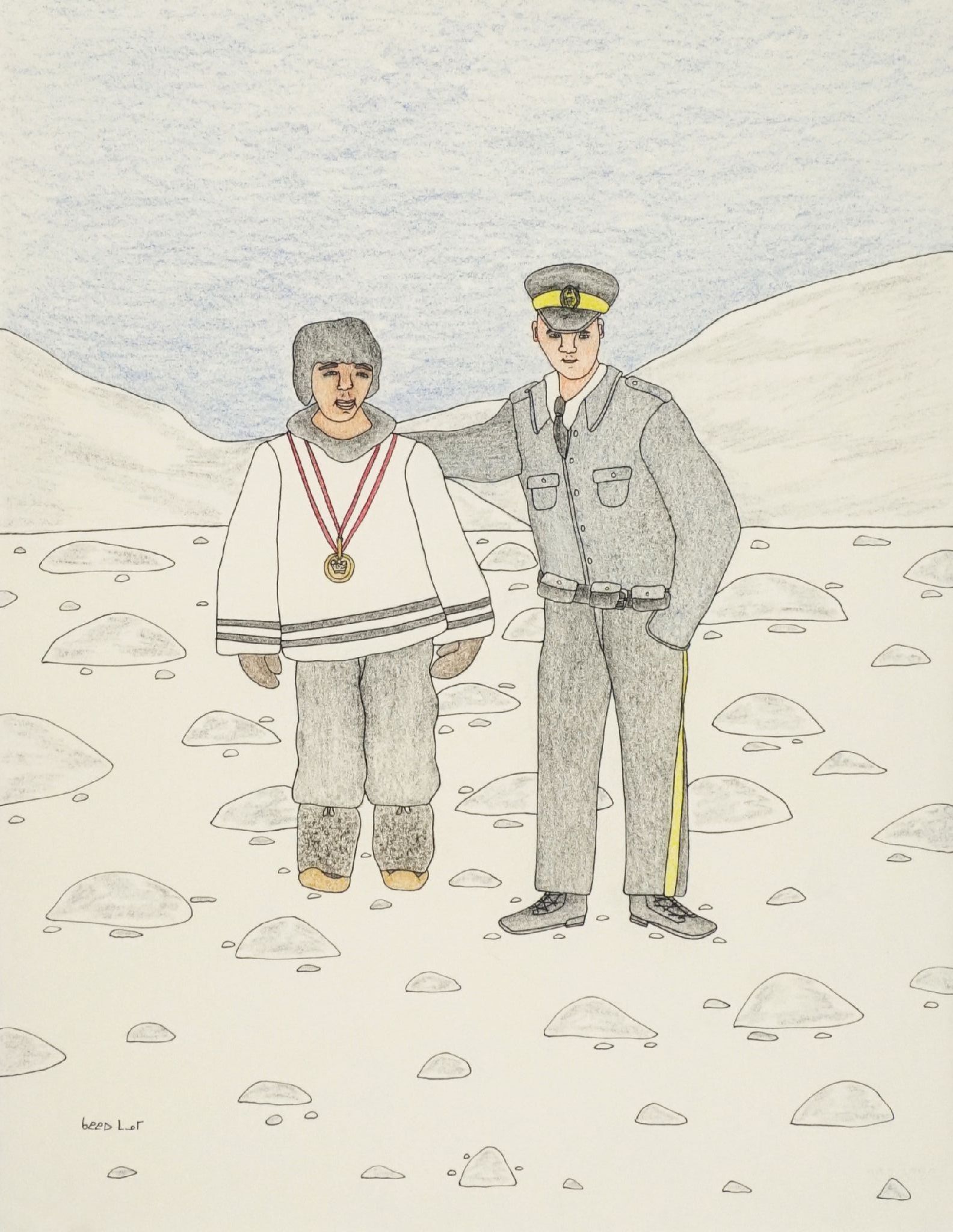
coloured pencil, ink
20 x 15 3/8 in.
$1,400 CAD
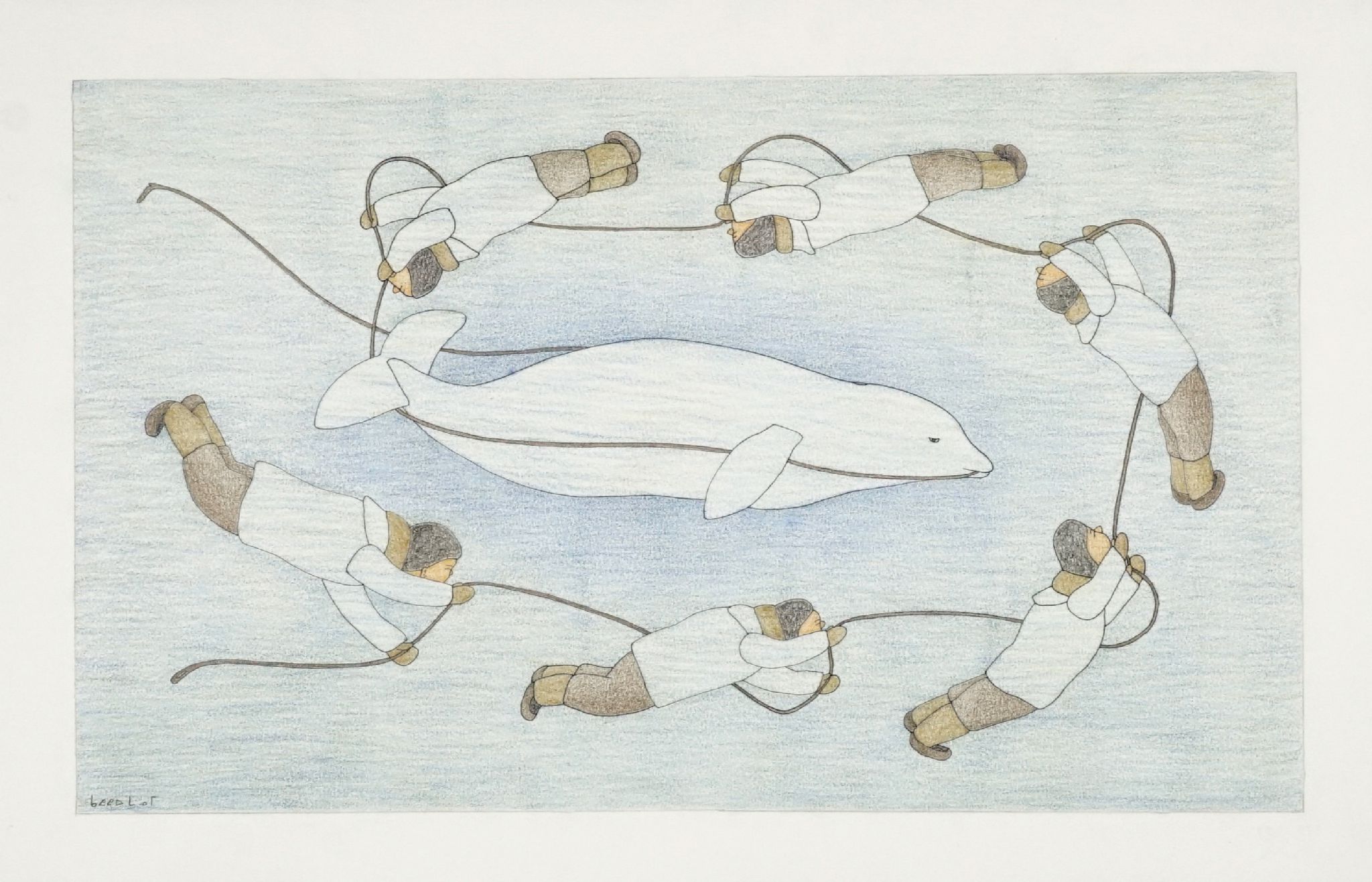
coloured pencil, ink
15 x 22 3/4 in.
SOLD
"Hunters being pulled by beluga."
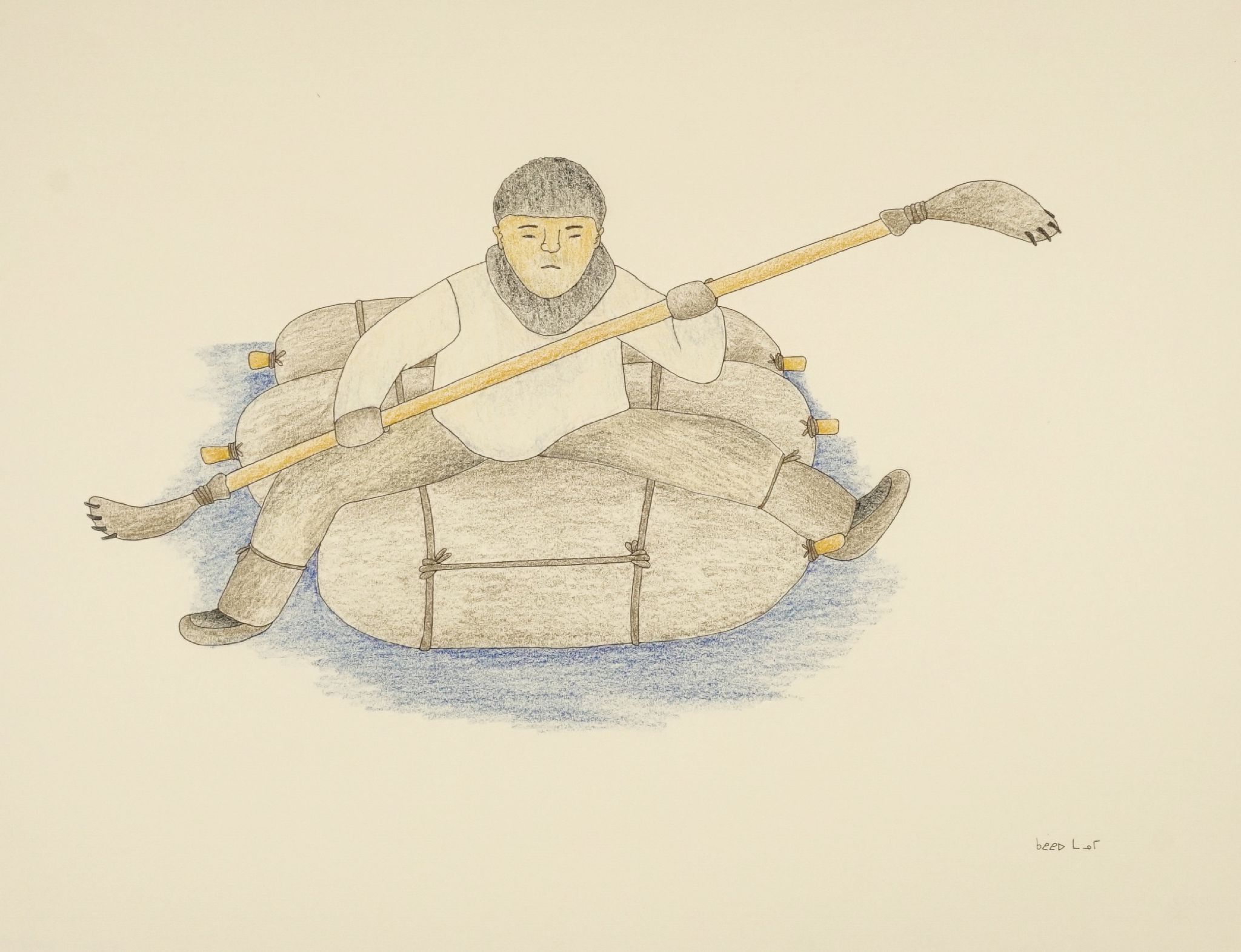
coloured pencil, ink
20 x 26 in.
$1,800 CAD
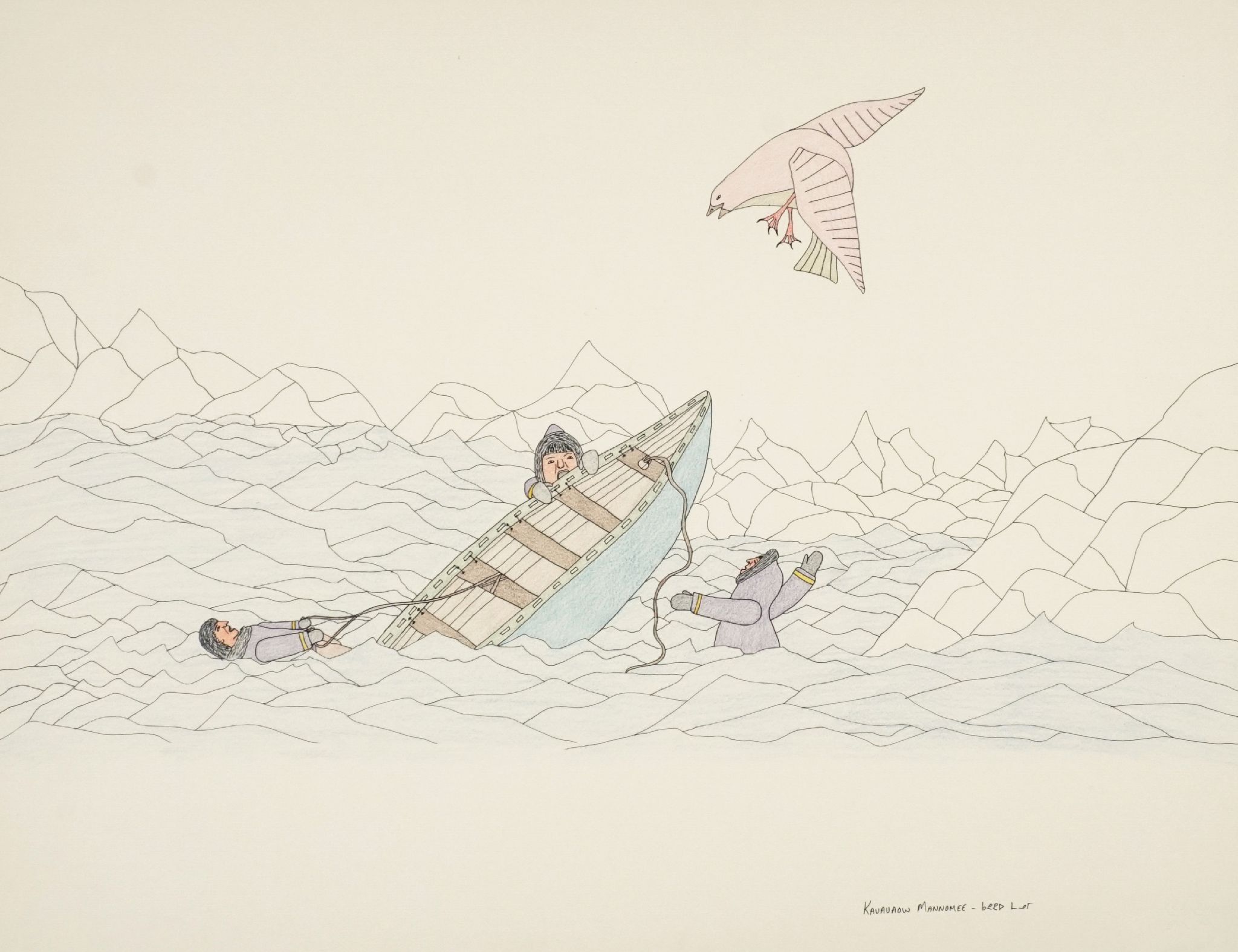
coloured pencil, ink
20 x 26 in.
$1,800 CAD
"Helpless seagull watches hunters falling overboard on a stormy day."
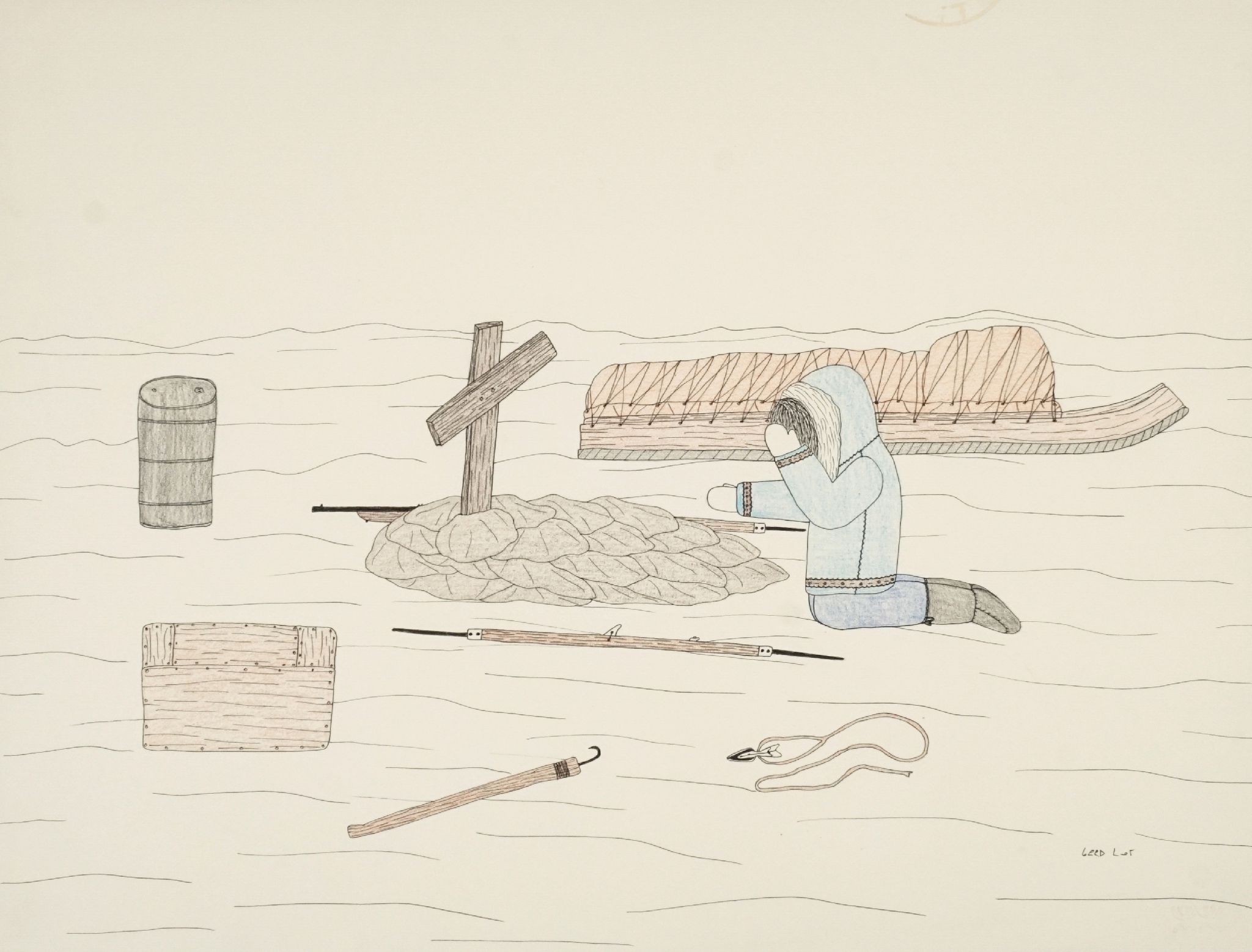
coloured pencil, ink
20 x 26 in.
$1,800 CAD
"The young mans grandfather became ill after a successful but long hunting trip when heading back to camp."
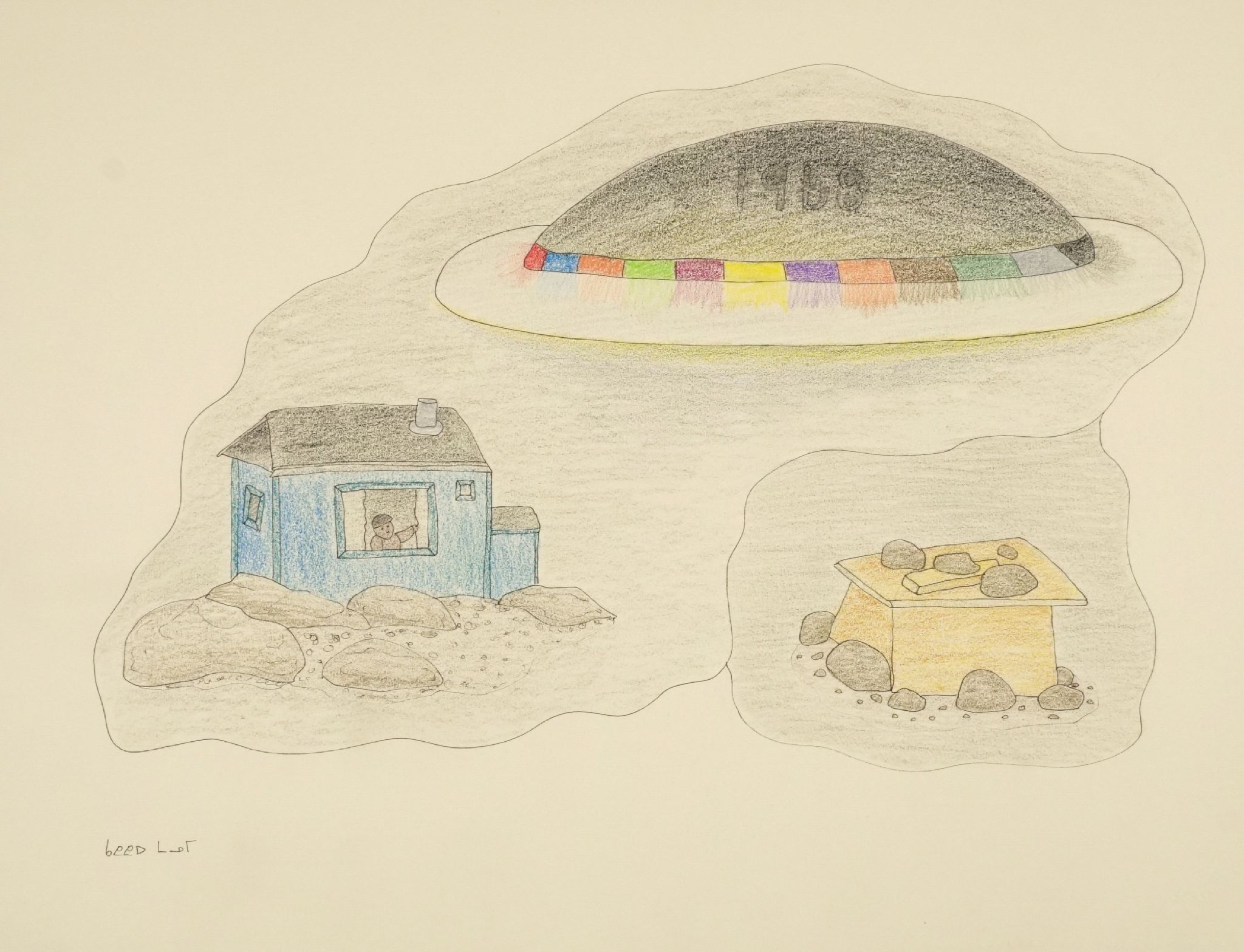
Coloured pencil
20 x 26 in.
$1,800 CAD
"Invaded by UFO in 1968 in Kinngait."
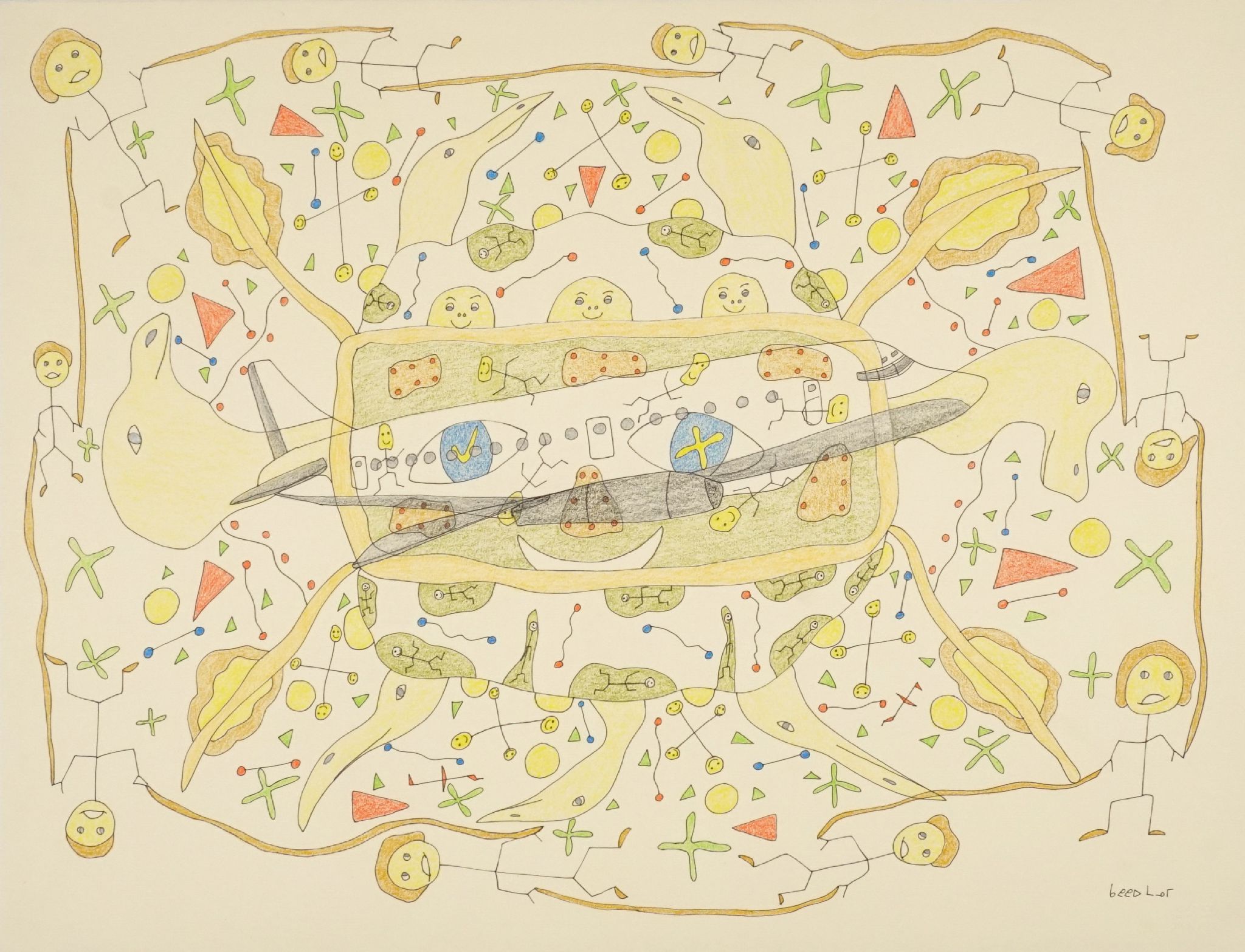
coloured pencil, ink
20 x 26 in.
$1,800 CAD
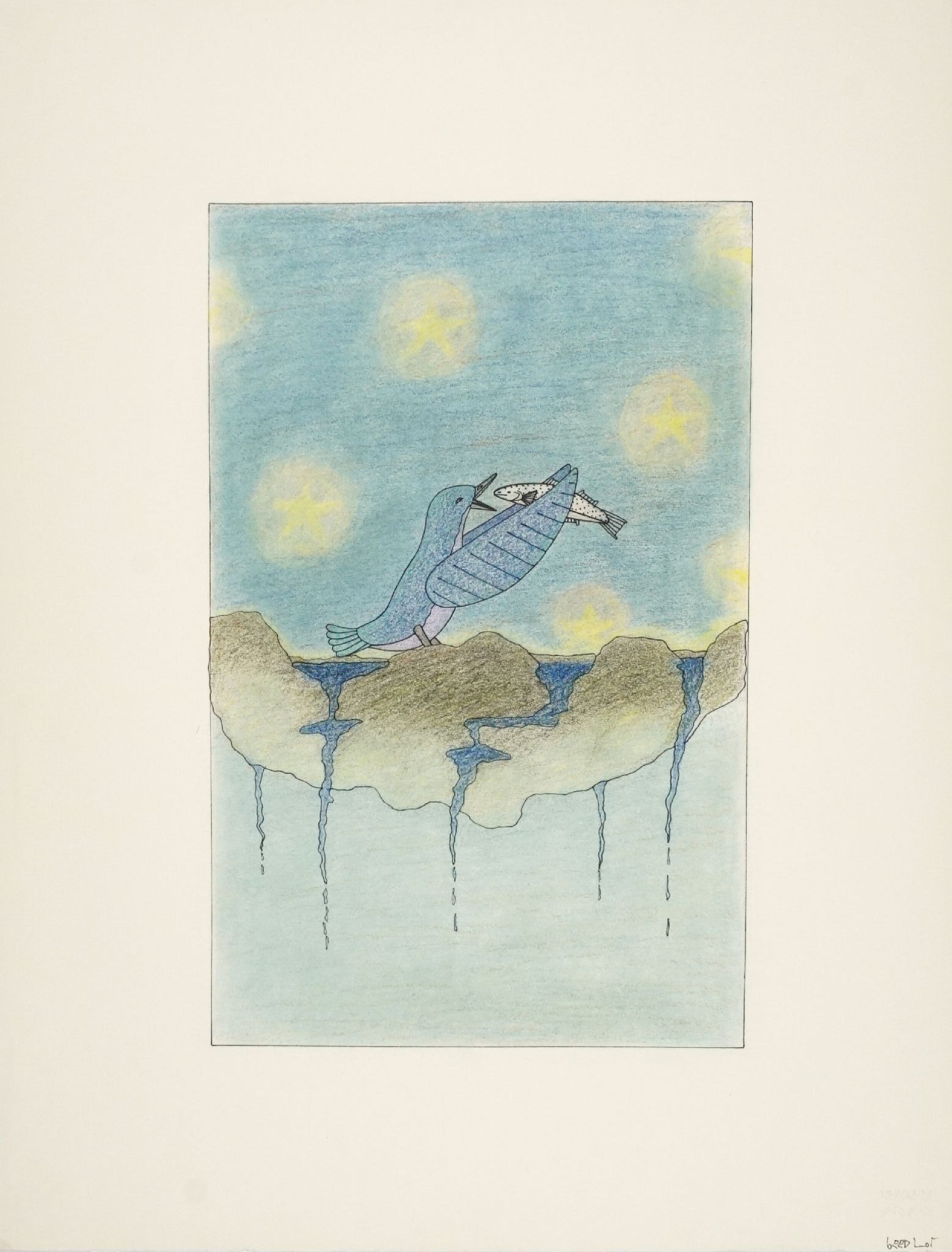
Coloured pencil
25 7/8 x 19 5/8 in.
$1,800 CAD
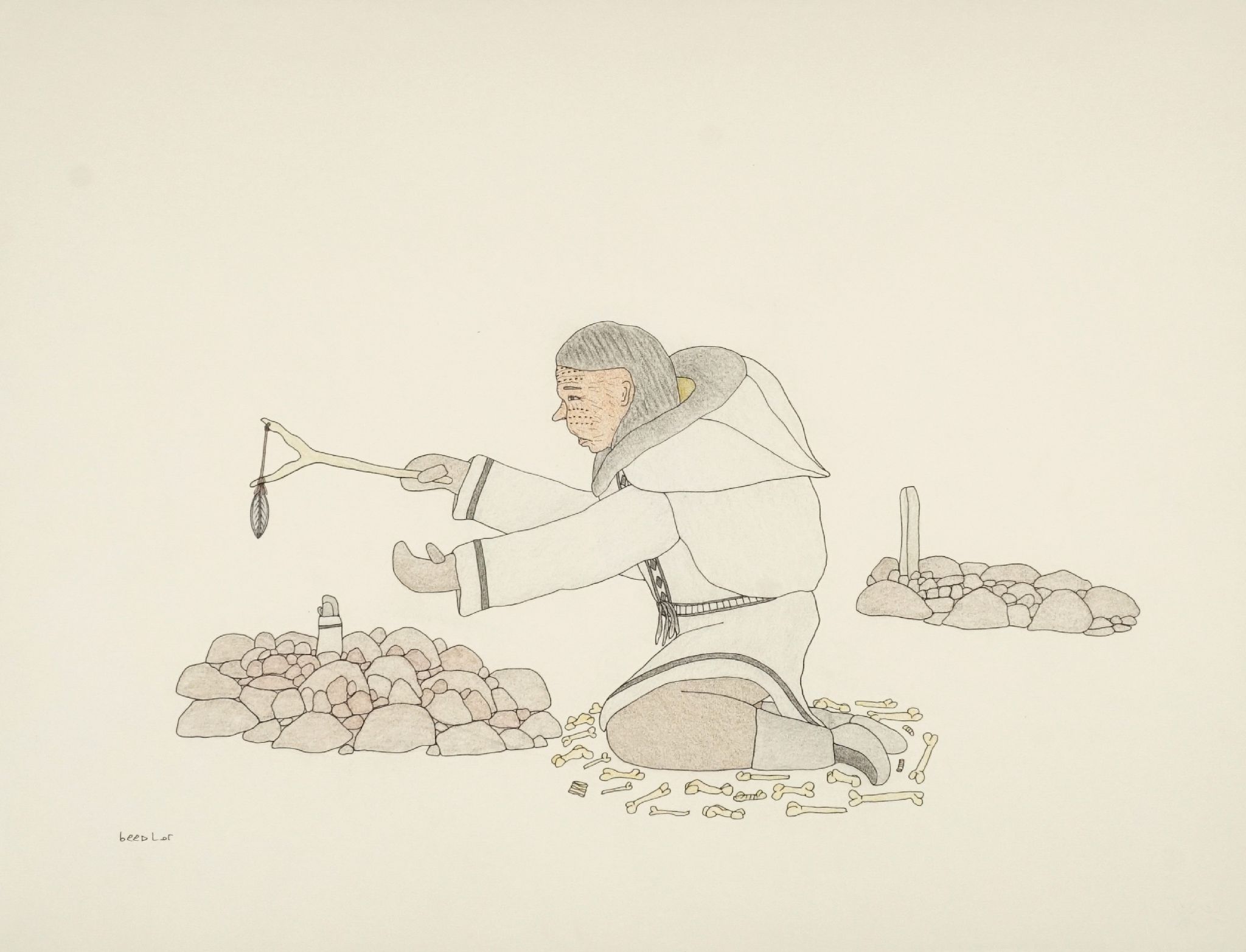
coloured pencil, ink
20 x 26 in.
$1,800 CAD
"Shaman woman trying to resurface her dead child. The bones around her are to help her to communicate to her spirit helpers."
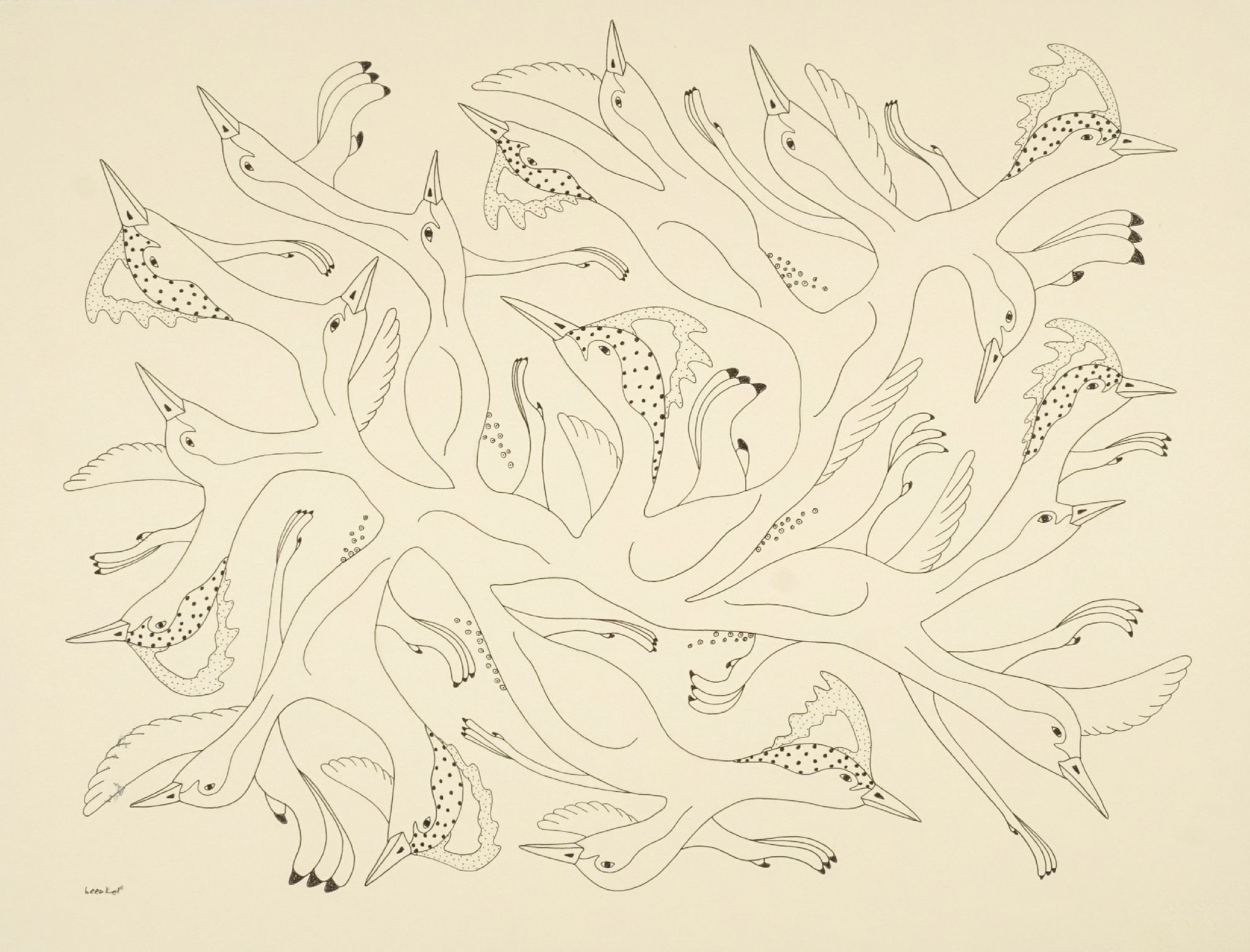
Ink
20 x 26 in.
SOLD
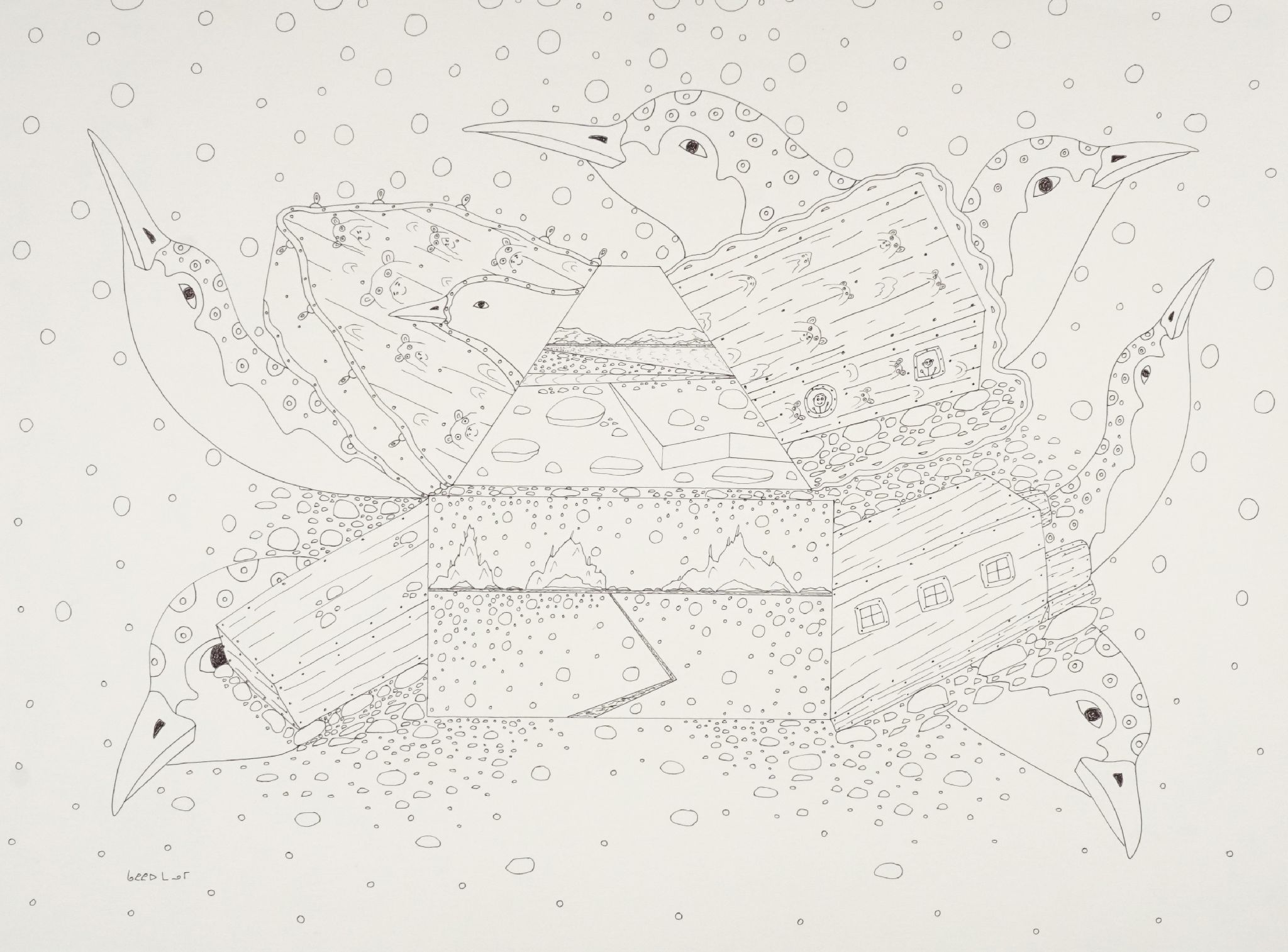
"Loons stuck in one body."
Ink
20 x 26 1/8 in.
SOLD
"Little people making a ship for moving to other hunting grounds."
coloured pencil, ink
19 3/4 x 26 in.
$1,800 CAD
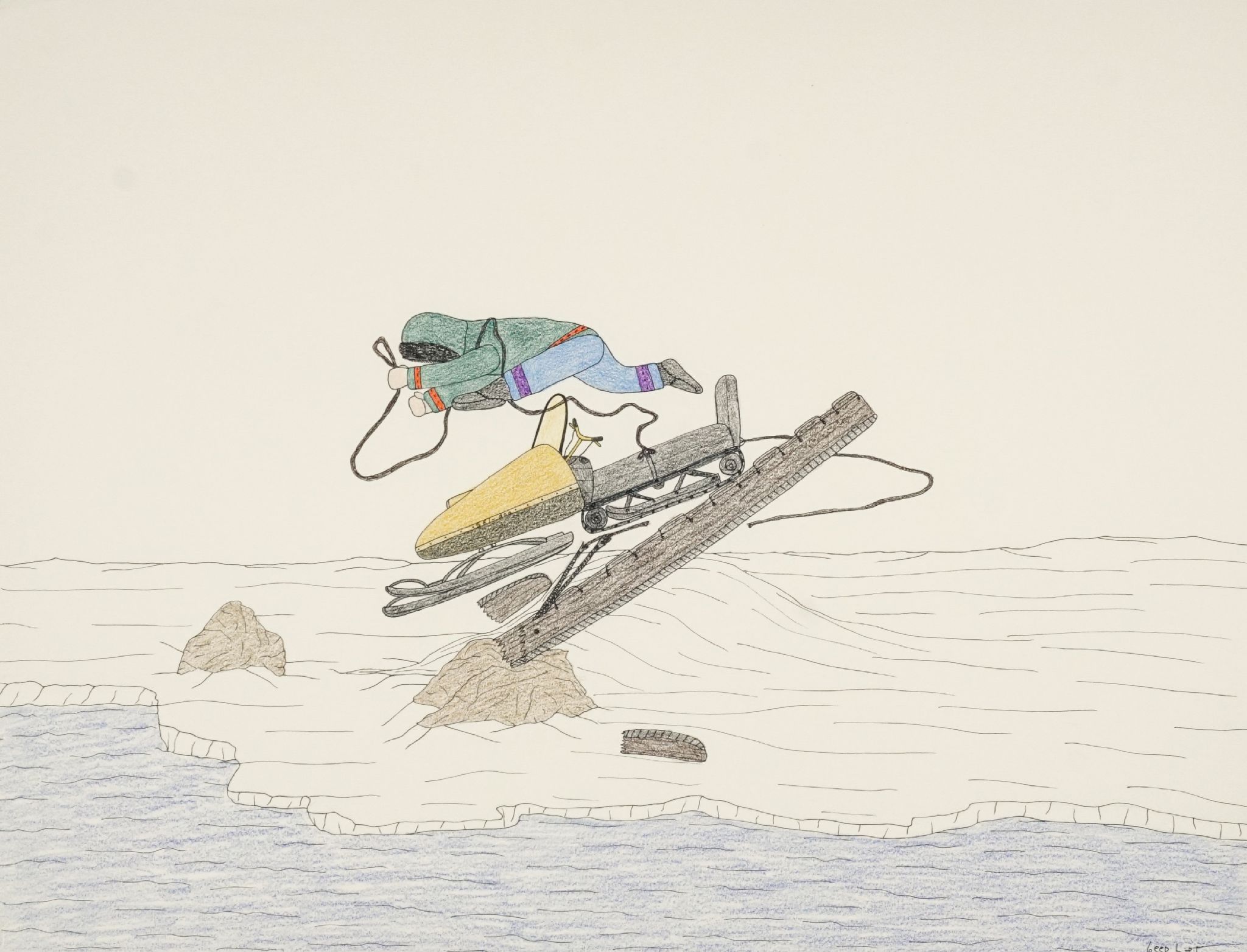
"My komatik hit a rock and broke and I flew with my snowmobile."
ink
23 x 30 in.
$2,600 CAD
coloured pencil, ink
26 x 20 in.
$1,800 CAD
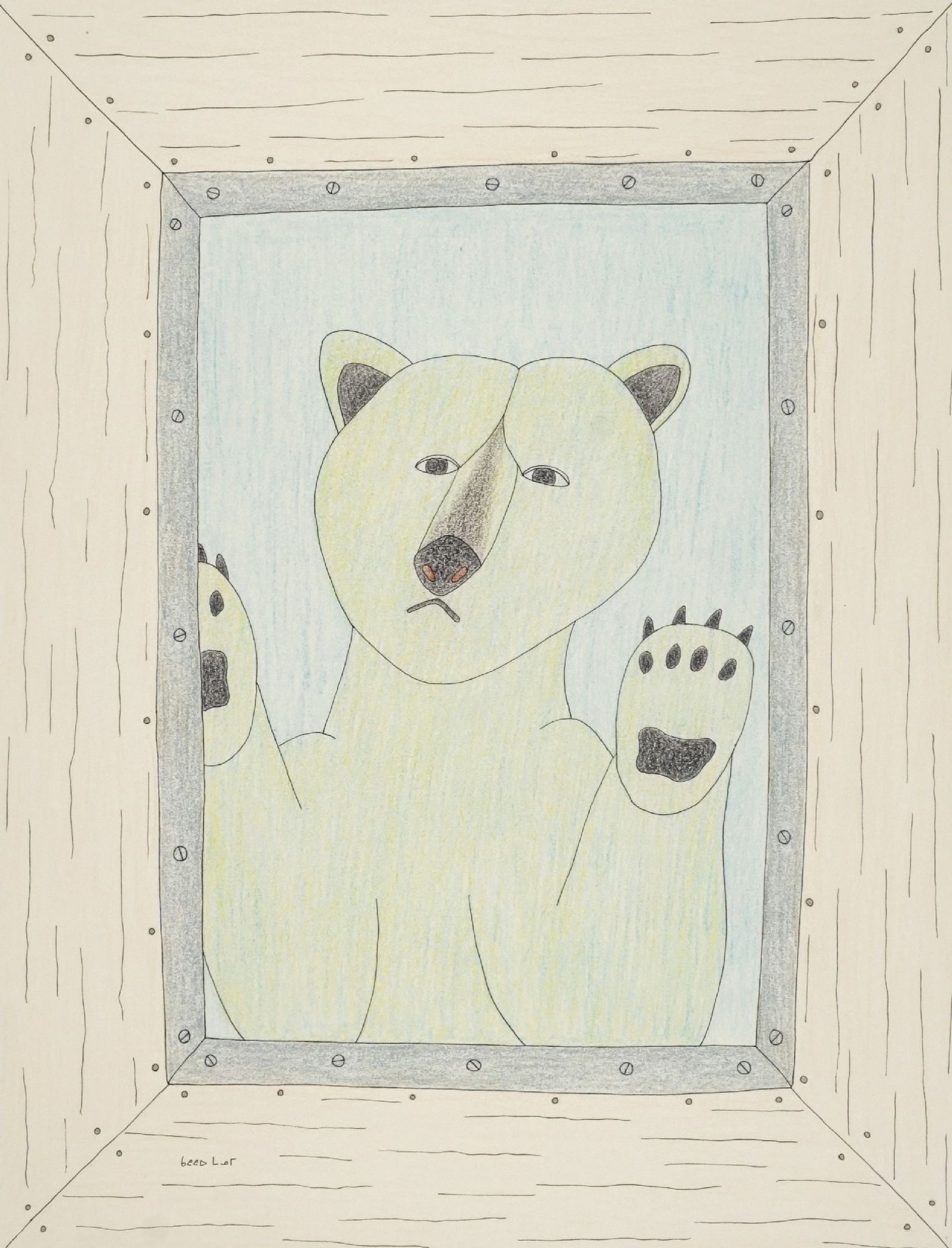
"Polar bear looking inside the cabin window."
coloured pencil, ink
19 7/8 x 26 in.
$1,800 CAD
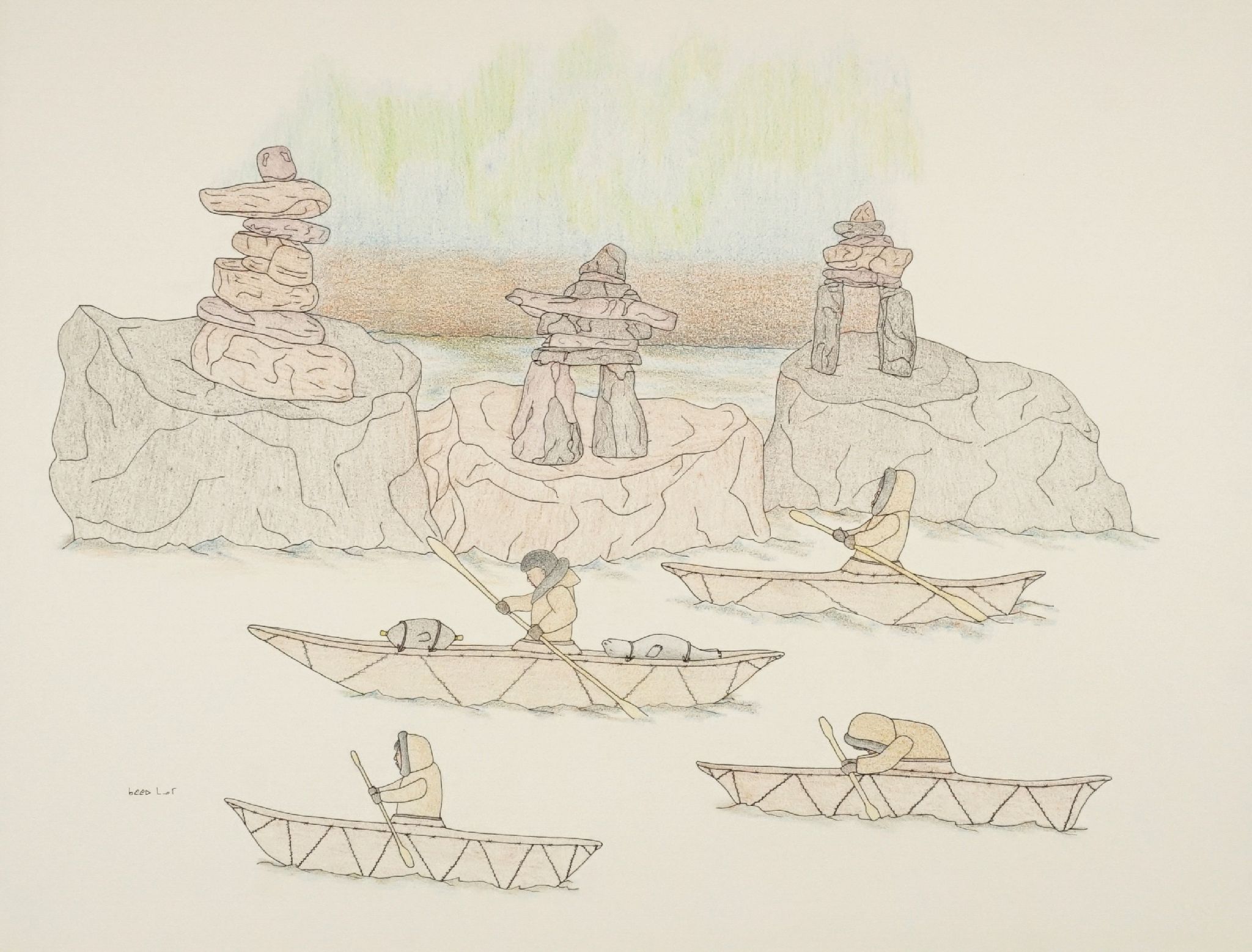
"After a long successful day of seal hunting, tired hunters coming back on a beautiful evening with lots of Northern lights."
coloured pencil, ink
25 1/2 x 19 5/8 in.
$1,800 CAD
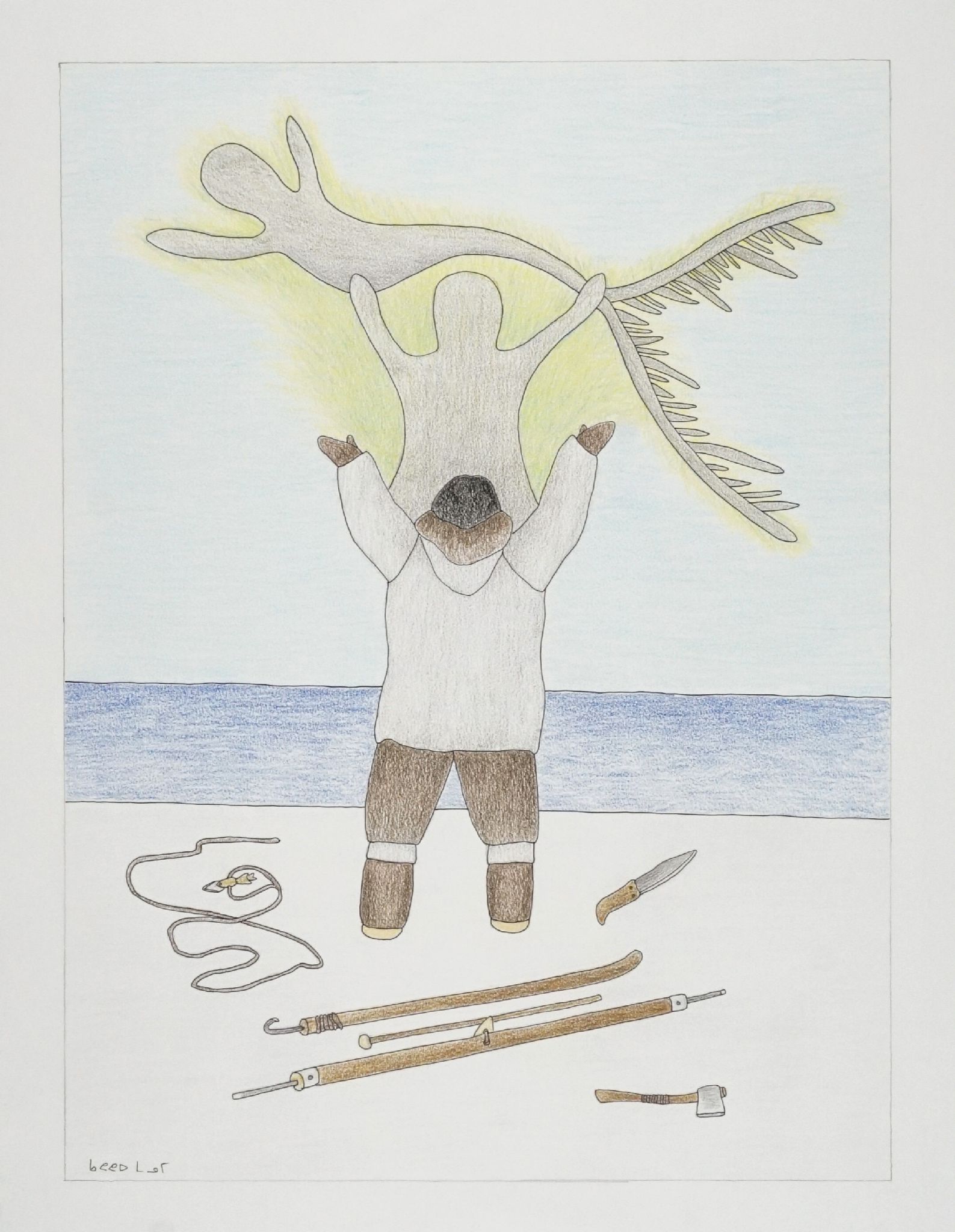
"A hunter down at the floe edge seeking help from the spirits for catching animals."
coloured pencil, ink
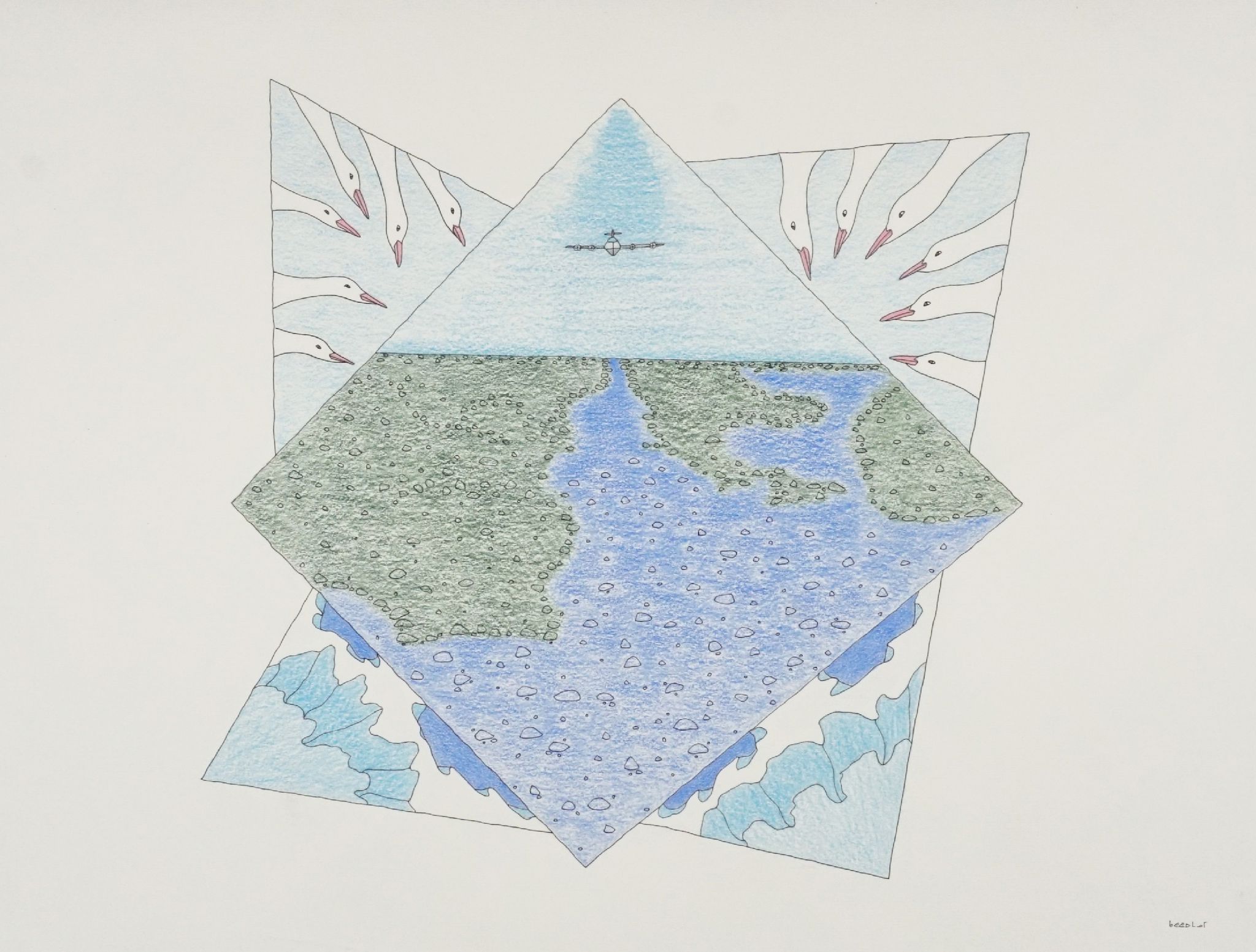
23 x 30 in.
$2,600 CAD