
Arnaqu Ashevak
A Retrospective
March 12 – April 4, 2026

BOWHEAD WHALING SHIP, 2005, Stone, antler, sinew, ivory, whalebone, 27 x 22 x 10 in.
I knew when I first interviewed Arnaqu Ashevak in 1998 that he was very different from any of his fellow Kinngait artists. During the interview, he mentioned that two of his favourite artists were from Europe – Alexander Calder and M.C. Escher. He went on to say, “sometimes I look at art magazines, and get inspiration from that. Lot of good stuff in there. Magazines with artists from around the world. I subscribed 3 months ago to that art magazine, that comes annually six times” [1]. This was a startling moment in the interview, and one which immediately signaled to me that this was truly a unique and fascinating artist.
Ashevak had an endless curiosity about the world and was open to any new inspiration for his art, regardless of the source. A television documentary about the Holocaust led to a haunting drawing and monoprint. An encounter with a book of Celtic designs led the way to a decorated drawing of a bird. The famous sculpture of a she-wolf nursing Romulus and Remus, the founders of ancient Rome, is recreated in a drawing showing a husky dog nursing her pups alongside a human baby. Endless inventiveness combined with endless talent.
Ashevak first studied carving under artist Henry Evaluardjuk while in school in Iqaluit, later returning to Kinngait Studios to study printmaking. Despite being a technical savant, the word he often used when speaking of his work was imagination. He felt that it is imagination that inspires art for all artists. Ancient Inuit myths and legends, images from popular culture, or even the beauty he found in the Arctic landscape provided the seeds from which his works of art flowered.
Two major works in this exhibition show the combination of imagination and sheer technical brilliance in the handling of mixed media sculptures. Bowhead Whaling Ship (2005) is an immaculately detailed model of a 19th century European whaling ship. His technical mastery is evident in this complicated and yet elegant ship; the masts made of antler; the full billowing sails made of whalebone and the rigging and ladders painstakingly created of knotted sinew. Ashevak himself had not seen one of these ships, but he had seen illustrations and a film about the whalers. His admiration for these ships is clear from the perfect balance of the composition, with the counterpoint of the two whales in the water.
He also sensed another connection to himself; “I think I know about some of the descendants from those Northern whalers… I think my late adopted father [Johnniebo Ashevak] was descended from one of those whalers” [3].
Ashevak drew upon personal experiences and expressed them in his work, combining his technical skill with clear artistic visions. His final sculpture, Archangel (2008/09) is an enigmatic ‘tour de force’, created in the last year of his life before his premature death from cancer.
Ashevak often reflected on his relationship to spiritual forces: “you can believe in them and they are there, like a guardian angel” [2].
The subject matter is poignant; an archangel holds up a shield and a sword beside a cairn that features a heraldic image of an Inukshuk. In the absence of an interview about the sculpture, one can only wonder if Ashevak was actualizing his own guardian angel in stone.
We are fortunate to have been able to collect these works for presentation together, many from the collection of John and Joyce Price who knew the artist personally and greatly admired his work. It is an opportunity to introduce a new generation of Inuit art collectors and enthusiasts to one of the great talents from Kinngait, who led the way for others with inspiration, talent, and hard work.
-Patricia Feheley
- Interview conducted by Patricia Feheley with Arnaqu Ashevak, in person in Kinngait, 1998.
- Interview conducted by Patricia Feheley with Arnaqu Ashevak, telephone interview, 2004.
- A Filtered Vision: The World According to Arnaqu Ashevak by Patricia Feheley. Inuit Art Quarterly, Vol. 21 No. 2, Summer 2006.

Stone, antler, sinew, ivory, whalebone
27 x 22 x 10 in.
SOLD
"This is like a statement about something that happened a long time ago. I was watching a documentary and got an idea to make a whaling ship. They seemed complicated to me, with lots of sails and masts and rigging. The whalers were up here and some of the people from communities around Baffin are descended from them. I think my late adopted father [Johnniebo Ashevak] was descended from one of those whalers."
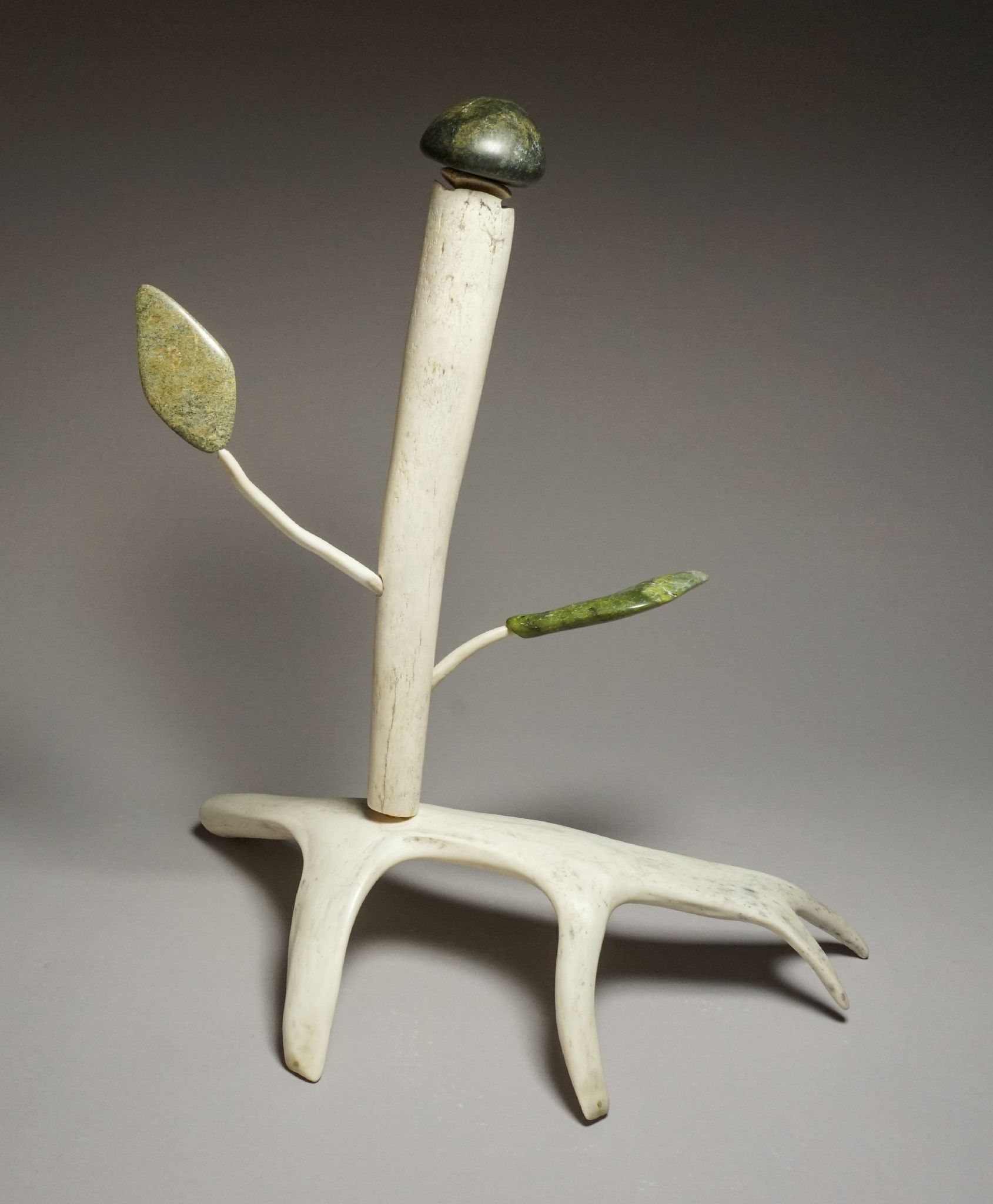
Stone, antler
19 x 16 x 11 in.
$2,400 CAD
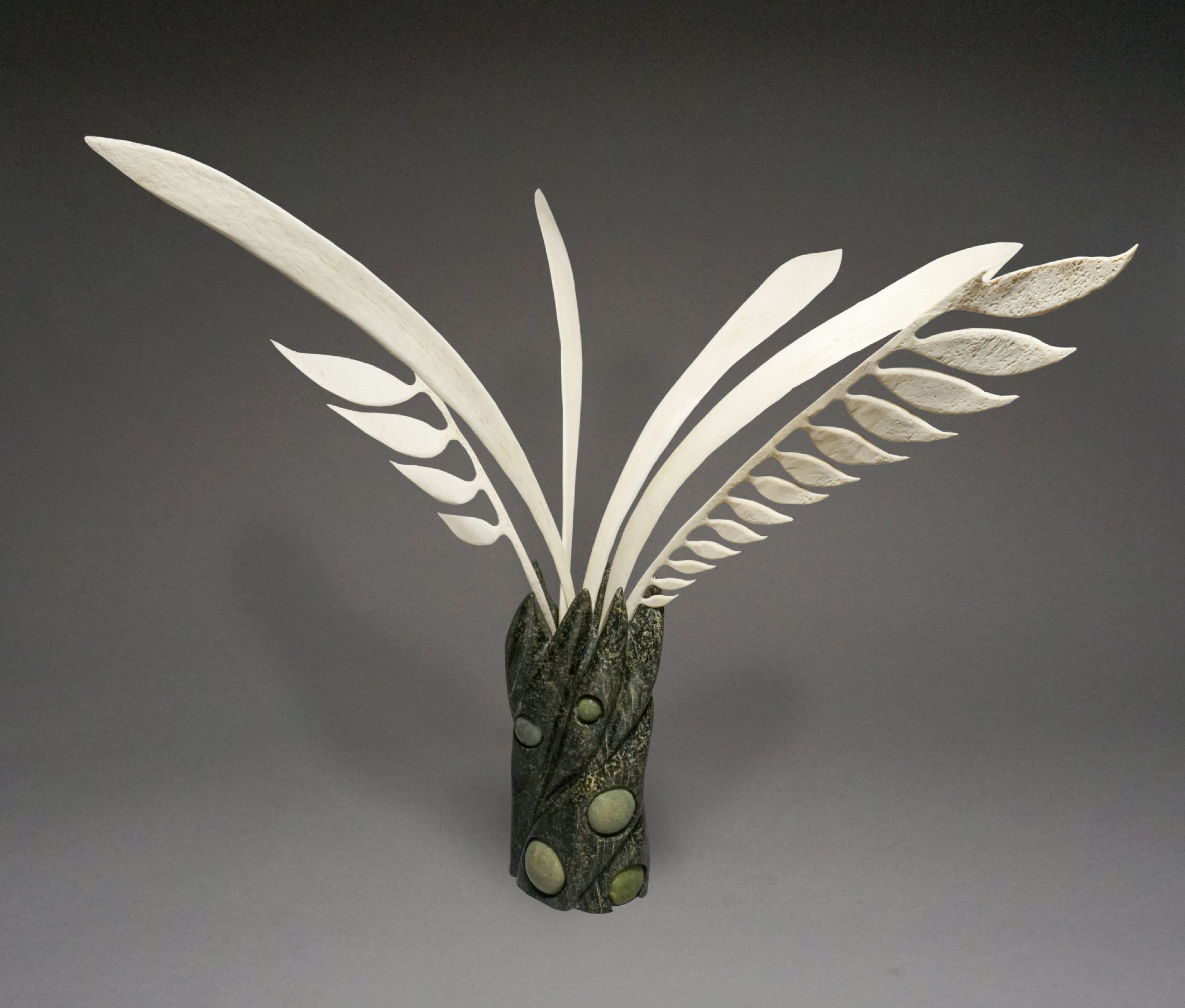
Stone & whalebone
28 x 18 x 11 in.
10,000 CAD
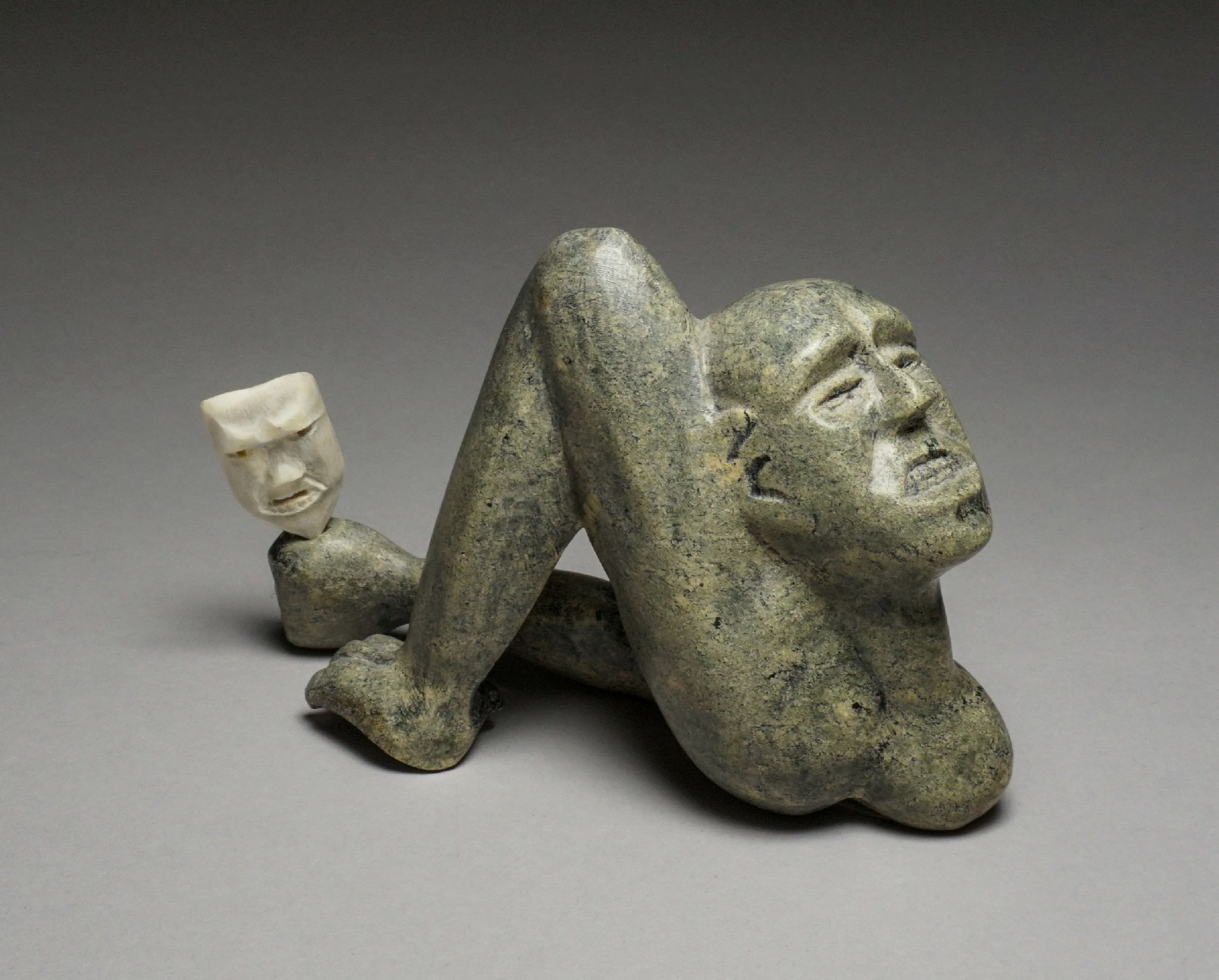
Stone & antler
4 1/2 x 7 x 2 1/2 in.
SOLD

Stone
13 x 14 x 5 in.
SOLD
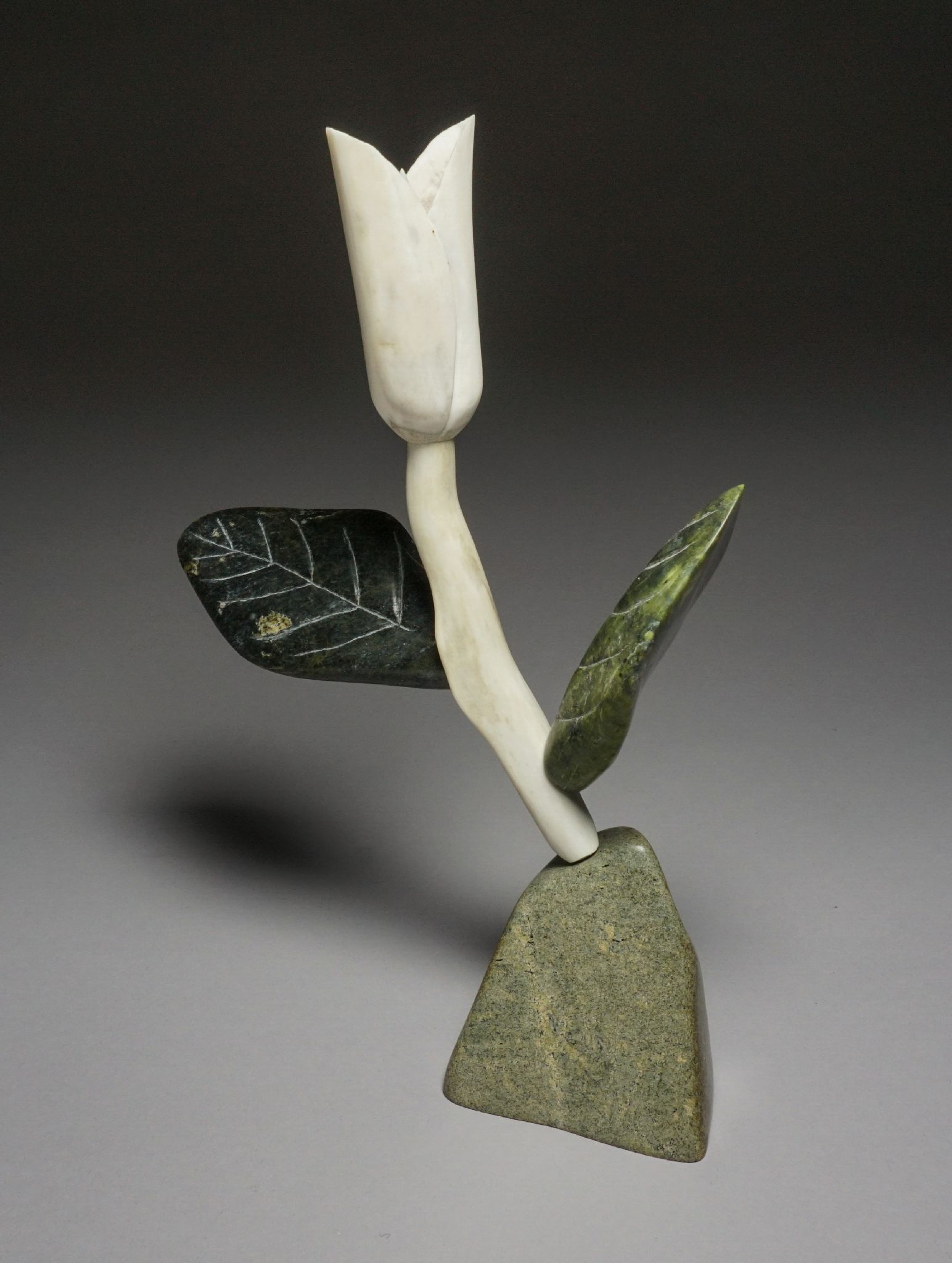
Stone & antler
13 x 10 1/2 x 4 3/4 in.
$3,000 CAD

Antler, stone, sinew
15 x 10 x 5 in.
$8,000 CAD
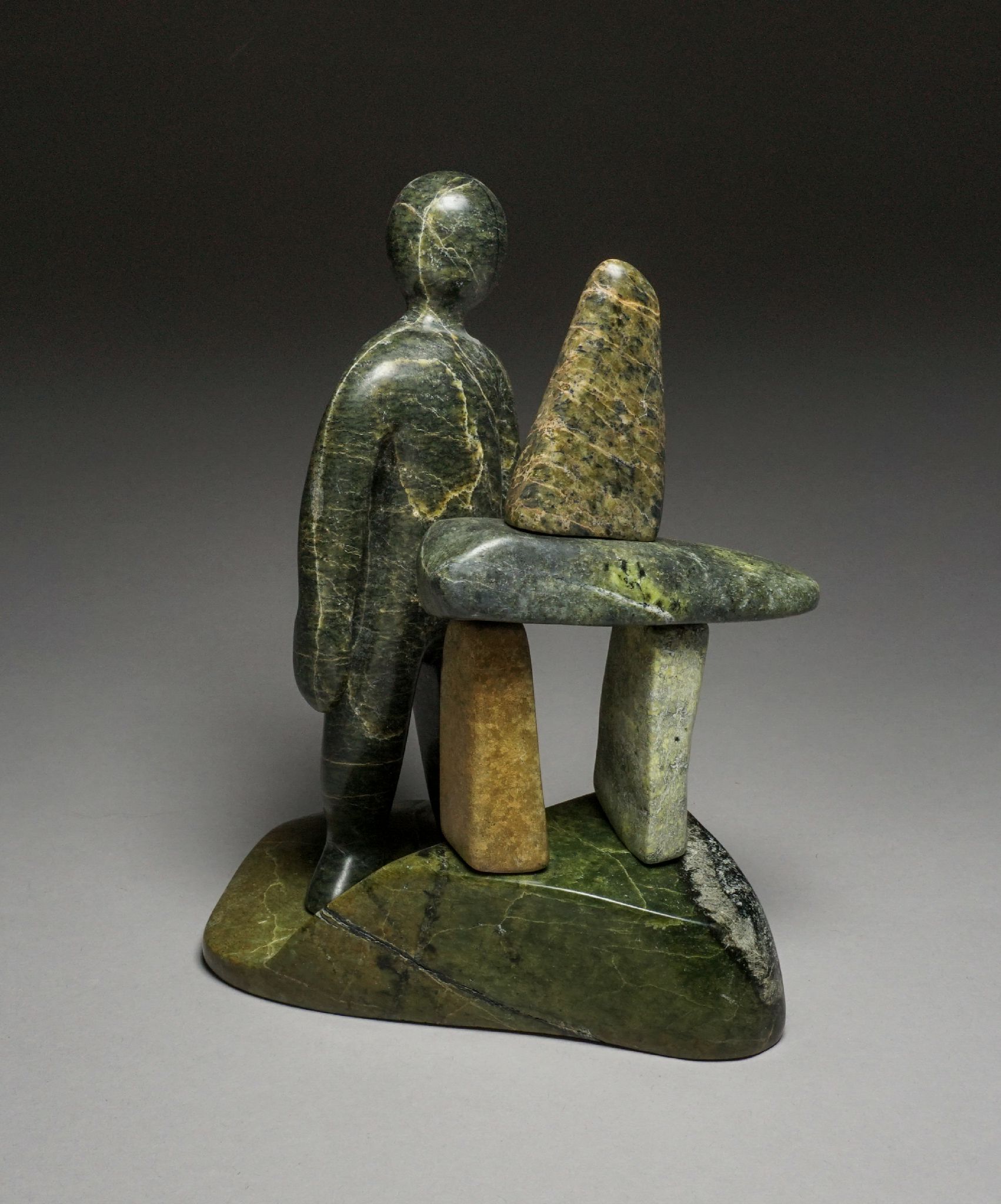
Stone
8 x 8 x 4 1/2 in.
$2,800 CAD
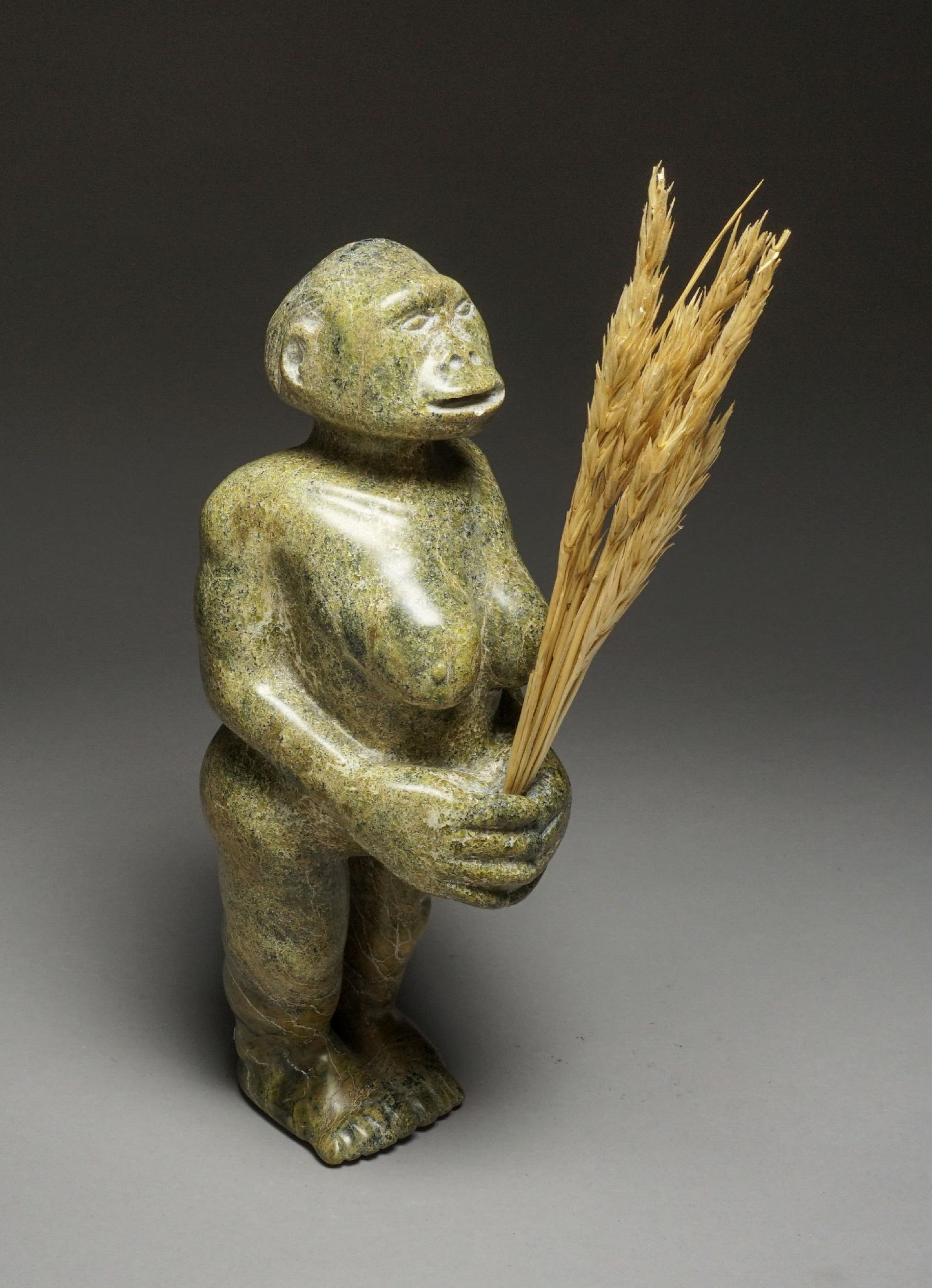
Lime grass and stone
11 1/2 x 3 1/2 x 4 1/2 in.
$2,600 CAD
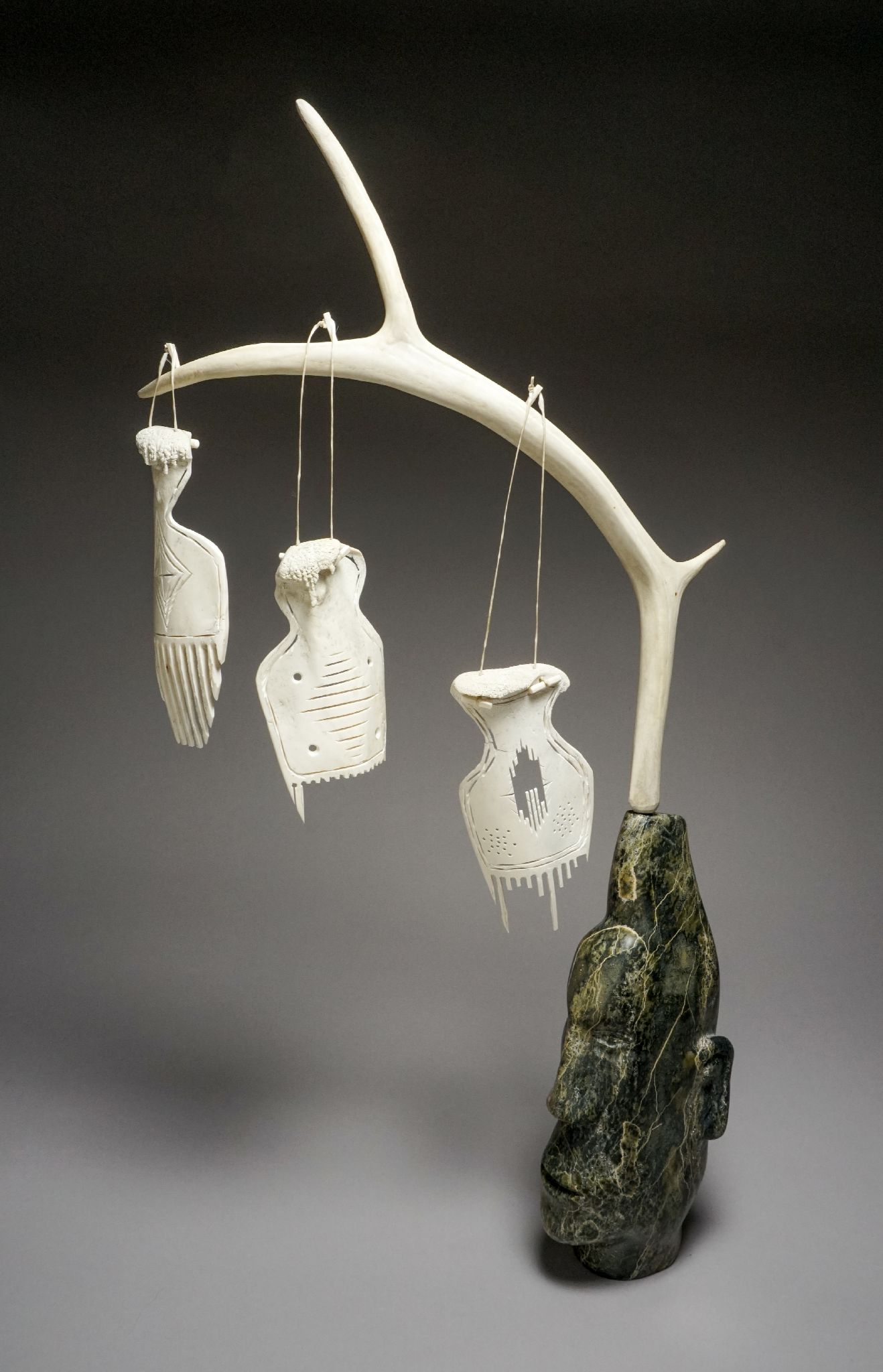
Stone, antler, sinew
28 1/2 x 15 1/2 x 3 in.
SOLD

Stone, antler
8 x 7 1/2 x 1 1/4 in.
$1,800 CAD

Stone, baleen
18 1/2 x 18 x 2 1/2 in.
SOLD

Stone, antler, hair
21 x 14 x 16 in.
$5,000 CAD

Stone, antler, whalebone
23 1/2 x 6 x 7 in.
$7,500 CAD
The subject matter is poignant; an archangel holds up a shield and a sword beside a cairn that features a heraldic image of an Inukshuk. In the absence of an interview about the sculpture, one can only wonder if Ashevak was actualizing his own guardian angel in stone. - Patricia Feheley
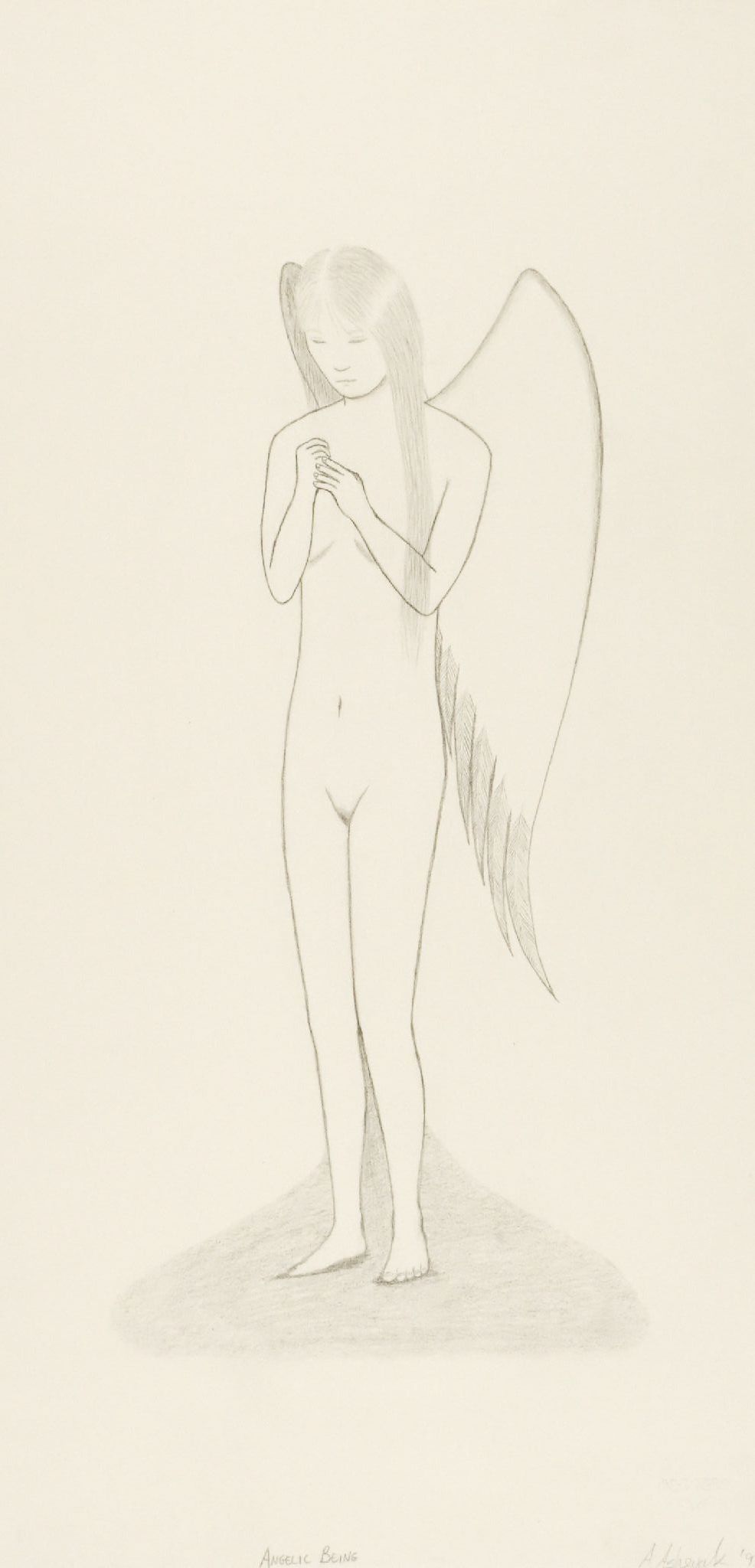
Graphite
26 x 13 in.
$800 CAD
“This is like a spiritual being. You can believe in them and then they are there”
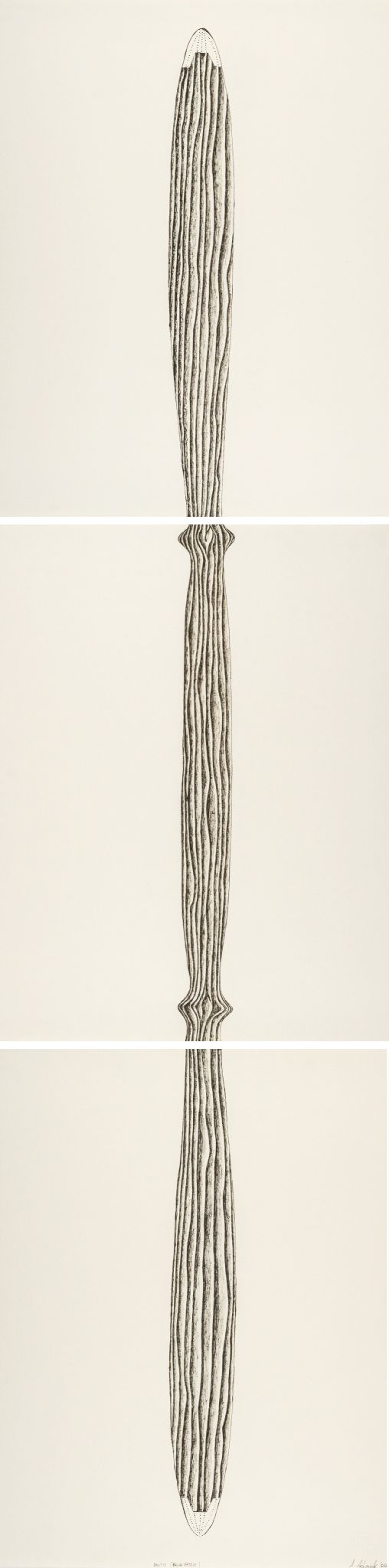
Ink
78 1/8 x 20 in.
$2,800 CAD
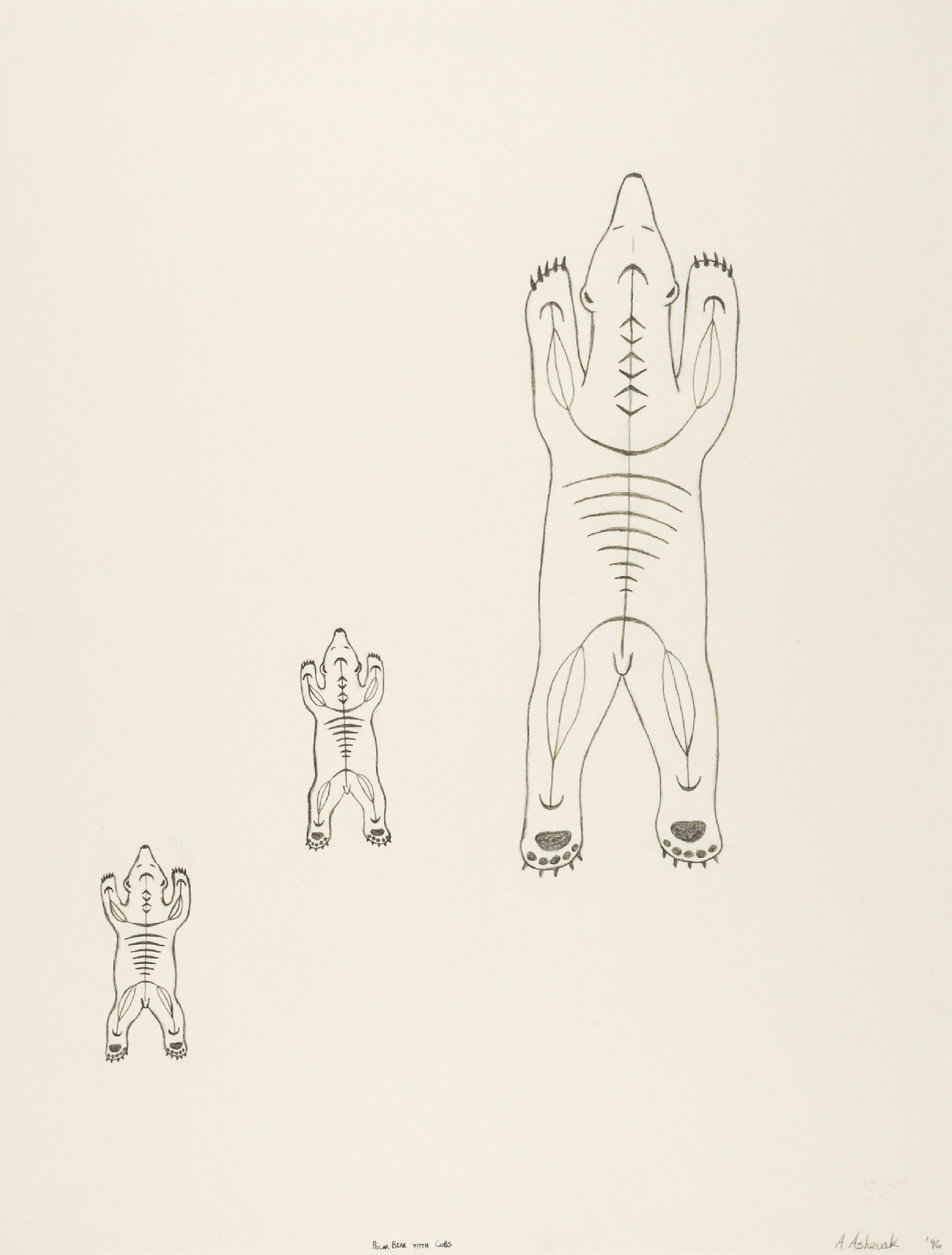
Graphite
26 x 20 in.
$950 CAD
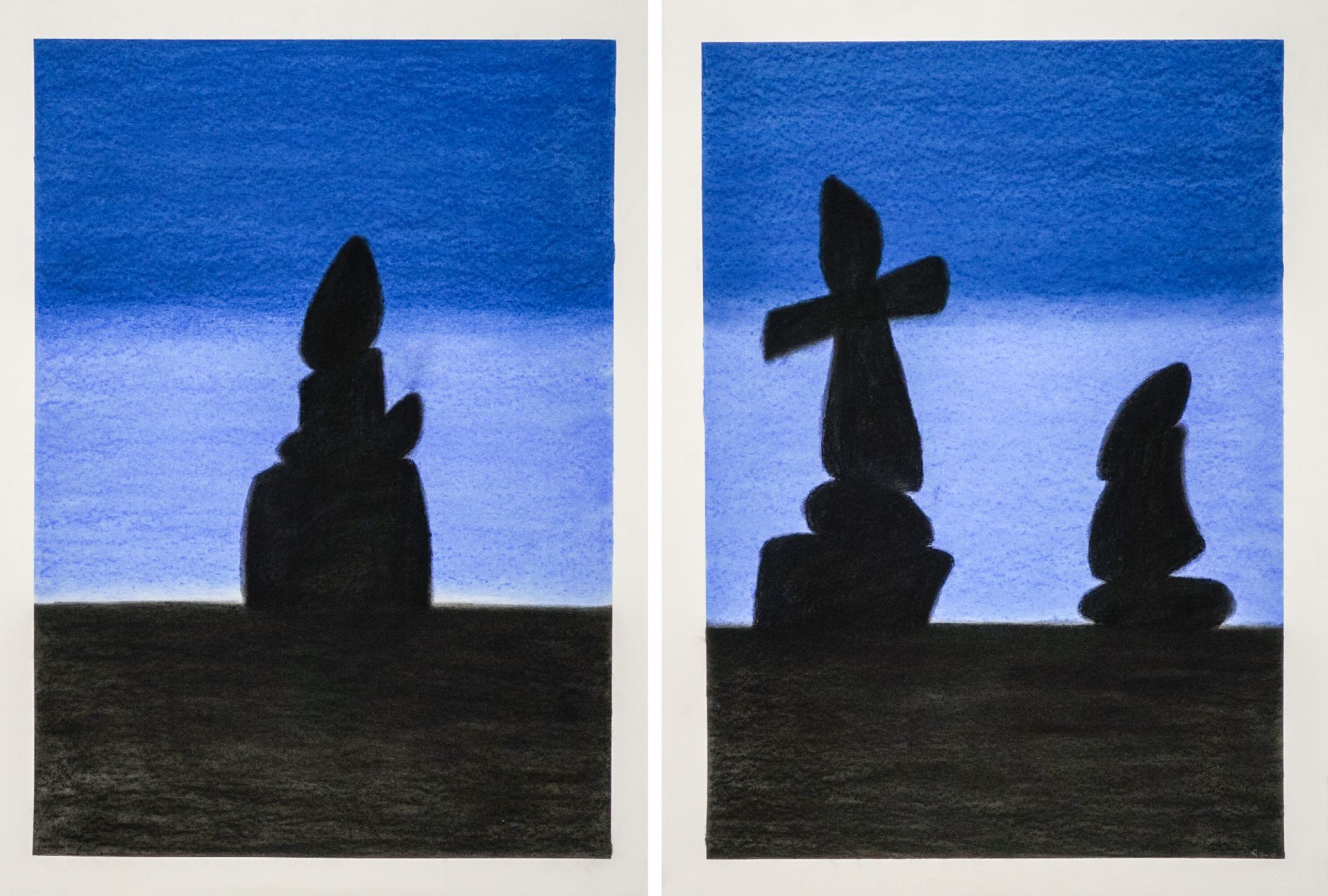
Oil pastel
29 3/4 x 22 in.
$3,500 CAD
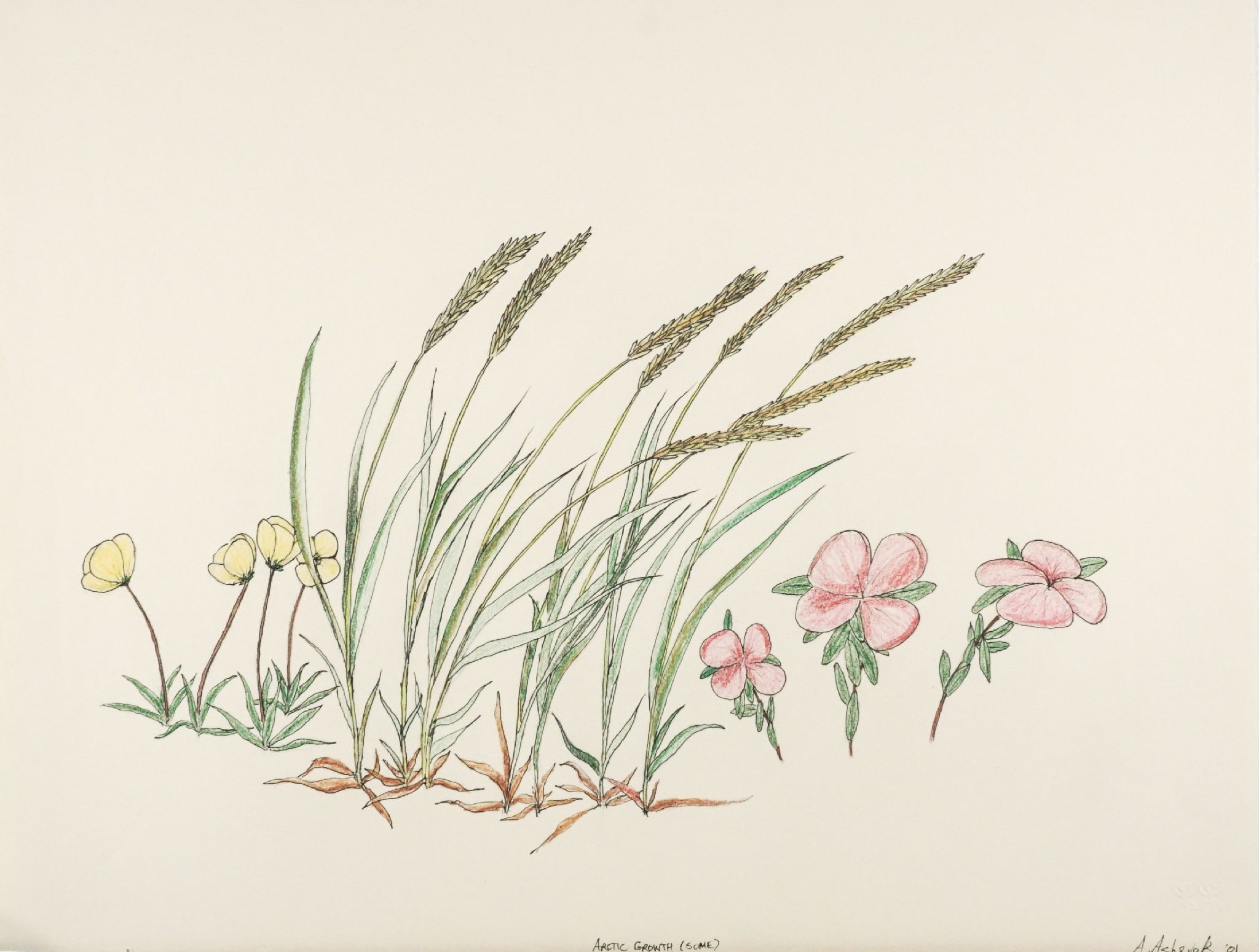
Coloured pencil & ink
20 x 25 7/8 in.
$950 CAD
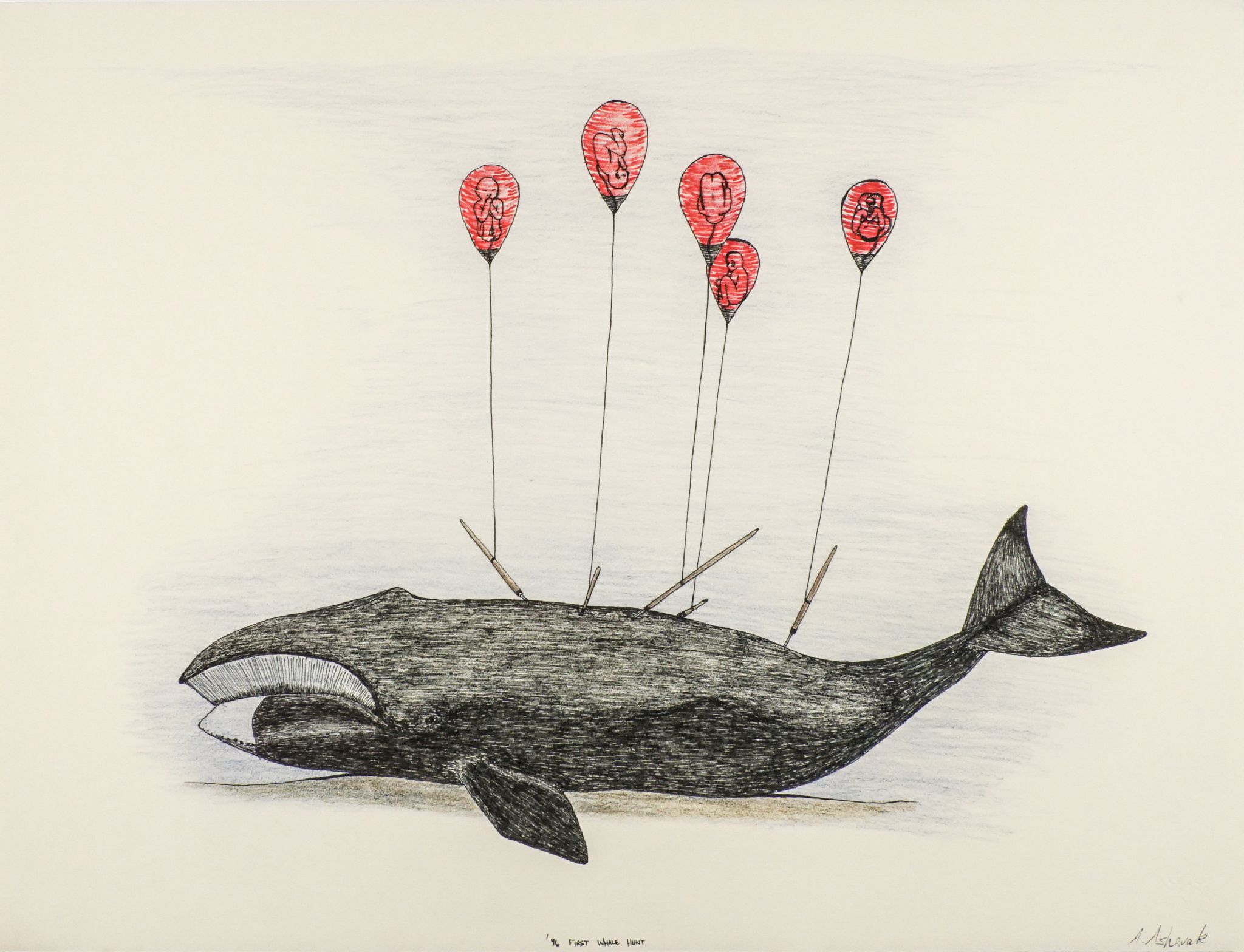
Coloured pencil & ink
19 3/4 x 26 1/8 in.
SOLD
"I was trying to say something about the first whale that went down since they started hunting again. I tried to tell the story about the first hunt. They didn't really know what to do with the whale - how to catch it. It sunk there, but I heard it went back up. It got a little rotten, but they got some muktuk; they got something out of it."

Pastel, ink, coloured pencil
29 3/4 x 22 in.
$1,400 CAD
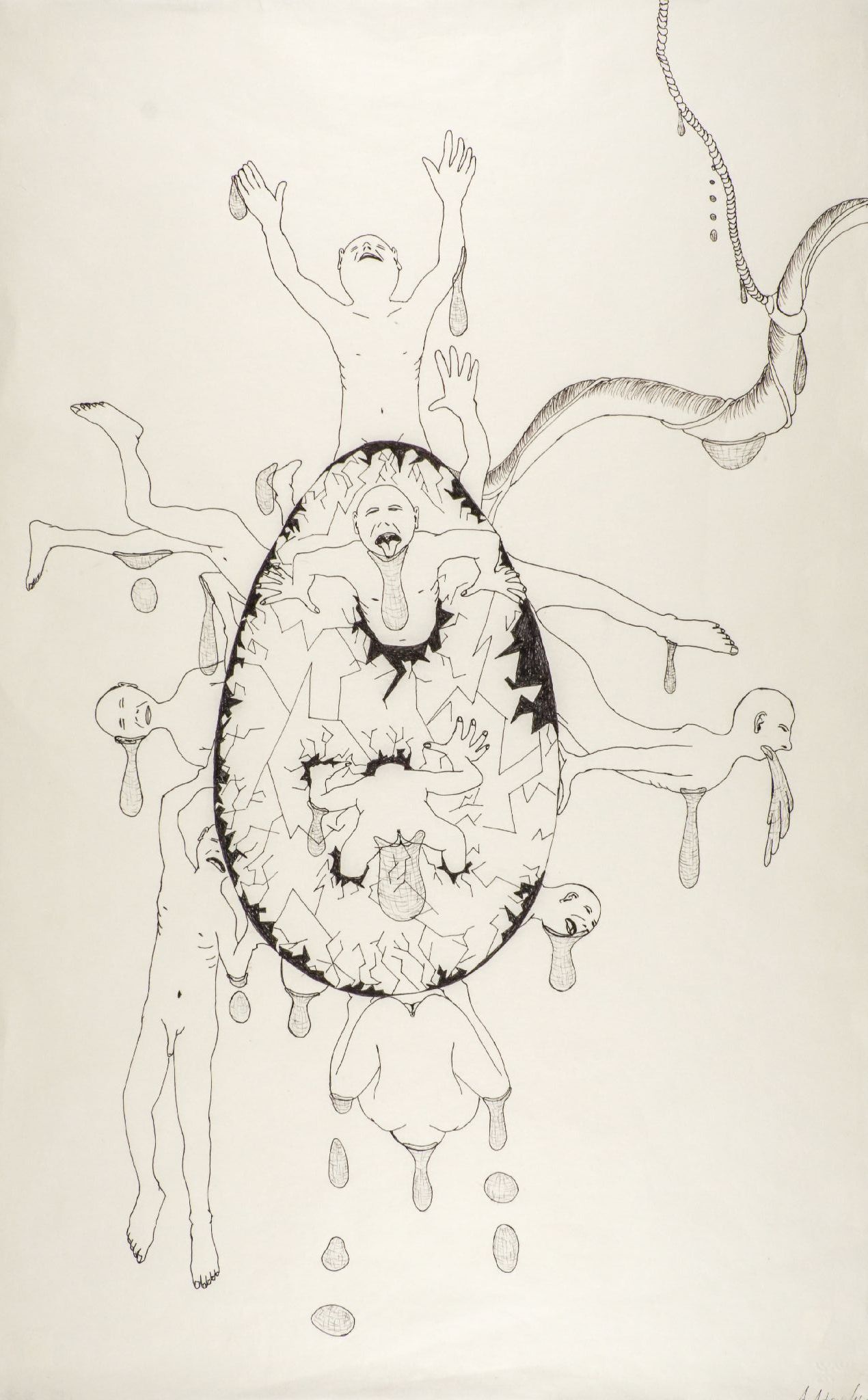
Ink
39 x 24 3/8 in.
$1,200 CAD
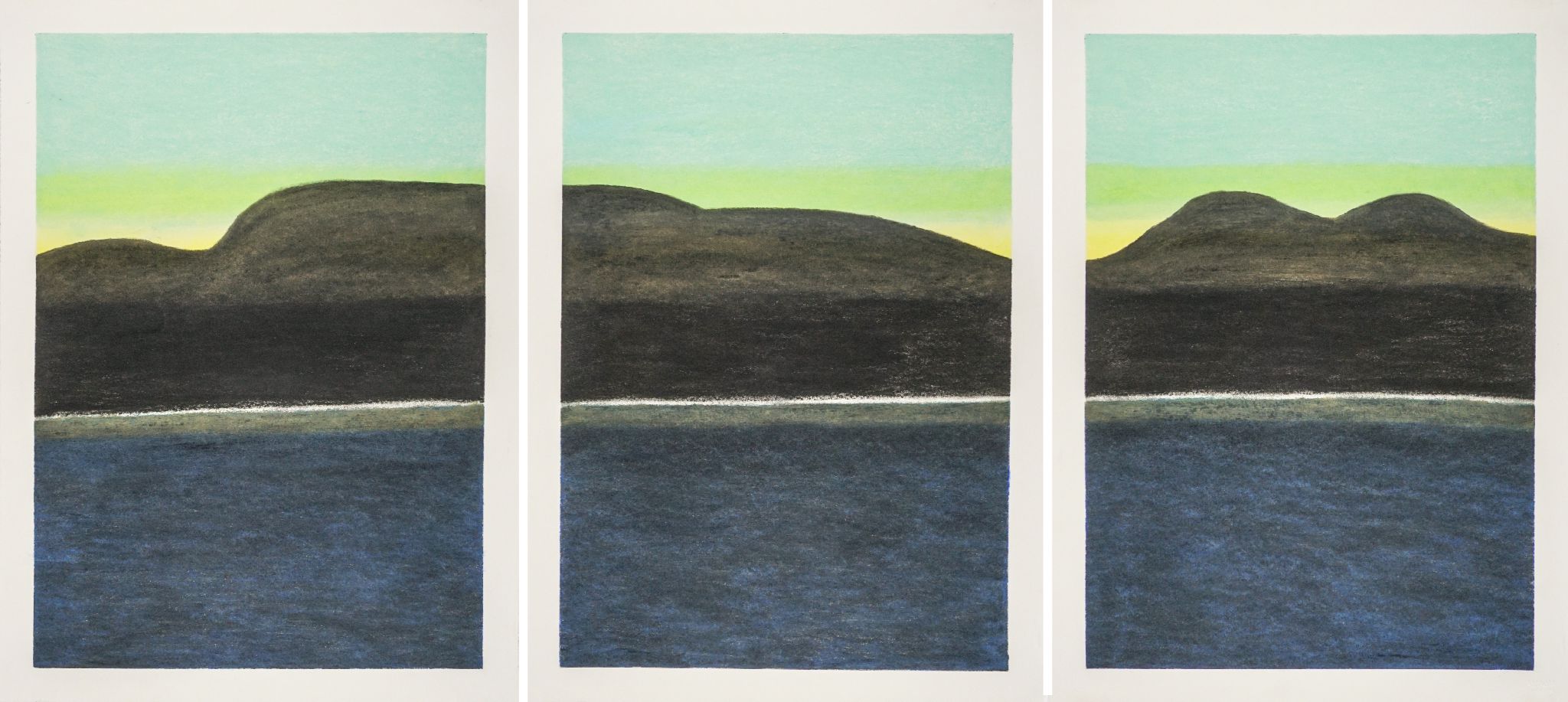
Pastel & coloured pencil
29 7/8 x 66 1/8 in.
$9,000 CAD
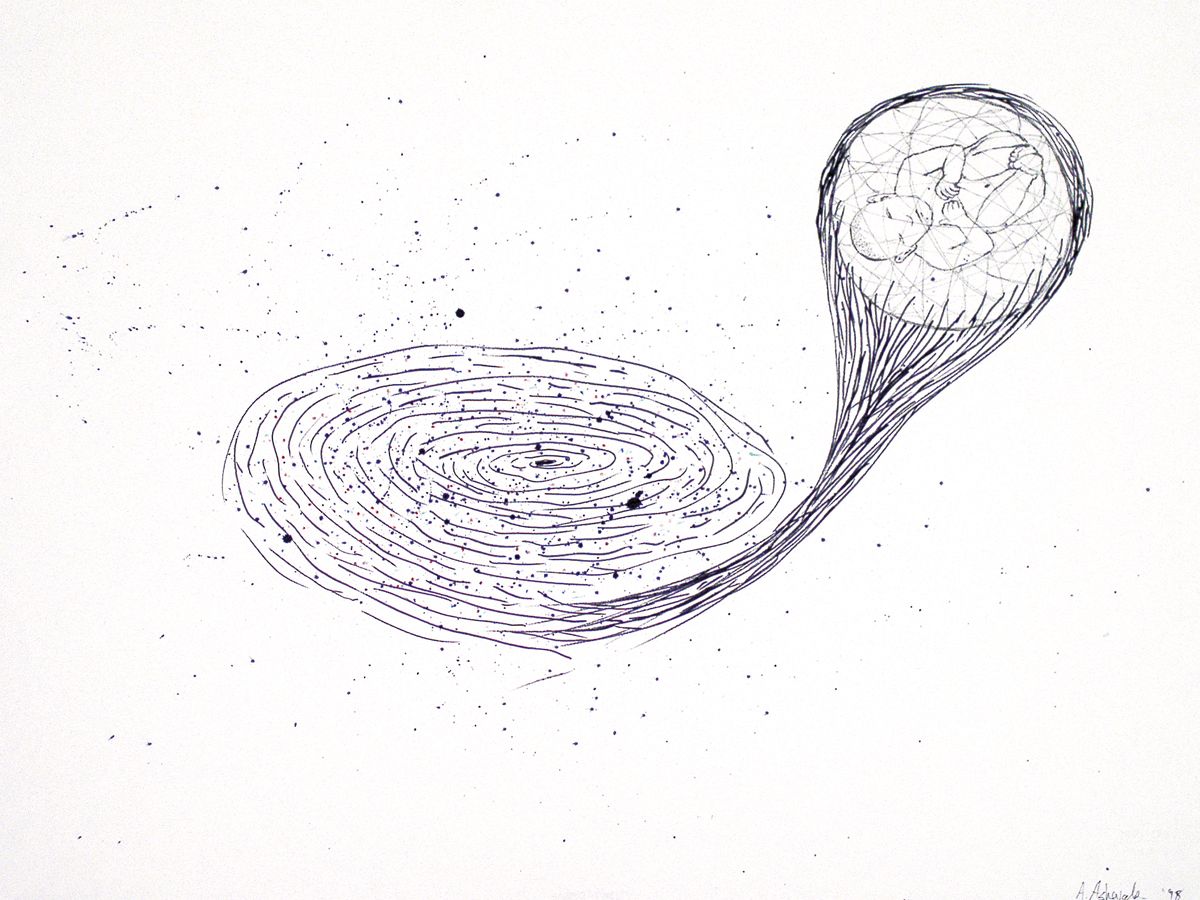
Ink
20 x 26 in.
$950 CAD
"One time I saw a documentary. It's hard to explain what I tried to do there. It was about looking into space to the planets and other things up there. The fetus is one of the planets. Human beings come from there - are made up from that matter."
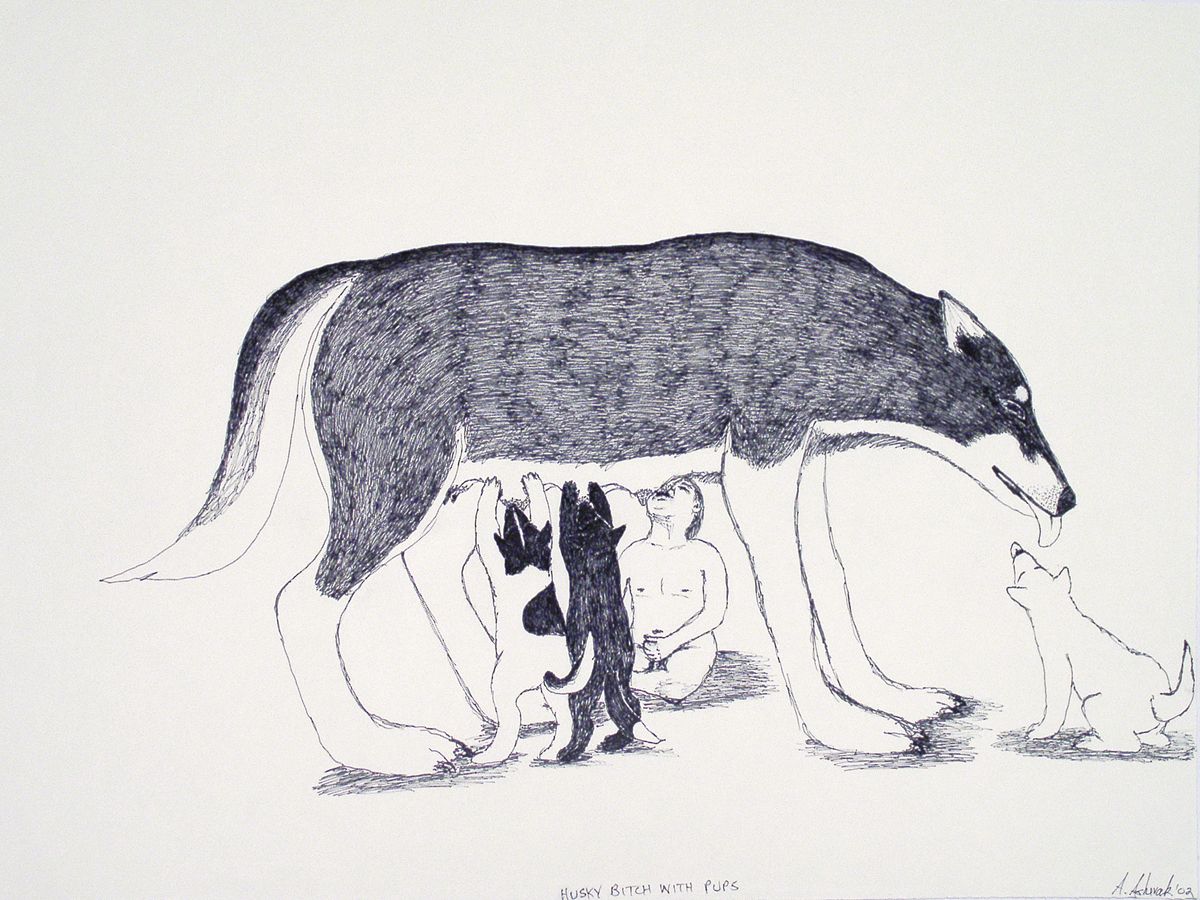
Ink
20 x 26 in.
$950 CAD
"I got that from a book. It's a sculpture I saw, so I decided to do a drawing here, but I didn't know what it really meant."
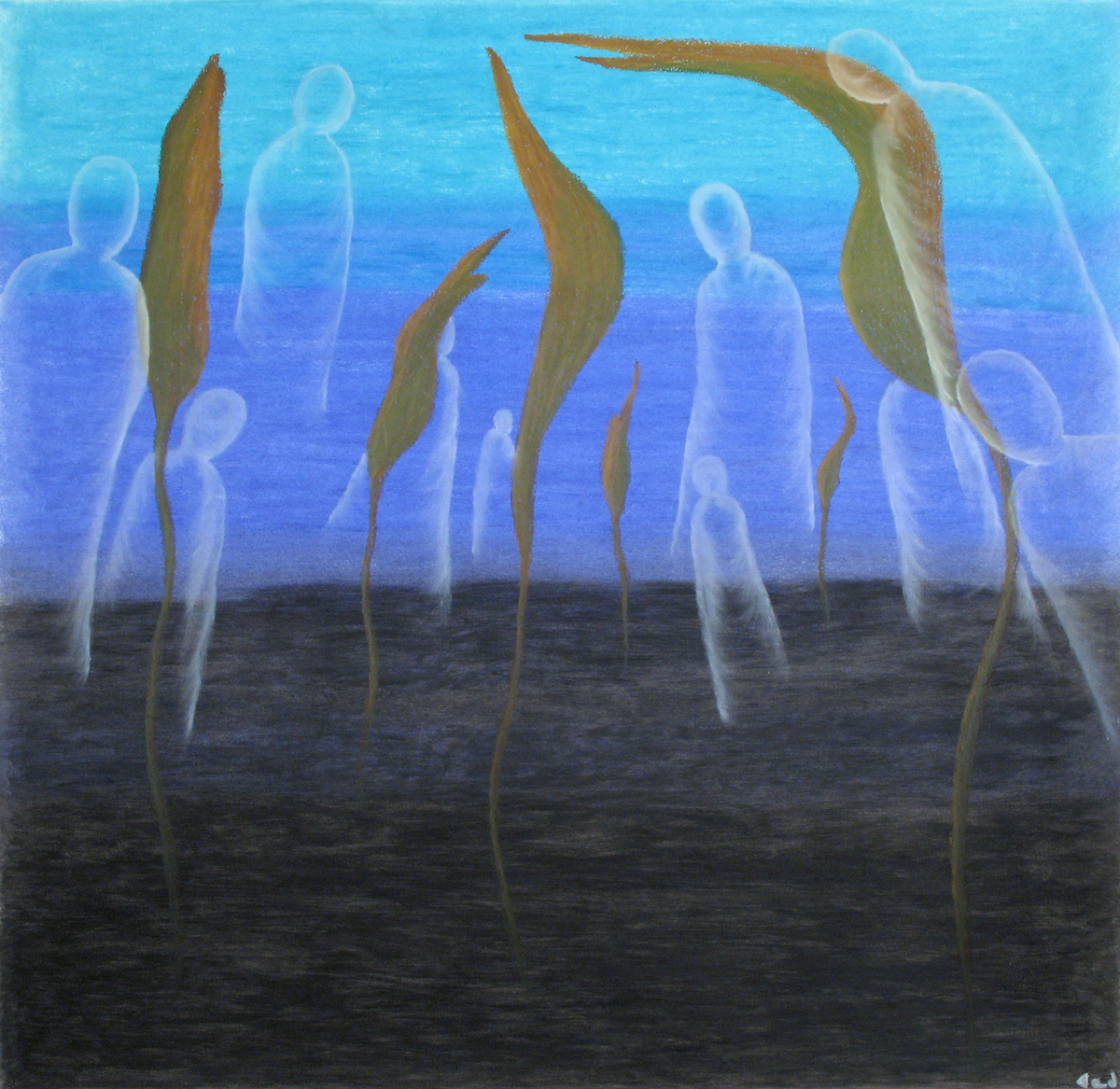
Oil pastel
48 x 46 in.
$5,000 CAD
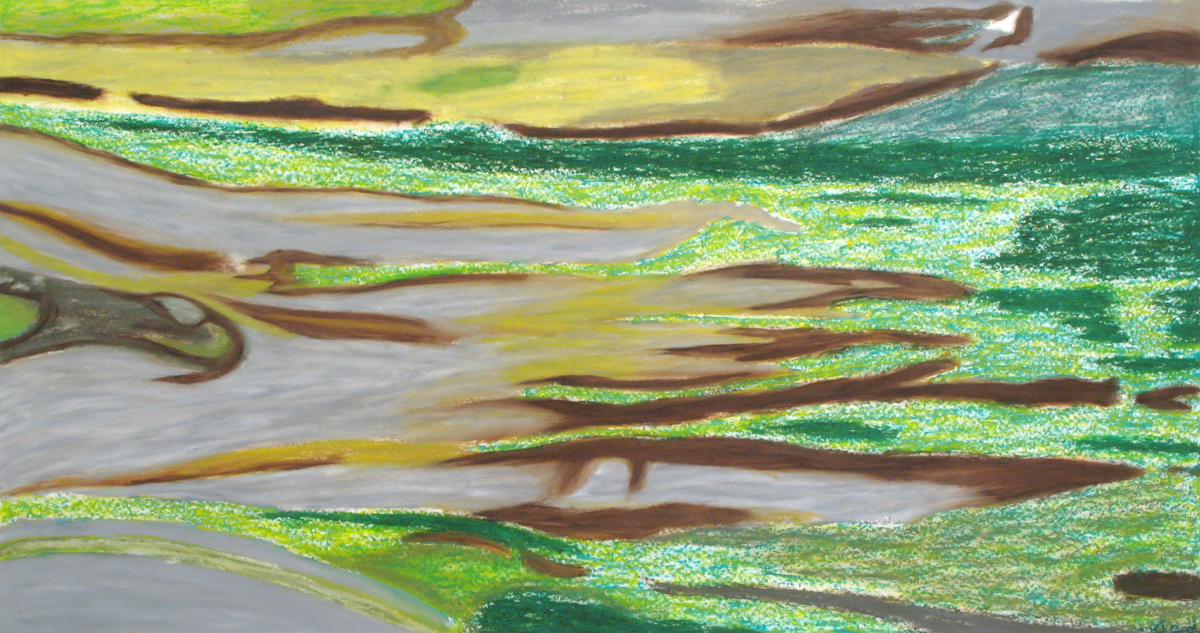
Oil stick on paper
30 x 53 in.
$4,500 CAD
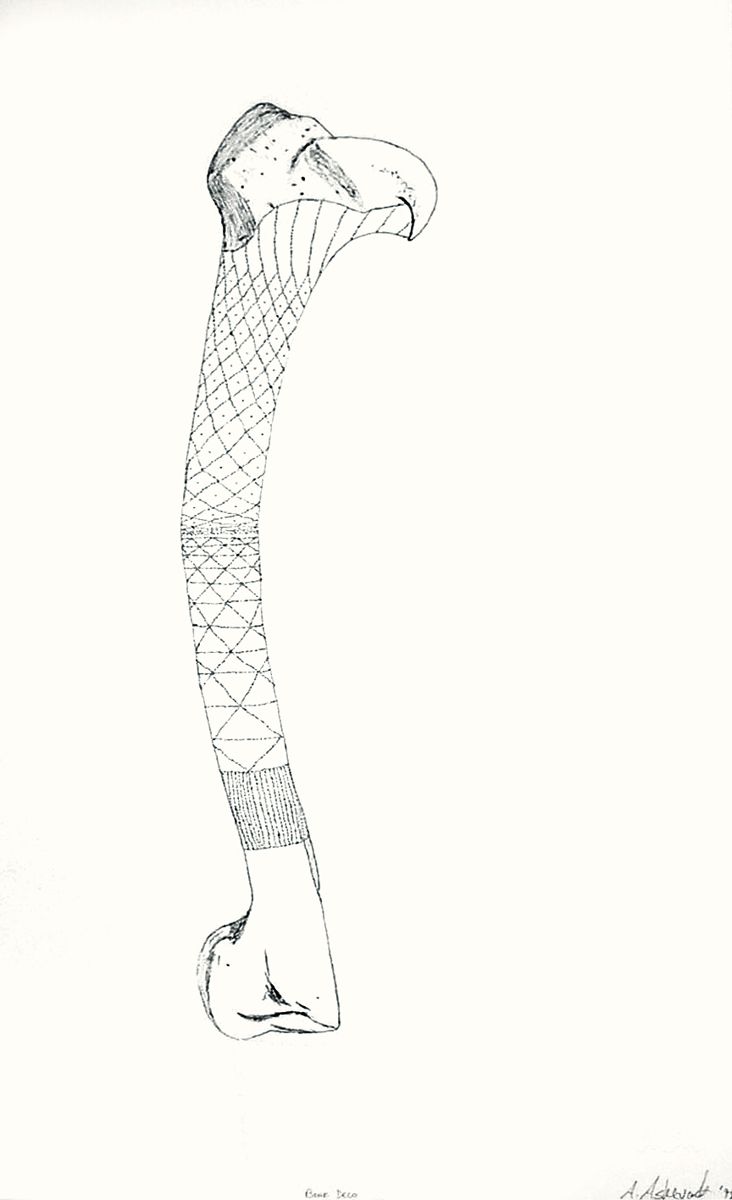
Pencil, ink
26 x 13 in.
$900 CAD
"Back in the old days they sometimes did drawings on bone or ivory or other antlers. It's weathered, white and it gets hard and you can do a drawing on it."
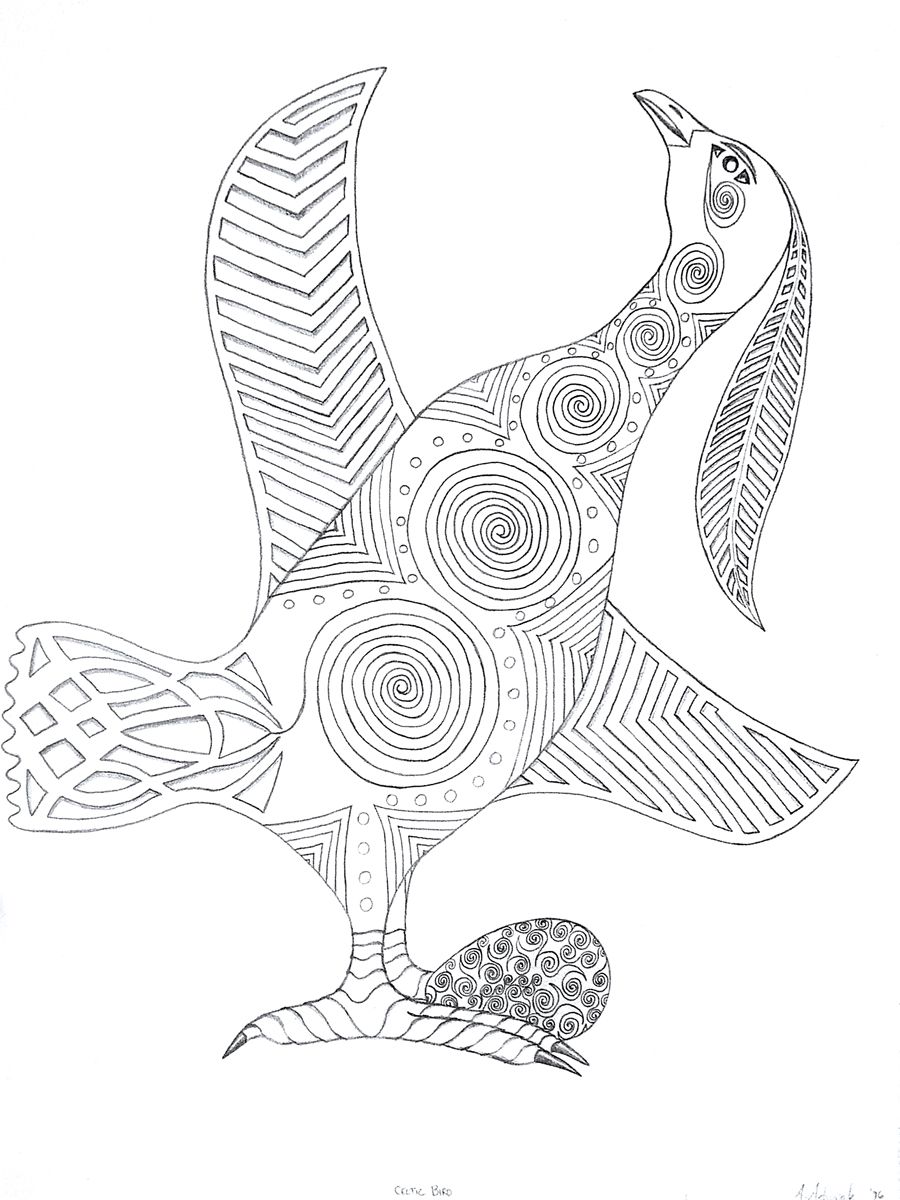
Graphite
26 x 20 in.
$950 CAD
"This is some sort of large bird with markings. It has an egg with it, so it's a nesting bird. I got the markings from a book I saw about Celtic markings - from Ireland, or Scotland."

Coloured pencil & ink
26 x 9 in.
SOLD
“Some older generation people have walking canes. I ripped the paper to be this size. The handle is a skull, like a fox skull”

Stained-glass & wood
21 x 20 1/2 in.
$3,200 CAD
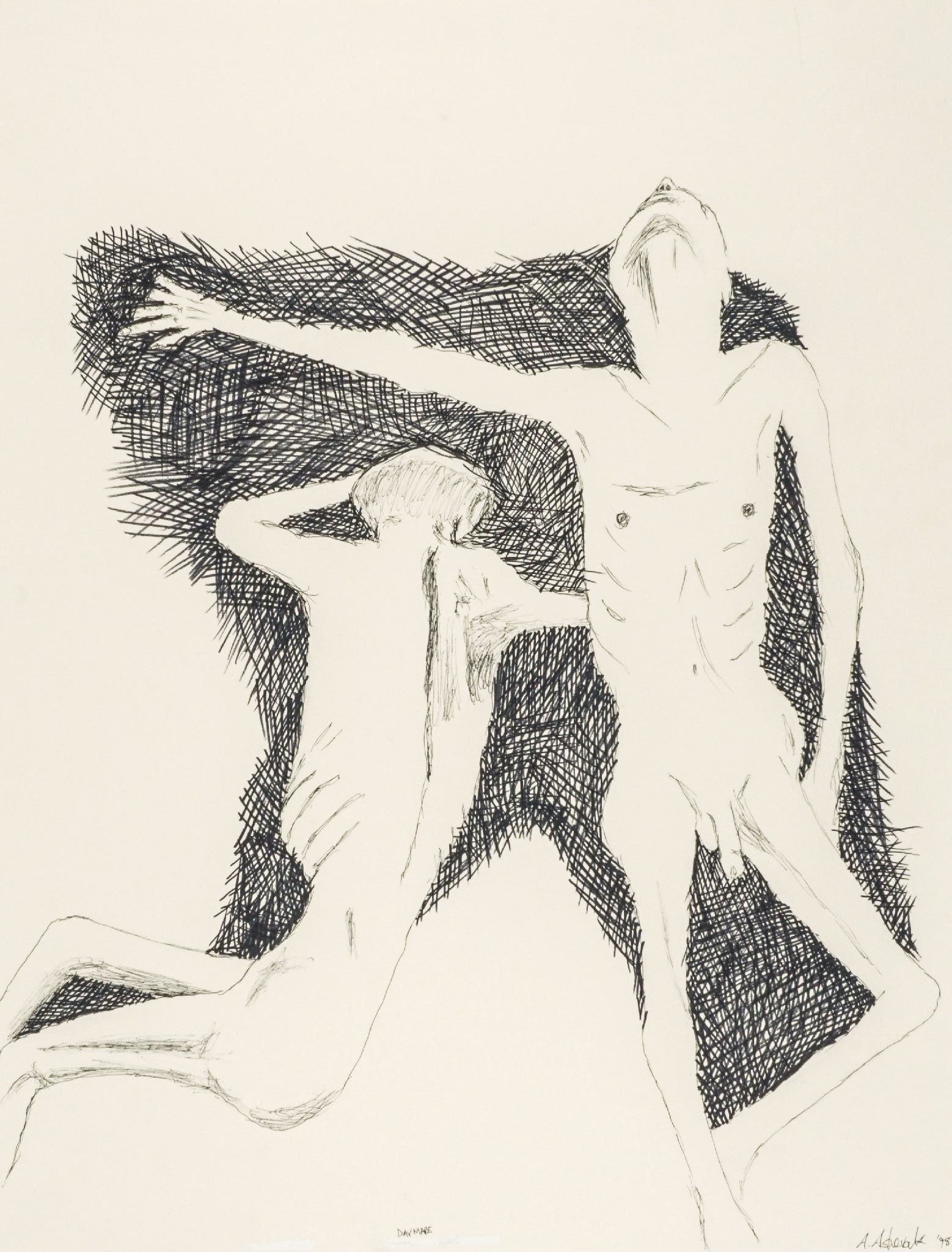
Graphite and ink
26 x 20 in.
$950 CAD
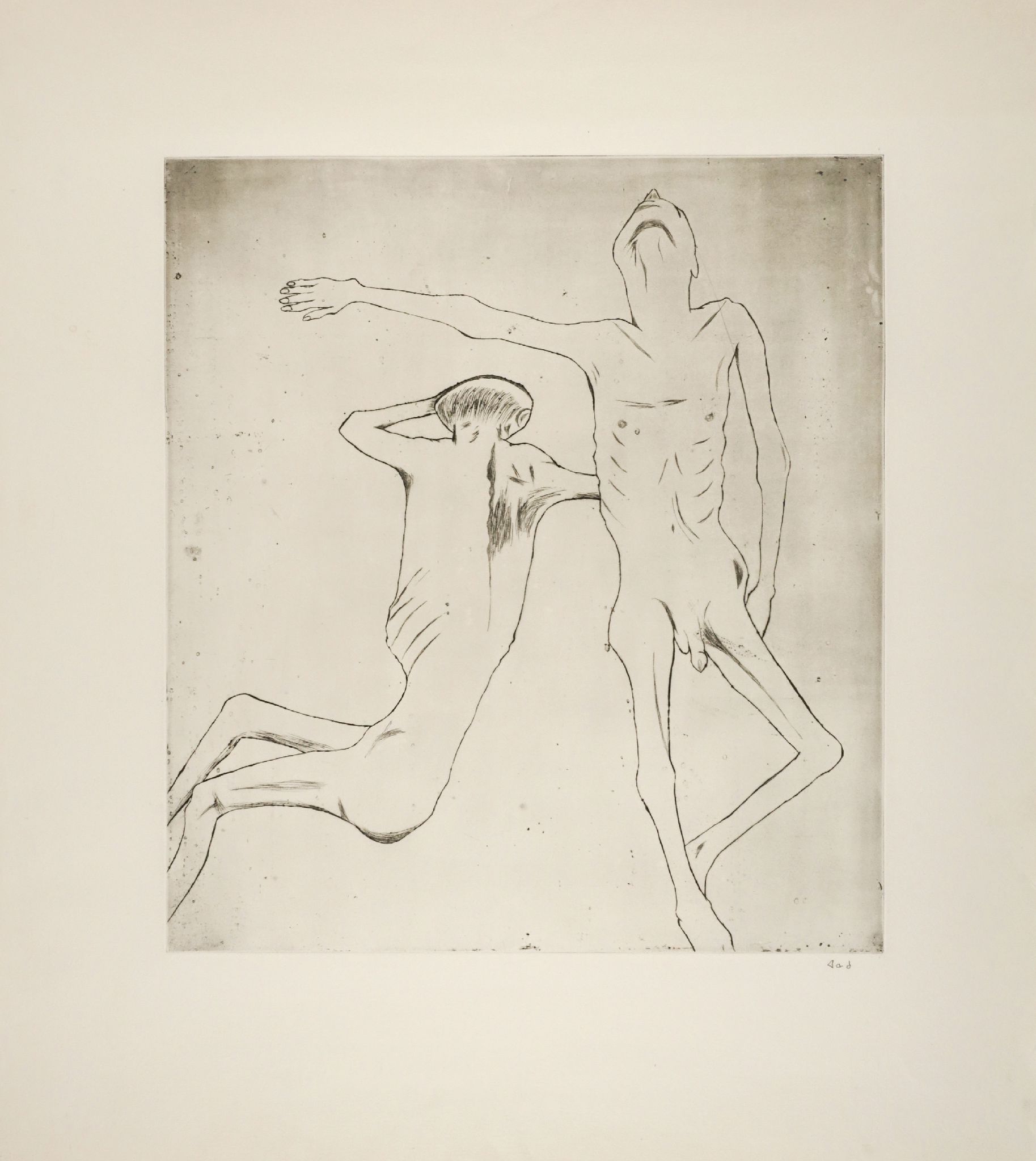
Etching & Aquatint
35 1/4 x 31 1/4 in.
$1,000 CAD
"I saw a documentary about the Holocaust victims back in World War II; I started drawing about it. It's a strong image. I called it Daymare because it was like a nightmare but happening in the daylight. It was like a dream, but it still happened"
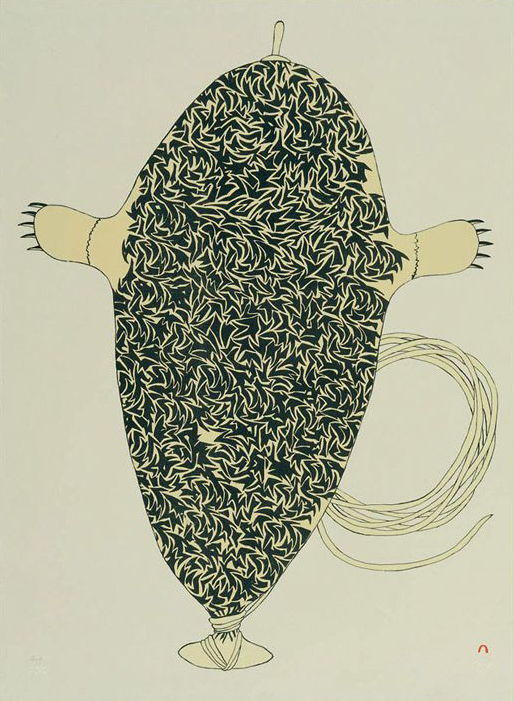
Lithograph
30 x 22 1/4 in.
$700 CAD
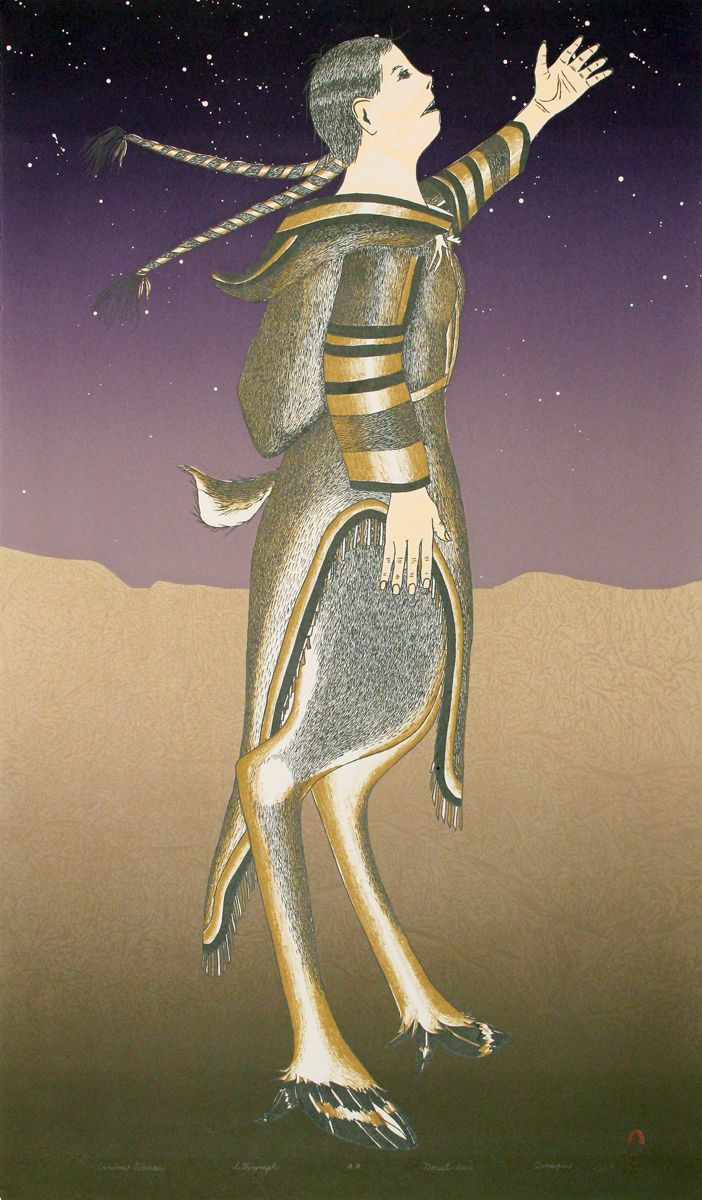
Lithograph
34 1/2 x 20 in.
$700 CAD
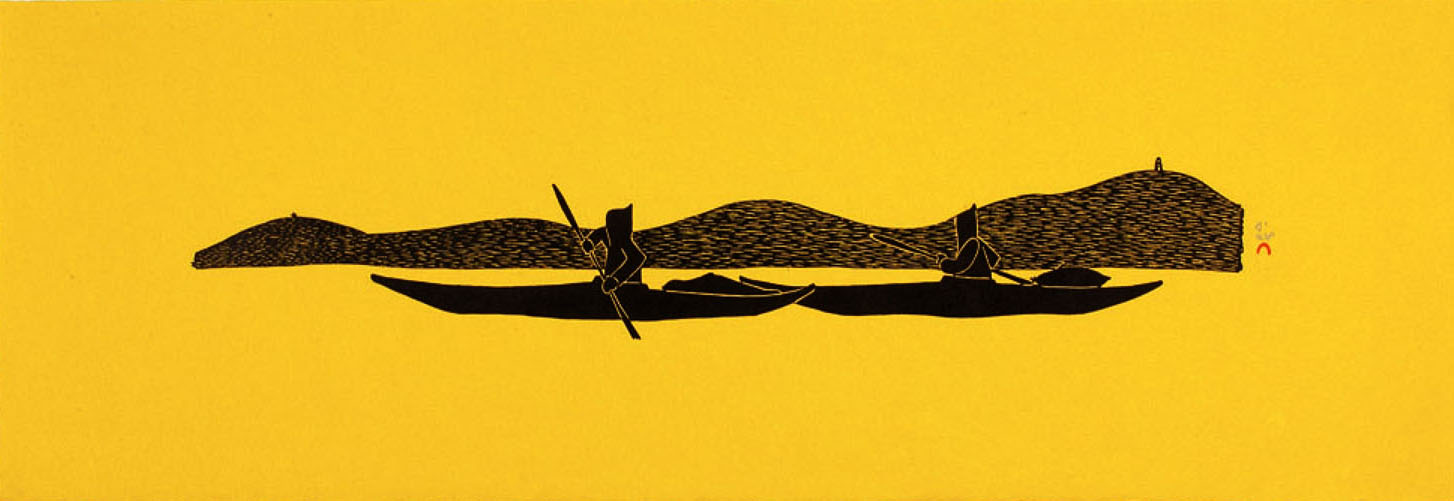
Stonecut
12 3/4 x 37 in.
$2,500 CAD

Stonecut
28 x 22 in.
$2,600 CAD

Etching & Aquatint
28 x 22 in.
$3,000 CAD